Your board meeting is just two weeks away. The calendar invite is glaring back at you, and the agenda leaves no room to hide: defend your post-Series B marketing investment, prove incremental pipeline ROI over the next two quarters, and confirm that your current customer acquisition cost (CAC) trajectory is sustainable.
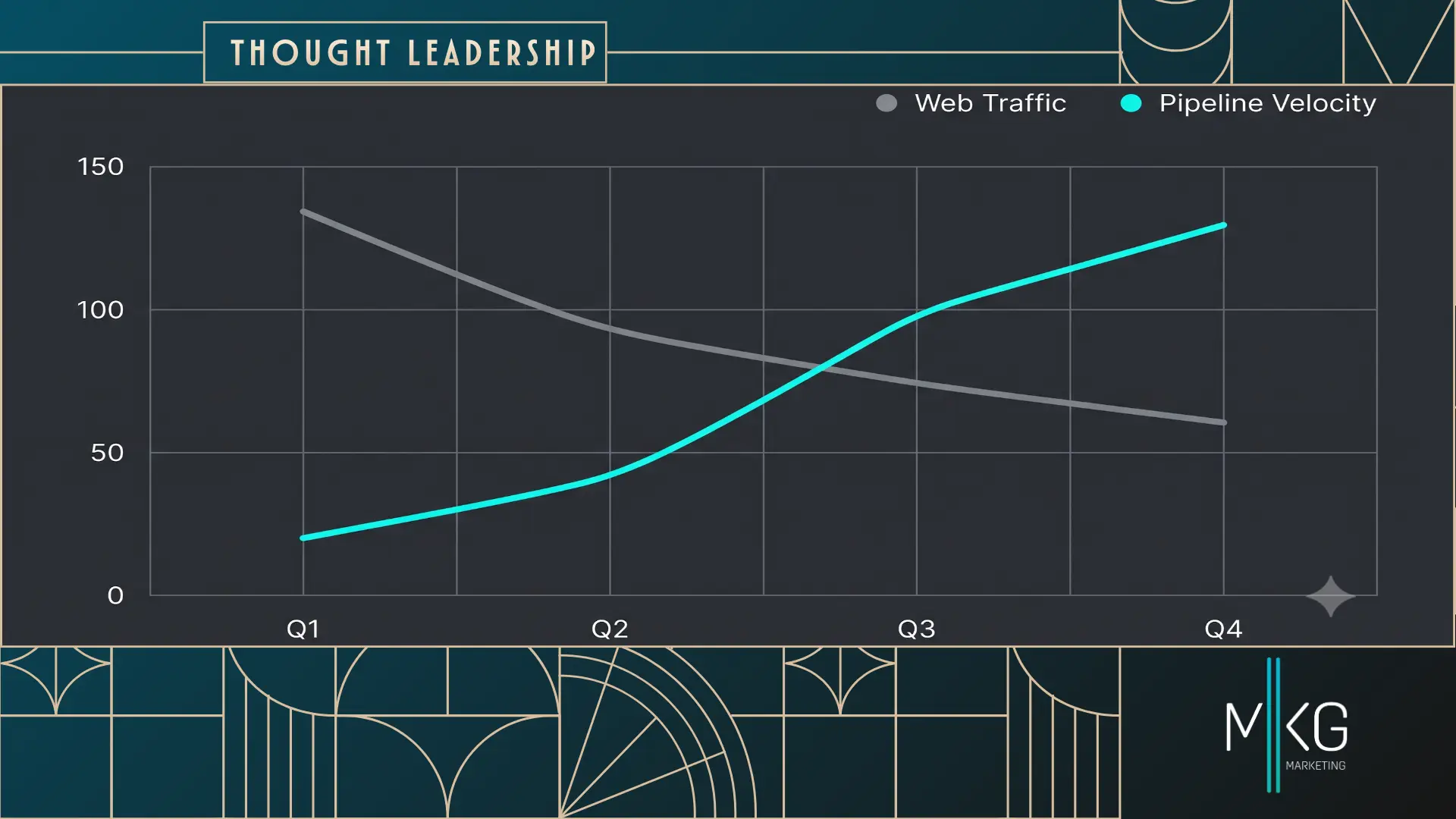
To get ready, you open your go-to web analytics platform. You expect to see the usual straight line between search rankings, site clicks, and inbound demo requests. Instead, you’re confronted with a disturbing trend.
Your top-of-funnel SEO platform insists you’re winning. Your priority keywords are ranking better than ever. Yet your site’s organic referral traffic is steadily declining week over week. Buyers are searching for the exact problems your SaaS product solves, but they’re getting complete, synthesized answers directly on the search results page. They scan AI-generated summaries, get what they need, and move on, without ever clicking a single link to your site.
You’re stuck in a measurement crisis. The attribution models digital marketers have depended on for more than twenty years, last-click tracking, multi-touch UTM parameters, and cookie-based sessions, are collapsing. When buyers research inside conversational interfaces, they eventually appear in your funnel as “Direct” traffic or self-reported “word of mouth,” often weeks after their true first touch.
Walk into the boardroom armed only with legacy traffic reports, trying to rationalize why stellar rankings coincide with shrinking website visits, and you’ll look like a marketer clinging to vanity metrics. To defend your budget and assert clear strategic authority, you need to adopt a modern measurement framework, one that captures how your brand builds influence without clicks and translates that influence into an airtight financial business case for your Chief Financial Officer (CFO).
The Core Deficit: How Generative Engines Break the Click-Based Funnel
The structural breakdown in marketing measurement is a direct consequence of how search engines have redesigned their user experience. Large language models and AI search applications have introduced a friction-free research layer between your brand’s content and your prospects.
The Interception of Educational Search
Under the legacy search model, informational queries served as highly profitable entry points for software platforms. When a buyer searched for a framework, such as "how to design a B2B sales commission plan" or "enterprise API rate-limiting best practices," they were directed to an optimized blog post. That visit placed a tracking cookie, fired a retargeting pixel, and kicked off a measurable lead-nurturing journey.
Today, those same queries are resolved instantly within the search environment itself. The user’s intent is fully satisfied by an AI Overview, a Perplexity-style summary, or a ChatGPT conversation. Because they get the insight they need without ever reaching your site, this structural shift has created an Informational Query Collapse.
For modern marketers, the implication is clear: your top-of-funnel content is still training the models and powering the answers, but the traditional web-traffic feedback loop has been cut off.

The SVO Attribution Matrix: Shifting Metrics from Clicks to Models
To survive this transition, you must replace click-based attribution with a Search Visibility Optimization (SVO)**** reporting framework. The board does not need to see how many people visited your resource page; they need to see if your brand is the definitive answer recommended by the systems your buyers use to make purchasing decisions.
This requires tracking a completely different set of metrics that measure your active digital footprint across the entire LLM ecosystem. Consider how your reporting must pivot to remain relevant:
| Metric Category | Legacy Attribution Model | SVO Attribution Framework |
|---|---|---|
| Primary Traffic KPI | Unique Sessions, Pageviews | Influence Without Clicks (Off-site impressions) |
| Market Share Metric | Organic Keyword Share of Voice (SoV) | Share of Model (SOM) (Citation frequency) |
| Attribution Vector | Last-Click UTM Parameters, First-Click Cookie | CRM-to-Model Pipeline Association |
| Financial Validation | Cost Per Click (CPC), Cost Per Lead (CPL) | Pipeline Velocity, Accelerated Sales Cycles |
1. Quantifying Share of Model (SOM)
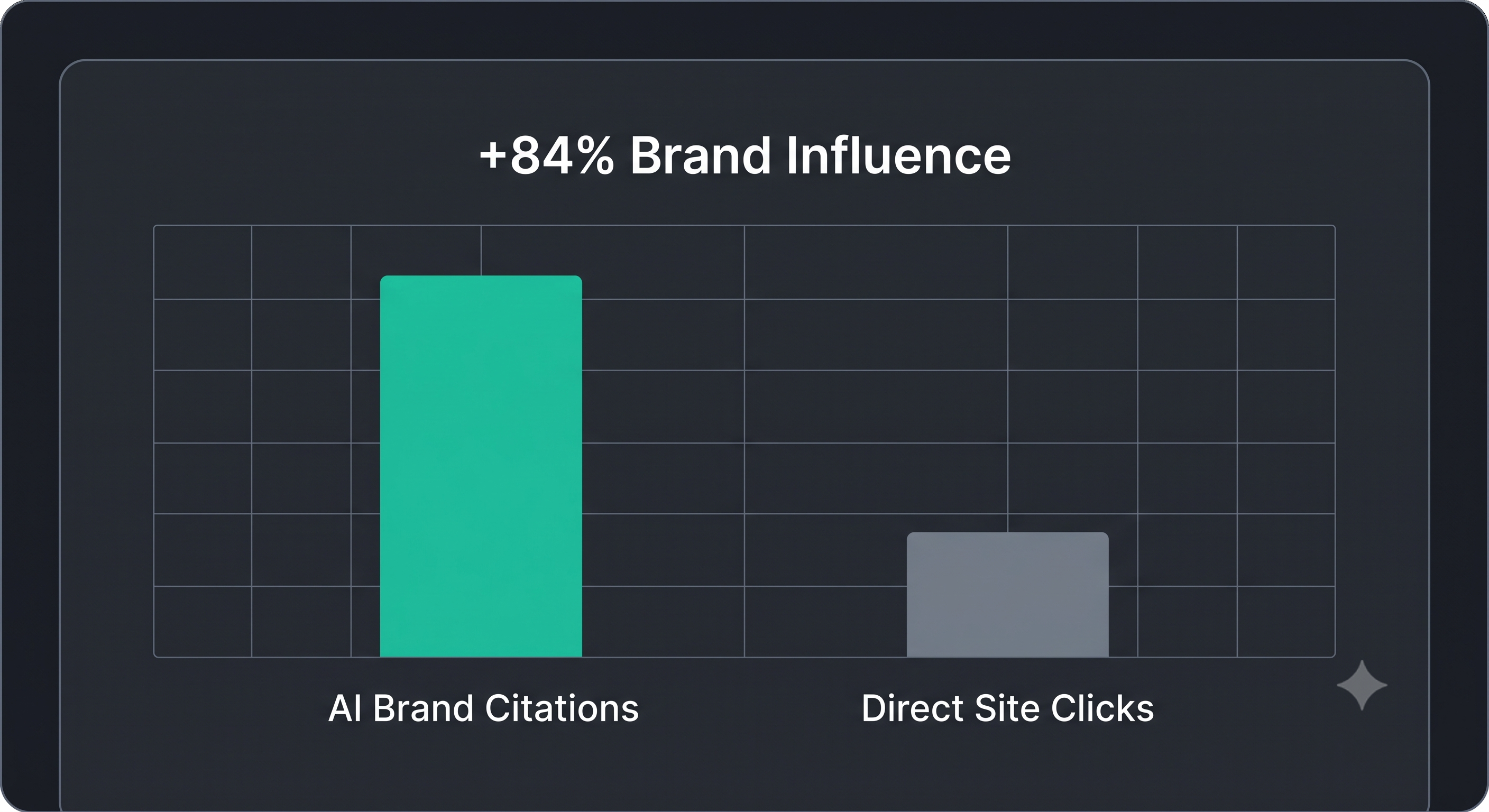
Just as you historically measured your share of voice on traditional search result pages, you must now measure your Share of Model (SOM). This KPI tracks how frequently your SaaS platform is cited as a recommended vendor or authoritative source across dominant large language models.
If a prospect asks an LLM to "Compare the top three enterprise compliance platforms for Series B startups," your SOM metric tells you whether your brand was included in that generated recommendation, how prominently it was positioned, and what specific attributes were associated with your software.
2. Measuring Influence Without Clicks
Because search experiences no longer require a click, your reach must be measured through off-site trust footprints. This involves tracking your brand's presence inside curated industry databases, open-source documentation, developer communities, and trusted third-party review platforms that generative models scrape to compile their summaries.
When your brand is consistently integrated into these reference networks, you exert massive Influence Without Clicks. Your buyers absorb your brand authority during their initial AI research phase, bypassing your website entirely until they are ready to book a direct sales call.
Building the CFO-Justification Package
To defend your marketing budget, you must translate these modern off-site visibility metrics into a language your finance department respects. A CFO is inherently skeptical of abstract marketing concepts like "brand awareness" or "algorithm influence." They want to see how these adjustments reduce customer acquisition costs and accelerate the movement of capital through the business.
Your CFO Justification package must connect your SVO strategy directly to the core metric of enterprise growth: Pipeline Velocity.
Step 1: Mapping the Offline CRM Signal Loop
To prove that your off-site visibility is driving real pipeline, you must establish an automated data loop between your customer relationship management (CRM) system and your marketing data.
When a prospect books a demo and enters your pipeline, you can no longer rely on self-reported attribution forms or simple direct-traffic categorization. You must cross-reference their IP address, company domain, and early-stage engagement timeline with your off-site coverage. By demonstrating that accounts exposed to your high-ranking AI citations move through the funnel faster, you prove the direct pipeline impact of your off-site optimization efforts.
Step 2: Calculating Pipeline Velocity Impact
Use the standard financial formula for revenue acceleration to show how your SVO efforts directly de-risk the sales cycle:
Pipeline Velocity = (Qualified Opportunities × Average Deal Value × Win Rate) / Sales Cycle Length
When you optimize your brand for LLM retrieval and citation, you are educating the buyer before they ever speak to an account executive. When a prospect enters your funnel after researching solutions through an AI engine, they are already deeply informed about your product’s capabilities and specific differentiators. This pre-educated state dramatically reduces internal sales friction, resulting in:
- Shorter Sales Cycles: Buyers make decisions faster because they do not need to sit through basic introductory education.
- Higher Win Rates: Your sales team is engaging with highly qualified prospects who already understand your platform's unique value proposition.
By presenting a clear, data-backed correlation between SVO visibility and a shorter sales cycle, you give your CFO an undeniable business case: your marketing spend is directly accelerating the velocity of capital through the company.

Summary
Defending your marketing strategy to a venture-backed board in 2026 requires an immediate departure from legacy, click-reliant reporting models. When search engines transition to closed-answer ecosystems, traditional web traffic metrics decline, while actual brand influence remains highly active. AI Overviews and zero-click search behaviors are systematically intercepting your buyers during the educational research phase, causing a dramatic drop in top-of-funnel website sessions.
To protect your budget and align your team with revenue growth, you must implement a robust Search Visibility Optimization dashboard built for executive scrutiny. This shift requires three core actions: measuring your Share of Model (SOM) to track your brand’s citation frequency across leading AI platforms, quantifying your Influence Without Clicks by auditing your off-site trust footprints, and building a CFO-ready justification package that ties SVO directly to pipeline velocity improvements and reduced sales cycle lengths. Stop defending empty traffic drops. Align your metrics with financial reality, demonstrate how off-site authority drives qualified buyer intent, and transform your marketing team into a highly accountable, capital-efficient pipeline engine.