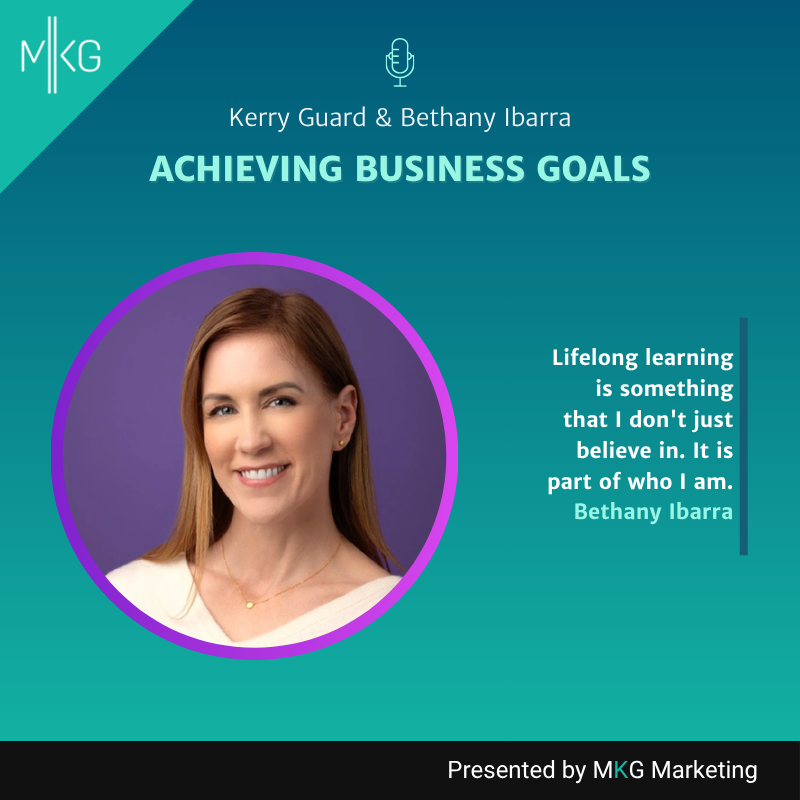
Bethany Ibarra
Bethany Ibarra helps technology, engineering, and manufacturing organizations drive sustainable revenue growth and maximize profitability through strategic P&L management, commercial domain design, and scalable pipeline frameworks.
Overview:
Bethany Ibarra sits down with us to talk about the necessity of treating the sales pipeline as a structured, predictable process to achieve sustainable revenue growth. Ibarra emphasizes that a Chief Revenue Officer's core mission is to generate repeatable revenue by aligning customer value with long-term organizational value. To navigate complex enterprise markets, she advocates for defining clear qualification frameworks, honing a hyper-specific ICP, and continually adapting Product-Market Fit. She outlines a simplified, three-tiered scoring system—evaluating financials, deal psychology, and timing—to streamline opportunity assessment without overcomplicating operations. Ultimately, Ibarra underscores that leadership accountability and transparent CRM tracking across recurring dashboards are vital to eliminating pipeline leakage, while stressing that rigid frameworks must complement, rather than replace, human decision-making and genuine curiosity.
Transcript:
Kerry Guard 0:09
Hello, I am Kerry Guard, and welcome to Tea Time with Tech Marketing Leaders. Welcome back to the show. As always, we are live, which means if you are here with us, say hello. The beauty of being live is we get to answer your questions in real time, and if you aren't able to join us live, that's okay too. That's the beauty of recording. It's here for your viewing pleasure when it is a good time for you to watch, and we will be paying attention to the comments asynchronously and getting your answers, getting you answers at that time as well, so don't panic. You're not here with us in live. We will be sure to circle back with you. We are here for the engagement. I mean, the beauty of LinkedIn. Am I right? Yeah. I am so excited for the show. I have Bethany Ibarra here with me. We are going to unpack why Pipeline is the process? A little bit about Bethany before we dive into our topic today. Bethany is an accomplished executive with over 25 years of experience in driving revenue growth and maximizing profitability across diverse industries, including technology, engineering, and manufacturing. I want to pause there for a second. The reason why I host this show is because we are all in the same boat of trying to market a very hard thing to message. You can't do it in a one-liner. This isn't like Nike of just do it. It requires thought and integrity around what it is we're trying to help people understand of how we make their jobs easier, and it's so hard to do well. And we're messaging it to an audience that doesn't necessarily want to be messaged too. So partnering those two things together is a tough, hard nut to crack. And Bethany is here for us in that she's got this experience in spades when we're talking about technology engineering and manufacturing, she has clearly been around the block folks. So lean on in. She has a proven track record of success at leading companies like Motorola, Google, and Lenovo. Spearheaded the development of scalable commercial domain at an engineering consultancy, while focusing on strategic planning and client lifecycle optimization to deliver sustainable growth, enterprise in expertise in enterprise leadership, P&L management, new market launches, and building high impact strategic partnerships. She's a collaborative leader with a continuous improvement mindset, adept at driving organizational design and talent development initiatives. Bethany, welcome to the show.
Bethany Ibarra 2:50
Thank you, Kerry. That was humbling, but I appreciate the intro. Yeah, I'll give some context about who I am. First off, thank you for having me on your show. My origin story is born and raised in Michigan, and I was raised by a single mom, a few children, two of my brothers. So my childhood was informed by a deep love of education. My mom was an elementary school teacher. Lifelong learning is something that I don't just believe in. It is part of who I am, and always want to sing from the rooftops and profess the power of curiosity quotient, juxtaposed with the ground shifting a lot underneath my feet. You know, as a you know income level that just hovered around poverty, and understanding the value of work, and what that means, and also understanding the need to always attempt to infuse stability to create that sustainable traction in your life, and that led me out of undergrad to a wonderful growing up at Motorola, 15 years working across the business life cycle in a few different divisions, really getting that trifecta of government, commercial, industrial, and consumer, working there both domestically and internationally, from a startup division to a very established market leading division, and even being part of a sunset of a of a division. So just getting that incredible and grateful for that experience, and then at Google a few years where I had already moved into commercial leadership. That was when I got to manage my first really sizable P and L of over 100 million annually by the second year, and then moved over to Lenovo through an acquisition, and worked there for five years as a general manager, relaunching North America in a couple channels, and then that led me to engineering consultancy. Where I've been the last couple years building out a commercial domain, so I'm excited to talk about why frameworks and processes infuse kind of this repeatable growth. So I'll pause there, and then we'll set up some contests.
Kerry Guard 5:17
Yes, I have some questions because what amazing journey you've been on, and not everyone, including myself, it took me multiple years of coaching to finally pull that thread through of how our upbringing impacts our leadership, and so the fact that you have that story figured out is pretty amazing, from the curiosity and education standpoint to the stability standpoint. Like, what more could you want from a CRO? Can I like seriously, folks? The stability piece is huge, but then always figuring out where that next opportunity of growth is going to come from and learning and the figure it outer. I'm a figure it outer, and I appreciate those. My mom was also a teacher, and instilled in me the love of learning. To this day, I consider myself a forever student because of her. So I so appreciate that aspect, and especially the stability piece of it as well. Having you know a different you know a an upbringing of where you know parents are divorced and living cross country and needing that as a child as well like that stability is so huge and I ah it totally comes through in my work and and I appreciate why it comes through for you too?
Bethany Ibarra 6:41
Own your story. That's what I tell everyone. So be you know, it's not about perfection. That's okay. It's part of what makes you you, and part of what allows you to thrive when you own that story.
Kerry Guard 6:56
Own your story, know your story, and then and then own it and appreciate it's part of why you are the way that you are and who you are. I love that. I absolutely. And the other thing you said that really stuck with me of the curiosity quotient. So how do you use curiosity? I'm going to ask. I'm going to ask this question, and we'll get more into my standard. But I just love this. So how do you apply curiosity today in the work and job that you do?
Bethany Ibarra 7:26
So, the early beginnings of my career, you know, why was I doing a lot of laterals? Quite frankly, across divisions to get that bulk of experience, that hunger to understand the different ways industries and businesses and markets function, and getting that foundation underneath you, asking a lot of informed questions, and by the way, people want to help answer those questions. So I encourage everyone at any point in their career reaching out, asking colleagues-you know-certainly everyone talks about having mentors, but mentors can be peppered throughout your life, peppered throughout your work. It can be someone in your faith community that works in a certain industry. So, you know, asking a lot of questions. It, of course formal education gets layered in there. You know, I did go and get my MBA. I'm always working on certifications. That is important to continue to keep those skills fresh. I listen to a lot of podcasts. You know, different perspective, different ideas on different takes. And I will say, being at a consultancy the last couple years, and this is what people talk about when they have worked at consultancies. Nothing can replace a database of knowledge of talking to 1015, different companies solving sometimes similar problems with a lot of patterns, but from a different perspective every week, and that can just elevate and escalate your ability to lift up, but then go down and help drive value.
Kerry Guard 9:13
Seeing patterns is definitely key in our line of work for sure. One thing you mentioned was, "I'm sorry, I'm totally breaking the rules because I did say we were going to move on. Two more questions, two more, and then I promise we will. Lateral moves. I think this is something people lose sight of. They get stuck on this idea of moving up in a ladder and needing that financial stability, which is absolutely key. And I understand, but there's still ways to. I moved laterally, and I actually still made more money when I was doing that. I don't know if that was the same for you, Bethany, but my mom now works for Apple in the education division, and one of the things that she got from one of her mentors is to look at growth as a jungle gym, and to not think of it as this up straight upwards momentum, but how can you move through and without? So having had that. Experience. What did you take? You know, what does a lateral move meant for you? And to your point that you just made, like, what are some of those key patterns that you found in each jump?
Bethany Ibarra 10:11
Yeah, I love this topic. So I think of my career as a portfolio. You know, artists have a portfolio, and it demonstrates the stretch that he or she may have, and thinking about opportunities, being open to them. So I was explaining this to a group one time. You know, you're on a journey in your career, and your career is actually quite long. You know, they there's this expression, "Life is short.” Okay, well, decades is not short, you know. It is a marathon. Some of it's run at a sprint pace, but it is a marathon. And when you are traveling to a foreign country on vacation, you're needing to be open to what's possible. You need to know, okay, I have to pack my toiletries. I have to have my passport. You know, you have to have some preparation to not be left on the side of the street, but being open to what's possible. You know that has really informed my career, and being open to that and jumping, especially earlier in my career, on those opportunities. And I agree with you. If it's done in a somewhat purposeful way by being open-minded. It doesn't neces. It didn't mean for me, and it and it shouldn't mean making the same for those numbers of years that you're doing that, because you're still able to amplify your outcomes as you're curating this experience. You know, just because it's a title lateral, you're still able to be more powerful because you've had an operations role, and now you're in product management. You still have that work experience in your back pocket. You can still pull from it. You still have connections that you've made that are useful and powerful to your results.
Kerry Guard 12:05
There's this intersectionality that happens depending on what journey you've been in. So that's the beauty of marketing and its expanse. I would say product marketing and sales. Right. There's this huge expanse of a journey you can go on in terms of what path you choose, whether it's a specific niche from a channel perspective, whether it's going more broad from going in house and more of a manager level to, like I said, sales or product. There are so many different avenues that you can take within marketing, and then the cross section that you just mentioned, Bethany, I think is so key around what makes you unique in your ability to forge your own path. For me, I started out in traditional marketing, and then I did a lateral move and actually took a step back into digital. And then my next job was A promotion, and and and a jump, but I got that promotion in moving companies because of both my traditional and digital experience, having managed a huge account on my own. Yes, and then I sat there, and in that job, they needed help with from a finance standpoint, and I was able to take that on to help them find a better way to create their billing system, and I actually uncovered 250 grand for the agency. So now I have this finance background partnered with the digital media background that made me really be able to forge my own path forward and get to my next job and a huge salary increase. Right, so I made sort of these lateral moves, like you're talking about, with some salary increases and some titles here or there. But it was that intersectionality of the finance piece and the digital marketing planning piece that really propelled me. And so find the things that give you joy and that you love and that you're putting energy behind. I didn't wasn't thrown in the finance piece, and I was like, "Okay, fine, I'll figure it out. I was like, "Oh, this is, I love this. I was nerded out real hard in the Excel sheets, and I figured out the system and the process, and I figured out how to streamline it. I like got like dialed it in, right? But I loved doing it, and so whatever your path is to Bethany's point, I cannot agree more on taking the time to figure out that intersectionality for you. And
Bethany Ibarra 14:27
you don't have to have it all figured out. And what you're describing, it'll come. It'll come is common in when you create that collection, that diversity of experience, those powers that you have wrapped around you. The force multiplication of career growth does start to happen pretty fast once you've really curated a book of knowledge. You'll see then you have that ability to run both sides of the marketing spectrum. You have the ability to run a larger P and L that has diverse. Markets and channels that will take much longer if you're just working your way through one domain over time. You know, there's not one path, there's not one recipe, but certainly be open to the opportunity.
Kerry Guard 15:16
I know the job market's hard out there, and hopefully, this gives you some inspiration. I love that. Last question, and then I promise we'll get into the crux of our conversation. You said something around informed questions, and I know that this is going to impact our conversation. So I just want to be thoughtful here around what that means for you. What does it mean to not just ask questions for the sake of asking them, but how do you? What does informed questions mean in your in your book?
Bethany Ibarra 15:41
So thinking about the why of your job, if you are in digital marketing, if your why is you're managing an agency and you're buying AdWords, you know, understanding the metrics in a in a deeper, richer way. Maybe that you're a little bit more junior and you have questions. You know, where can you go to find that source of knowledge. If you are new in sales and you're managing, you know, lead intake, you know, what do you mean by band budget authority need timing? You know, what are the nuances there? Finding people that can help and don't just ask one subject matter expert. That's where the power is, you know, ask a collection of people. People want to help. They want to share their knowledge. Most people, yeah, you know, of course, timing it, scheduling it, you know, finding that space. But that is something that at organizations or even outside your own virtual or actual walls of your organization, people want to be helpful.
Kerry Guard 16:45
I love that. I love, I love the aspect of asking multiple people. Trust but verify, right? So, how do other people see this situation? It's why on my podcast, if somebody comes on and I've talked about the topic already, I'm like, that's okay, that's fine. I want to hear your perspective and your take and how you approach it because it's going to be different. It's going to be different thanks to the intersectionalities of our career, and so I want to hear it, and I'm here for it. I love this, Bethy. I could literally talk to you all day about all of these things. We were literally having the podcast before we started having the podcast. We need to go live, Bethany. This is too good. This is too good. So thank you all for joining us. We are going to talk about why pipeline is the process. That's five now. I said it. I got two more. I love to say it two more times. I'm excited for that. But pipeline is the process. Talk to me about process, Bethany. And as a CRO, right? So we're talking about the many levels of marketing here, and the CRO plays such a critical role. We're going to take a step back. The CRO plays such a critical role. Tell us about that role first, and then we'll talk about how process fits into it.
Bethany Ibarra 17:55
Sure. So the you know the mission is to generate revenue for your organization in sustainable ways, in repeatable ways, in ways that allow for growth-growth in the context of what that means to your company, your industry-that's a wide range of variants. So understanding what you do, who you do it for, you know what those metrics are that you're measured against does vary, but that is at the simplistic level what your mission is. You know, to create sustainable ways to drive value to your customers to your target markets that generates revenue in a in a repeatable way.
Kerry Guard 18:40
Let's talk about the value piece because I feel like we don't all quite have a handle on what that value means different things to different people. So, from your perspective, how do you show up and create value for your customers?
Bethany Ibarra 18:53
Yeah, that's a perfect TN, and this is some of the context of what we're going to get into. So, contextually, knowing your product market fit, your PMF as it's called, is important to what we're about to talk about. It's actually required. That is a living, breathing organism that evolves as the market shifts and changes as your business matures and grows. But understanding the current state of that, and then the journey of that along the way is mandatory. So I describe it as knowing what you're doing, why you're doing it, and who you're doing it for-the A to B to the C. So what am I doing? Am I offering computing power to manufacturers-that would be a value driver. Am I? What am I doing? Am I ensuring on-time delivery of restaurant equipment to large restaurant chains? That tells me what I'm doing, why I'm doing it, and who I'm doing it for. So your product market fit. In addition to not just your product market fit, understanding who your ideal client profile is is also required. Your ICP, as it's termed, it's a standard industry term. You know, being able to just sell your restaurant equipment to every small business in the universe-that is a recipe for low profitability and not sustainable. Understanding that you know your distribution company is optimally profitable when you can find that big chain of Long John Silver's and Olive Garden, and you're serving them at the wholesale level. You know, really being able to tag an attribute, not just who I'm doing it for in the universe of possibility, but what does ideal look like, and then you're able to identify your customer lifetime value, your CLV as it's termed in in the world, and that is varied. I've worked in you know the government side of the business when I was at Motorola. A client lifetime value of a customer who buys a network and mobile devices that were purpose built for their network over 10 years is dramatically different than an engineering services firm that's developing a product over the course of you know a year and a half to two years, but you know understanding your business in that context, all of that is assumed when you're starting to create a framework around your pipeline or your qualification process of your business.
Kerry Guard 21:38
We talked about value in two ways, and I want to be really pedantic and sort of annoying about it, but I think it'll be really helpful as we lay the ground here because generally in marketing when we talk about giving value, we talk about it from a customer standpoint, which you mentioned. So one is about giving value to our customers. What is it that they're getting that's going to make their jobs easier, and who are we giving it to? Two very important pieces in the PMF product market fit. But the other thing you mentioned on the flip side is the value that brings back into the company the CLV, which is the value for the organization from a numbers standpoint. Did I capture both of those perfectly?
Bethany Ibarra 22:20
Absolutely. You know, understanding, you know, and this is the role of revenue leadership: is that marriage of the value that you're delivering to the market to your target customers. Who are they? Why do they need to solve the problems that you're solving? And how can you reach them, and then what does that pull back into your company? It's the marriage of those two things.
Kerry Guard 22:49
It seems so, duh, but also simpler than it actually is. So let's break these two things down. There's three things you mentioned in terms of giving value back to the market: the product market fit, which is changing what you, why you started it today is not what it becomes tomorrow. I think to an extent, I'm curious about this, Bethany, because one of the things I always try and go back to when I'm working with, I feel like startups tend to lose this really quickly, and I try and always bring them back. Of like, but why did you start it? What was the pain point you were having that you were trying to solve? So instead of us trying to take in all these inputs of like what other people want and the features that they are looking for, let's focus on the pain that you were feeling and why you started. So, in terms of the value we're bringing to that customer and the initial journey that this thing starts on, does am I right to assume that that's really where it begins, and then you take in the customer input as you build out from the MVP, or does it always come back to does it, or do you need to take in those inputs? Am I giving my customers bad bad advice? Maybe I am, and that's okay too. Like, where's the balance in that in terms of finding that product market fit? I feel like you got to find that balance to get the thing off the ground.
Bethany Ibarra 24:19
Yeah, I mean, you have to start to get moving. I mean, you have to get off the starting line to get some points on the board. And you know, being stuck in discovery mode for perpetuity. And I've only worked in technology analysis paralysis. Technology companies love data. I certainly do as well. But you know, what are we really trying to do here? Are we just trying to analyze something? Are we trying to deliver value to the market, the world, and solve problems? The latter. So, voice of the customer is is what you're describing, and peppering that throughout your existence as a company, not losing. Of that, but certainly as you're defining your initial instantiation of your company, that is required, and you know, trusting your instinct to your point of what you're you know the advisement that you're giving these startups, there was a reason why this business became a business. Even though you're a startup, there is a valid reason why you're solving a better way to grow organic plants. You're solving a better way to compute a certain algorithm. There's a reason that had validity. So you're right. You know, getting lost in the sauce, and you do see a lot of startups they call it the pivot. You know, and there is nothing wrong with being open to that, but you can get lost in the forest and never find your way out if you're not clear. You know, starting with the end in mind. You know, the Franklin Covey values, starting with the end in mind. What does that mean? You know, what really is your end goal, and not losing sight of that.
Kerry Guard 26:10
Let's talk about from the flip side of the enterprise standpoint, because you've worked with many big companies from Motorola to Lenovo. From that standpoint of reconnecting with the customer because we've all lost our way. Let's admit it. Can't help it. It's happened. Move on. How do you find your way back to the customer and the customer voice again with so much data at your fingertips, so many customers to navigate? How do you not get lost in that sauce?
Bethany Ibarra 26:38
And to add another layer of complexity, and this gets to you know why frameworks are so helpful. The multi-layered value chain within those businesses you're many steps removed sometimes from the end user or the actual customer using the mobile device or using the Bluetooth accessory or using the Nest you know, thermostat and Google hardware, you can be three steps removed. Now, certainly, you know, dashboards and data and analytics behind how these millions of customers are using the products that informs features and capabilities, but it can get cleansed out of your process when you're that far removed, and you have, you know, in this complex selling process known as enterprise selling, you know, sometimes you can have your buyer of record, and you are the vendor of record with a distributor or a retailer. That's not the actual procure of your product-that's not your installed base. They are buying your product wholesale, and it is important to understand the value chain that they need delivered. You know why? What are their pain points? How can you help alleviate them? As an example, when I manage national retail returns, just kill that business, you know. The retail space, whether it's online or brick and mortar, you know, consumer returns are such a heavy burden of cost. How can we help support the refurbation and you know, pre-owned sales? You know, thinking about force multiplying value, even for your channel partners, is you know part of driving value. Where are you driving value? Everywhere. When you are responsible for revenue, it's not just about you know one piece of the equation. That's when you're doing it right. It's thinking about delivering value every step of the way, every step of the value chain.
Kerry Guard 28:44
It feels so big. You mentioned frameworks being a huge component of helping navigate this huge ecosystem in terms of being able to deliver that value in multiple ways across so many channels. I mean, the reseller channel load, and then field marketing on and all of those, you know, we were talking from a global standpoint. It gets very diluted very quickly, and so what are let's break down the framework. What's your favorite? Where do you start, and how do you really marry these two things in terms of value for the customer and then value back into the company,
Bethany Ibarra 29:22
so you understand the job to be done, as it's called your product market fit, the why and the what into who that you're bringing to the world. You understand your ideal client profile. You've attributed that, and you understand financially what is that you know approximation of a customer lifetime value for your company. So now you're armed with that information. Setting up a qualification framework is extremely important. It creates a vocabulary around the types of opportunities in your pipeline or the. Multi-phase qualification step. Depending on the business, it could be anywhere from four to six steps. It depends on how they organize it, but it's simply put the journey that your customers take with your company's help on aligning on the value, aligning on delivering that value, and then retaining it. If you're in a SaaS company with a subscription-based model, you know that could be setting it up for years initially, and then hopefully renewing it for additional number of years, and a little more transactional capital equipment. You know it's big, heavy expenditures, but buying a bulldozer could be, you know, buying one a year. You know, nevertheless, you know, there is a journey that you go through with all these opportunities in your funnel. So, one thing that is extremely helpful is to set up a scoring system. Not complicated, no more than ideally two, but three scoring levels per attribute. Because if once it gets too complicated, first of all, no one understands it. So what's the point? But even if they're trying to, you'll see this big variance in the users inputting the numbers, and then it loses value. So you really want to
Kerry Guard 31:20
maintain too, and it's hard for that two or three. Gosh, I feel like that would fall apart really quickly.
Bethany Ibarra 31:28
That that is super super helpful to create some way you are scoring. That helps with prioritization. You know, we're all limited by capacity. There's an opportunity cost. Even talking about opportunities, right? That alone, if you're inputting inefficient deals into your process, you know you only have so many people in a given day to qualify, to show demos, to go on trips, to build relationships. There's only so much ability to manage all of that in a given time. Some businesses do this better than others, but certainly the more attention you put into that, the more efficient you'll be with your outcomes.
Kerry Guard 32:14
I feel like for all the companies I've worked with, from a qual from a qualification standpoint, from a scoring standpoint, it's very arbitrary, and everybody has a different idea on what scoring looks like. So let's be like kind of annoying and pedantic about this, Bethany, because to your point, you don't want to overcomplicate it. But what does that even mean? It's so hard to not overcomplicate it when you have multiple ICPs you're going after depending on what products your you know your you saw for your audience. So and then you're talking about account based marketing. So you have multiple audiences based off of who you're talking to, depending on what level they are. You have your enterprise to your midsize to your small businesses. You right. We're already slicing and dicing this to the nth degree, and then you build in your channels to that. And who gets who gets the score at the end of the day, right? So let's talk about let's break this down for folks. We're going back to the ICP. From everything I feel like I just said, sort of talking myself into this, it's got to come back to your priority of who is that ideal buyer, right? Who is buying from you? Who is paying for this thing? What do they look like? Is that as legal as it gets?
Bethany Ibarra 33:34
And there can be multiple definitions. If you're, you know, running a software as a service business, and you're selling CRMs, customer relationship management databases. You know, the chief revenue officer may have multiple teams targeting different pieces of the market, and each of those teams think about their you know client lifetime value and their ICP a little differently. But at the aggregate, there's still one macro ideal. So I like three different scores: an initial lead score, which can be very most. I mean, it could be in most businesses even automated. It could be just scraping the internet for size of the company and putting tolerance ranges, number of employees, you know, understanding if they have in even a this division name this that could buy our product. It could be very very high level, and that hopefully can be as automated as possible on the lead scoring side. Then there is some manual manipulation once you start engaging with human beings, and you go through this journey of aligning on value, the sales process in enterprise selling is not short. It averages 12 plus months for most industries. That is not one. Conversation, or even 10. You know that is a journey you're on together, building trust, delivering value along the way, and learning more about their pain points and how you can help solve them in a really clear way. So the lead score in that pipeline process, or the sales qualification journey, I like to think about it three different ways: financial ability to pay. If you're dealing with a lot of private companies, this is not a slam dunk. If you're dealing with a lot of publicly traded companies, you could scrape that off the internet and automate it. Done. But in a lot of worlds that we work within, you know, private companies, their financial statements aren't just on the internet for anyone to read. This is different than desirability to pay, which you will not learn until they become a customer, and this is not necessarily correlated to you know how much cash they have on hand. Some companies just honor this, and some don't. We can get into that-the psychology, the why. There's reasons, but certainly, you know, if you are selling to diverse target markets, you know, really understanding, you know, are they funded? How many seed rounds do they have? You know, the less, the bigger the risk it is to ingest that into this long process that you are consuming your finite human capital and company resources to try to align on. Then, what I wait the most is you know the sales projections, and this gets to the client lifetime value, both short term and long term, and these numbers throughout this journey get crystallized. You're not going to know truly what the financial opportunity is after a 30 minute discovery call. That's very unrealistic. So that's okay having a leadership team that's aware of that-that you know-that's a process, and then timing-you know-are they ready to buy? And and that there's tolerance ranges around that. What is you know a near-term amount? It could be within six months. That's you know that's where we're going to spend our effort. If they think they need to buy within six months, if they start to say things like, you know, this is going to be a strategic initiative in 2026, you know, pump the brakes, you know, once again, how are we being most efficient with our time? Doesn't mean that we, you know, never call them back. It means there's an appropriate way in which we can engage with someone who's thinking that long lens versus near term, and then finally, this is around product market fit, and this will vary by company. And you are right; there needs to be definition. And over time, you know, as you're grooming this scoring system, you'll get clear, and the clearer you can be, the better about defining these and revisiting the definitions. You know, thinking about is it in our target market? Listing those target markets. You can't be everything to everyone. Well, so the target market is key. You know, depending on what you're selling. You know, certainly capacity and ability for you to serve could be real. I mean, I've been part of organizations where we've scaled too early. I've been part of organizations where we weren't scaling fast enough.
Bethany Ibarra 38:32
You know, so understanding you know capacity and what you can service and how you can service it, you know, that'll set your company up and the customer on the other end for delight or demise. You know pretty quickly, and then there's other elements that matter to your business. You know if you are, you know, selling a a software platform and there's a new strategic feature that you just launched, maybe you want to tag that in the scoring system because you really want to get a higher degree of installed base using that as quick as possible to optimize it. That could be an example. If you're at an engineering services company, maybe there's an upskilling opportunity that your engineers really want to lean into. Tag that. So this is there is nuance that needs to marry back to your business your product market so you can be aligned with the right opportunities and that's the sales process and then we can talk about the third score in a minute when after they become a customer.
Kerry Guard 39:39
yeah let's hold for here for a second because I have lots of questions. I want to pull up for everybody just so we're all remind like just friendly reminder of what we're talking about because Matthew, you just went through a killer list of how to score a prospect through the whole system from qualifying them as a. Down to a actual potential buyer, depending on all of these attributes, and I think that there is and and she meant Bethany mentioned a bit of automation here from a lead scoring standpoint versus human manipulation and how those play a role. I want to like be sort of obnoxious about this because I feel like so many companies get, as we like to say, lost in sauce. Feeling feeling that vibe that you mentioned earlier. I'm working with one client right now. They're an enterprise cybersecurity client, and when we started working with them, we've been working with them for a few years. Well, we got to meet with the with this chief product officer last year, and he was so it was the first time that we ever had such clarity around leadership priorities. They were so clear; it was like a drumbeat. He had to say it a couple. He had to show up to multiple meetings and say it a couple times before it, like again, seven times. You got to hear things seven times before it sinks in. But it was enterprise, North America, and one of their products. We want to sell this product into enterprise clients in North America. Now, if anything else happens around that, somewhat fine. But my budget for digital marketing needs to go against these three things: ready and go. Right, so wow, did that make our lives so much easier in terms of being able to tell that story? And then I don't know what the lead scoring was in the back end, but we were able to really hone and go at get after it, so thank you to that client, and I would totally encourage you all, you know, to show up every once in a while, just as a as a CMO, CPO, show up to your vendors, be very clear. This is what we're trying to trying to make happen here. I found that really helpful, Bethany. But that is really unusual for us to hear that level of clarity on our on down to that down to our level, right? We're a very small piece of the pie. We're digital ads and SEO, right? So very very small piece of like the full ecosystem of an enterprise Titanic trying to move through the ocean here and pick up revenue from your standpoint. Is that level of clarity? Is that drumbeat really what should be happening? Is it happening? Why isn't it happening? Tell me more around. You were very clear around these attributes, and so like how how much do we try these tie these attributes to those leadership priorities?
Bethany Ibarra 42:40
Well, they have to be tied. They it is not optional for them to be fractured, and it needs to come from leadership. This isn't a groundswell grassroots initiative that would be you know great attempt, but not very fruitful in driving results. So it has to come from leadership. I've been in businesses where, you know, the extreme clarity on who your target buyers were didn't necessarily require a bunch of scoring. You know, if you know I was managing the cable companies in the United States, you can most people can probably, even if they don't live in a market where Comcast sells or Spectrum Mobile, they could do a quick internet search and find, you know, the seven or eight cable companies that service the United States of America. So, however, and then you may have a team just thinking about one really large behemoth key account or enterprise, I will still caution you though that team has finite capacity to capitalize on the maximum amount of P and L outcomes as possible. So even in those environments, there was some different vocabulary around this qualification prioritization. It might look like a deal review. That's usually what it would be called because you would have these large key account teams, and make no mistake, they understand as an organization because there's finite investment to spend on pulsing demand in different key accounts, Verizon versus Comcast. You know, pick pick a big behemoth organization, and they, you know, there was a macro prioritization at, you know, different roles in different companies, but at that top line revenue leader for that division or that market, he or she was meeting cross-functionally with those key account P and L owners, with finance in the room, with legal usually in the room, and they were absolutely doing a you know more financial analysis view. With they had tons of clarity about what success looked like. They weren't necessarily. Having the teams ingest into a pipeline process, like I'm describing with a CRM, where scores are being tabulated and communicating out in a dashboard, because the business had a different topography, but the same concept was being applied.
Kerry Guard 45:17
A ladder up to it, though.
Bethany Ibarra 45:19
Correct.
Kerry Guard 45:19
We all got to work towards the same thing, I think that's so incredibly helpful, and I don't know that it's done enough, especially when you have teams that are trying to all work for different things and trying to get different things done. But I just found that so helpful, and I find the scoring system that you're talking about really simple and helpful too, especially from the financial piece. I don't know that we always look at desirability to pay and cash on hand. Like, I guess the question becomes, Bethany, the quality over quantity piece. Like, when marketing is being screamed at to deliver more leads, at what cost?
Bethany Ibarra 46:00
Yeah. Yeah, I mean, this is a communication framework to be able to describe what good looks like. Yeah, I we've all been in that confusing meeting where you know the president of a division or the leader of a division is you know do better, do more good. I mean, they're using these generic. What do you mean? I want to do better and good and excellent, but yeah. So you know, being able to pull up a report and say, you know, the the 25 qualification clients that are in our qualification pipeline right now, you know, you know, 75% of them are startups. Their ability to pay is attributed very low. Let's look at why. What are those keywords that we're buying? Why are we fishing in those ponds? You know, it allows you an ability to engage with marketing with specificity. It doesn't mean that it solves the problem. These are frameworks. These are tools to add efficiency and help optimize decision making. They aren't the solution. They're tools because people run business, not frameworks.
Kerry Guard 47:12
My last question for you, Bethany. I'm so sorry we're up to the wire here. I might have to have you back on, or I'm my plan, y'all. I'm having all this. You may have noticed a pattern, if you will, that there's CROs joining my podcast because they are a missing piece to the marketing puzzle, and I am here for it. And we are going to pull in some of these folks and have a round table. This is definitely a hot topic. I could see as a potential of really digging into this. So stay tuned on that. So last question for you, Bethany, is around you have the human manipulation piece, you have this framework, but you have a mega huge sales team in an enterprise organization. How do you marry these two things together with such intent that you don't a have a leakage problem where the wrong leads are falling out, and or the right leads are falling out, and the wrong ones are getting in. And how do you help them from a you know they have their own personal goals that they're being held to, right? So how do you help them see both the value for themselves as well as the company to to follow the framework, please.
Bethany Ibarra 48:27
Yeah, no, certainly there is alignment on everyone involved is trying to you know, and here's where the magic happens when you're in a business where the same team follows the client through the entire journey. The team that negotiates the MSA with all those terms, they live with those terms and operate them for years to come. No one is trying to make mistakes, but once you feel that mistake in practice, you know maybe there's a reason I should have negotiated in that 30 payment terms instead of net 60 because now when I go to get my quarterly commission, it's not looking so hot because there's this big delay here. So I mean, feeling that you know certainly that I love people who've worked in that methodology. Now certainly not every enterprise is organized that way from the sales organization. They call it functional organization, and there's reasons for it, and they make sense. A lot of SaaS companies are organized functionally, where a different team that qualifies or does net new client acquisition hands over to an account manager or client success team. Why? Because they're closing off, you know, at times a multi-year subscription. So fracturing a bit of that experience, there's some tolerance for that. If you're in an organization, you know, like I described, where you're, you know, managing. A whole portfolio of purpose-built products for a large enterprise that get launched and designed and developed, you know, handing that over to different teams. That's not going to be a good customer experience. So, how do you how do you omit this? You have to have it directly tied to your CRM. This isn't a spreadsheet. You know, it has to be in all the reporting. It has to be communicated weekly. It has to be, you know, these go-to-market dashboards. You know, a dashboard could be as simple. You know, Google Studio, Looker Studio. It doesn't have to be some expensive, complex Tableau BI layer, although it could be depending on the organization, but the key is it has to be transmitted and publicly shared every week. So the sales rep's name, or the account executive is, or the P and L owner, if it's you know a big enough division, is next to their list of deals with their prioritization, you know this isn't just sitting back in a team meeting behind virtual closed doors.
Kerry Guard 51:08
Accountability,
Bethany Ibarra 51:10
accountability.
Kerry Guard 51:12
Yeah, your name is against a thing, and you got to talk about it pretty much every day. That's gonna really help solidify the process and get everybody on board with following it, so that they don't keep seeing their name.
Bethany Ibarra 51:26
And it's not about shame and blame. It's about no, no,
Kerry Guard 51:30
no
Bethany Ibarra 51:31
understanding where we are with our you know, so we can forecast accurately, so we can provide predictability to not just ourselves but our customers, you know, our making ourselves inefficient doesn't help your customers either. You know, they need lean, mean fighting machines. That's what they're looking for,
Kerry Guard 51:51
and they deserve it. They deserve. They have tough jobs for sure. We're here to make it better. Let me recap here, Bethany, and then give you the last word here in case we missed anything, or double down, or correct me if I'm wrong. I love being corrected. I'm here for it. But it sounds like you need to first and foremost make sure you have true product market fit (PMF) Know your ideal customer and know how to bring value to them inside and out because that will bring value back to the customer, your CLV. In terms of how you do that from a scoring standpoint, is you want to make sure that you can do the automation piece first from your leads, easily qualify them against your company priorities, and then the human element comes into play to really understand where they are in the buying cycle and if they need this thing right now, and how much energy to essentially give it, depending on whether they're ready or not. I simplified the malarkey out of this, Bethany, but I feel like that's sort of the hierarchy of how to get started. Last piece of advice for folks like who maybe had a bad experience with scoring and bailed on it, or maybe they're just trying to get started. Where would you tell them? How would you help them get back on the horse?
Bethany Ibarra 53:10
The attention and time spent on clarifying and defining what each score means, and you know, no more than one, two, or three per element. You know, once you start seeing frameworks where there's so much context that you know someone's going to stop even reading by the time they get to the fourth variable, they're going to forget what it means. You know, and and if it is tied to your company goals and you're clear about, like you described to this product owner who was so crystal clear. If that's being repeated and that drumbeat is going on, that of course you know needs to marry in with your scoring. You know, remember this is not the outcome. It is to help make you more efficient in driving the right outcomes. You know, driving value. I'll end it with driving value throughout this process. That's what you want these people thinking about, and you want them thinking about it on the opportunities that make the most sense for the market, for the company, and for them, because it's their time. They only have so much time in a given week as well, and ultimately you're honoring your employees when they're clear about what their priorities are.
Kerry Guard 54:36
Clear is kind. Unclear is unkind. Thank you so much, Bethany. How can where can people find you?
Bethany Ibarra 54:41
Agreed. I am on LinkedIn, so I will drop that if you don't already have that. Certainly, find me on LinkedIn. I have. I'm going to put my personal email in there as well. So reach out. I love to connect with people and share ideas and hear what's going on out. Market curiosity quotient. Keep learning.
Kerry Guard 55:03
I am going to drop this framework where we'll write a blog post about it, and we'll write up Bethany's sort of high levels. You can have the key takeaways because she dropped in so many key attributes around each aspect. And I want to make sure you all have that sort of simplified into like a one pager. So you take that with you and run with it. I think scoring is really powerful when used properly and not overdone. And so I am here for it. I'm here for it. Thank you so much, Bethany. Before we close out, you are more than a CRO. You're more than a marketer. What what new hobbies have you picked up in the last few years since the turn of the world of COVID being sent into you know the isolation piece and or maybe coming out of it and feeling like I can go do this thing that I haven't done in a while. Let's yeah.
Kerry Guard 55:52
What do you love to do in your free time?
Bethany Ibarra 55:52
One of my big personal goals, and I've started to have some outcomes is being more involved in person with professional organizations and networking organizations, so I've started to attend more of them. I've met some, you know, incredibly intelligent, smart people doing big things and small things in the world, and that energy and that live dialog. I'm intentionally spending more time joining business councils and local organizations, and that's something that I'm excited to keep growing and proliferating. Connection, connecting,
Kerry Guard 56:31
yes, yes, connection. So key, so key. Coming out of the pandemic, I love that. What an inspiration, Bethany. I'm so grateful. Thank you again. Thank you to our listeners. If you like this episode, please like, subscribe, and share. This episode was brought to you by MKG Marketing, the digital marketing each that helps complex brands get found via SEO and digital ads. It's hosted by me, Kerry Guard, CEO and co-founder of MKG Marketing. And if you'd like to be a guest, please visit mkgmarking.com to apply. Bethany, thank you again. So good,
Bethany Ibarra 57:04
Thanks Kerry. Have a great rest of your evening.
Kerry Guard 57:07
You too. You too.