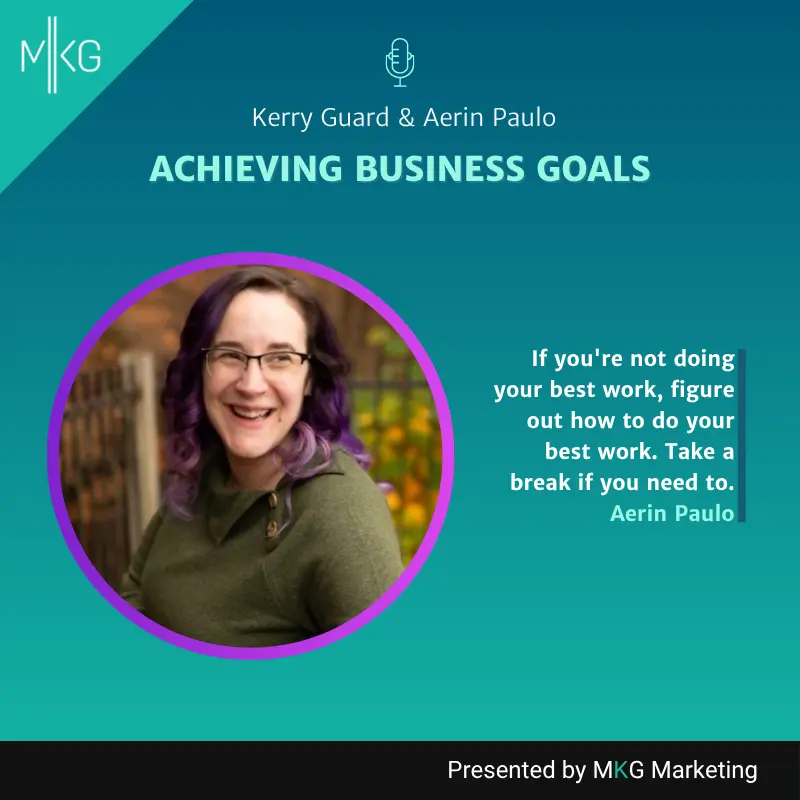
Aerin Paulo
Aerin Paulo is a marketing strategist who helps early-stage companies turn scattered ideas into clear, sustainable marketing that drives growth.
Overview:
Aerin explains how being the first marketing hire often means stepping into ambiguity, asking the right questions, and building processes before campaigns. She highlights the importance of understanding what already exists, identifying gaps, and using customer insights to shape marketing strategy and messaging.The conversation also explores the role contractors play in helping lean teams scale, why generalists are critical in early-stage environments, and how clear communication, documentation, and prioritization help prevent burnout while building sustainable marketing practices.
Transcript:
Kerry Guard 0:11
Hello. I'm Kerry Guard. Welcome to Tea Time with Tech Marketing Leaders. Welcome back to the show. This episode was brought to you by MKG Marketing, the digital marketing agency that helps complex brands build trust with their complex audiences via SEO and digital ads. Complex brands like Extra Hop Networks, a cybersecurity company that mkg, went on a seven-year journey that accumulated in a $900 million exit to Bain Capital and CrossPoint Ventures. Thank you, mkg. We are live on LinkedIn and YouTube. If you're here with us, say hello. We look forward to hearing your questions and your and answering all of them. It's the beauty of being alive. We want you to know you're here with us, and we want to make sure you're part of the conversation. So chime in. Chime in with me. Today is Aerin Paulo, a marketing strategist and leader. She loves helping early stage companies build marketing functions and teams, and she comes with a book of stellar contractors ready to go as the head of marketing at complyant, her previous company, she built out the marketing function focusing on taking a complex topic and creating a brand content and strategy that kept things simple and easy to understand for the user, she built and led a small but mighty team that was passionate about helping entrepreneurs and small businesses navigate the complex world tax Yeah, to say the least, she's been a team of many times. So she's learned a ton, but she excels the most in marketing strategy, communication, content marketing, go-to-market, social media, and demand generation. She is certified in agile marketing, meaning she's super organized, analytical, and able to pivot when needed. She's on a mission to help early-stage companies and startups build and scale sustainable marketing practices and develop nimble, amazing teams. Aerin, welcome to the show.
Aerin Paulo 2:04
Thank you. Nice to be here.
Kerry Guard 2:06
I'm sort of kicking myself for not getting your name right, because I grew up in a household of Depaolo, so I'm like, I just needed to drop the D, and I was there, and like, how did I mess it up? So yes, it happened as you do, as you do. So excited to have you here with me before we get into the heart of our conversation, which I cannot wait to unpack. You have joined companies, one after the other, as the first marketing hire and helped them build a full marketing team, and that journey to help others along the way. I want to know your story. I mean, that's sort of like what you do, but like, how'd you get there, right? Like, that's the brilliance of it all. So whether marketing found us or you found marketing, it's always an interesting, interesting journey. So why don't you tell Trevor and me hello, Trevor, thank you for joining us. Tell Trevor and me your story. Aerin, what do you do, and how did you get there?
Aerin Paulo 3:02
Sure, so I think, to answer your question, I found marketing, but I fell backward into it. So I was in college when social media was becoming a thing. I think our school was in the top 100 schools; the first 100 schools to get added to Facebook and YouTube were becoming a thing. And I was at school for this thing called New Media that nobody really knew how to define, but there were elements of film, photo editing, online storytelling, and all these different mishmashes of new media. And I really took to the Facebook and the YouTube of it all. And once I graduated, I got a job in retail and decided to ask them if I could run social media for them, if I could set up their accounts and post for them, and run their email newsletter. And they weirdly said Yes, I got the opportunity to start doing that, and from there, I was able to get marketing jobs. I'm from Central Maine originally, which is a pretty small local area, so there weren't a lot of job opportunities. So, as I got marketing jobs, I tended to be the first or the only marketing person. So it kind of just snowballed from there. And I kept getting the opportunity to build, which I found out I really like, so I keep doing it.
Kerry Guard 4:32
That's amazing. Let's talk about the startup energy of it all, especially being in Maine, which isn't necessarily known for its startup.
Aerin Paulo 4:38
See it? Nope, no at all.
Kerry Guard 4:43
But apparently, it is. Have you been remote all the time to find that startup scene? Or did you start in Maine at companies that were startups, what was sort of like that journey and transition from into those into those companies
Aerin Paulo 4:57
Yeah, so when I was in Maine. That was mostly small businesses, which you could call a startup, but there's no VC backing. There's no startup mentality. But small businesses aren't that far off. If you ask me, especially a lot of them, you have to convince them that they need to spend money on marketing. It's very difficult to get them to understand how important it is and that you can't; it's pay-to-play, and getting them to understand that was a challenge. And then I ended up moving to Connecticut eventually, and around here, there, there really isn't a startup culture either, not much of one, anyway, but I found a remote role through a startup or at a startup, and kind of got into the official startup world from there.
Kerry Guard 5:45
Was a little bit culture shocking, going from like a small business to an actual to a to a startup, or was it pretty similar?
Aerin Paulo 5:53
No, yes, and no. I think there are a lot of similarities between small businesses and startups, and the way that they're run and the messes and the fires that you're constantly putting out because nothing is well organized. But at the same time, I think the startup culture is very different. The expectations are much, much higher, the need to not even need, the necessity to track everything is really important. Not only do you know the KPIs for the activities that you're doing, the tactics and the channels, but you, you as a marketer. How are you doing? How can you prove your value to the executive suite and therefore the VCs, to make sure that you get to stay and keep going?
Kerry Guard 6:43
That's sort of like trying to understand, you know, I'm a small business, but I'm not a startup, right? I don't have the same necessary I have my own pressures, not necessarily the same pressures. I have, like a byproduct of pressures, right? Because I work with clients who are in the start, right, scale up stage, and so they have those pressures, and I want to support them, but it's not as direct as it is. And so in navigating that world and going from the small business pressures to that kind of mentality, what was the shift there for you, of like, how did, of how you sort of show up in the space? Was it like, was there a different kind of urgency? Was it like we got this? What was paint? Is it like a feeling picture for a second?
Aerin Paulo 7:35
Yeah, my experience, I think, was a bit unique. I actually felt less stressed than when I worked at the small businesses, and it was very much because of the group that I worked with at the company that I was working at. Unfortunately, it folded in September this past year, but they built with culture in mind from the start, and the founder had a very clear vision: like, I don't care when you get your work done; I don't care how you get your work done. I don't care where you get your work done. I want you to do your work. Want you to do your best work. If you're not doing your best work, figure out how to do your best work. Take a break if you need to. It was all very modern, and I felt empowered to do that. It was also one of the first roles where I was given not just autonomy but trust. I was hired to do a thing. I had experience doing that thing, and the founder and my teammates put trust in me that I knew what I was doing, and there was no micromanagement. There was no hand-holding necessary. It was nothing but support. It was a really good environment to be in. So I'm sure that's not the same for a lot of folks who joined startups. Unfortunately, I kind of wish that was everybody's experience joining every company, but I recognize that's not necessarily possible. So yeah, a little different, I think, for me than most.
Kerry Guard 9:02
How did you find so, you know, going from the Small Business sort of in person, how you said that you sort of, like, fell into that, that remote position. So did you just go online and start looking for jobs? Did you find it through a friend? Like, how did you make that leap? It feels like pre-COVID; mind you, it feels like a kind of leap to go into that and be intentional about it.
Aerin Paulo 9:31
So I think it was all kind of happenstance. I was fairly unhappy at the role I was in; all of those things I just mentioned to you were not really happening at that company, and so I was looking for new roles. We had just gone remote in March of 2020, and so I had been kind of like passively looking, but conveniently, when you're remote, it's a lot easier to look for a job while you're working. So I was able to do. That was actually really beneficial to my mental health, because I'm pretty sure it wouldn't have gone so well if I had stayed so. I ended up finding this job on LinkedIn, or indeed, or something, and I had a meeting with the founder, and she was great. I kind of knew it was a fit right off. She actually asked me, in my initial interview with her, what I did to keep track of my mental health and make sure that I was, like, in a good place. And I was like, That's a weird first interview question, but also amazing.
Kerry Guard 10:37
Writing that one down.
Aerin Paulo 10:39
And we just got along really well. It was actually funny. So she had, she was, it was for a head of marketing role, and at the time I was at like a marketing manager level, and we chatted, and she came back to me, and she was kind of ready to offer me the role. And I said, Look, I'm not really a traveler. Travel is a thing that I enjoy doing occasionally with my family. But I'm not. I'm not someone who wants to be on the road 1020, 30% of the year, and the head of marketing role that she was thinking of at the time was going to require that. And she said, You know, I appreciate that. You know that about yourself. And she went with somebody else come to find out they were working their own freelance job full-time at the same time as trying to do a full-time job with the company. So she came back to me and said, You know, I think we should try to figure this out. So she actually hired me on as a marketing manager there and gave me the time and the freedom to, like, grow, make mistakes, and figure out how to get to my next step. And I grew to the head of marketing role there, and the rest is history, I suppose, at that company, at least.
Kerry Guard 11:55
Yes to all that. I mean, I think on, you know, now that we're now that we're all remote, generally speaking, now that we're, you know, four years in post, I guess technically, three years post covid, mental health playing a really significant role in us, sort of putting our stake in the ground, of this being important to us, of what we're all looking for. It's nice to see that companies are leaning into that. So thank you to that lovely human who started that company and brought in people in a world that offered them that kind of support. Yes to all of that. I'm striving for that, that's amazing. Let's talk about where you are now. You got it. You were you, you had a bit of a break, and now you have found a new job. Congrats. Thank you. Your first weekend. How's it going?
Aerin Paulo 12:48
It's going well. I am. I actually found this at my last role as well. I'm stressed in a good way, which, like you don't want to feel stressed, but also it's because I see all of the possibilities. I see all of the things that could be done that isn't, aren't being done yet, all of the impact that I could make myself, or that I could help the team make together. And I think I'm an anxious person, unfortunately, by design, so that I am seeing all of these things, I'm like, yes, let's do them now, that's not how that works. So I'm very I'm trying to balance, you know, the anxious excitement and all of the things that I'm going to get to do with the reality of like, okay, at the end of each week, let's make a task list. Let's prioritize all those great ideas and make sure we're not trying to do all the things in a week, because that's when burnout happens. Let me tell you.
Kerry Guard 13:45
Yes, it is how burnout happens. And I love feeling the same way. I have a few companies I'm working with as their head of marketing, and I just want to, like, do it all. And they're slowing me down by design, and I appreciate that, because they want to get very specific things right. And it's, it's hard because I'm like, but let's go all these things we want to do, like, go time. And they're like, Well, yes, and there's, we get certain things about this, right? It's okay to fail in other ways. But like these things you want to get, like, okay, fine, you're right. So I love that, and I feel it. I'm with you, Aerin. I'm totally with you and the challenge. I'm feeling it. I'm feeling it. Let's talk about so you've joined this company. Are you the primary marketer, the only marketer who paints a picture of the team that you're on?
Aerin Paulo 14:39
Yeah. So I have a great former, now current colleague that I worked with a previous e-commerce company, and he pulled me on board. I am the first official, I suppose, marketing hire. They had some folks that are kind of like marketing adjacent, but it's. So this is a D to C E comm company that previously did a lot, or actually still does a lot, on like QVC and wholesale. So they're really just building this D to C arm pretty recently. So they have some folks who do marketing, marketing adjacent to marketing, very like things, but they're currently on a creative team, so they're not called marketing, right? So I'm the first official, like I am. I am a marketer. That's me. That's what I do. And I think we're trying. That's one of the things we're starting to figure out, like, how do we all work together? How can I help them? What can I help improve? Because I'm coming in from this position, I've been the first person a bunch of times, so I have, I know what to look for. I know what to ask. So far, it's been really good. Everyone's got amazing feedback, and they're being really candid out of the gate, which is great. That's kind of hard to find sometimes. Yeah, it's exciting. Everyone's been incredibly nice to like help.
Kerry Guard 16:02
Yay. More hands on board. Let's do this. Yes, in terms of starting out as the first marketing hire, which you mentioned, you've done a couple of times now, a bunch of times. Where do you start? You know you. Is it always the same channels, the same playbook, or does it vary, like, where do you figure out where you can make the most impact right out of the gate?
Aerin Paulo 16:30
Sure. So I usually start by asking a metric ton of questions, and typically that will be, do you do this yet? What exists here? What processes do we have for this? Is there one, and then I will usually ask to see any assets that they have that are relevant, like a brand book or something like that, and data that they can show me how things are. You know, if they already have social channels, for example, a lot of companies will set up their profiles and do nothing with them, or set up their profiles and do the whole spray and pray across them thing. So in those cases, it's helpful to look and see, like, Okay, did any of that work? So it's a lot of questions. It's a lot of digging into what exists and then looking for opportunities that I've seen work elsewhere.
Kerry Guard 17:27
It's the baseline, right? So, establishing benchmarks, yes, benchmarks, Fanta benchmarks, I feel like they get a bad rap. Yeah, is that fair to say that they get a bad rap? I feel like,
Aerin Paulo 17:41
I mean, I think it's like anything, you it's not the gospel. Don't take it as gospel. It's a guideline. It's a place to start, rather than starting with something instead of nothing. So I think if you look at it as gospel, then yes, I agree, they probably would get a bad rap.
Kerry Guard 17:58
But baseline, yeah, somewhere to like, say, I always find data is wonderful and useful if you can actually compare it to something. But if you're just looking at a number, we got our 2000 visits to our website, cool.
Aerin Paulo 18:17
Yeah. And let me tell you, those numbers are not necessarily available on the internet either for you to compare them to. So do your best, is my recommendation. Yeah. So you
Kerry Guard 18:29
need to compare them to something. So having those baselines in 2000 is a great start. Okay, great. Now let's look at next month and see where we go from there, right? So I love baseline and benchmarks as to that. So, where you said that you generally know where opportunities are. Do you have, like, obviously, every company is a little different, and so you'll have to play it by ear, to your point, understanding the lay of the land, but you've done this a couple times. So, do you have general places you tend to start out around the gate?
Aerin Paulo 19:06
Yeah, my background is mainly in social media and content. So those are the places that I typically start. And honestly, that's a lot of marketing. It all trickles down some way or another. So I usually look there first. I've done paid before, not long enough for me to feel confident that I'm an expert by any means. But I know you know a few triggers or levers you can pull for paid, and I'm also very comfortable asking other people who are actual experts for their opinion and going with that. So usually that might look like getting someone like a paid contractor, before doing too much with paid, because they're going to know more than me, so I'm going to take their word.
Kerry Guard 19:54
Yeah, contracts. Contractors are definitely a blessing. Let's talk about this. Thanks. We're getting into the people side. Design of it, in regards to the team you build. So you start off, it sounds like you know a lot about social, you know a lot about analytics, you know a lot about content. Do you consider yourself a specialist in that regard, or a generalist? Let's define those for folks.
Aerin Paulo 20:20
Yeah, I would consider myself a generalist in that I have never had the opportunity to focus on any one thing in a job, and I very often, because I've either been a team of one or I've been the person with the most experience across the most things, I've been asked to do things I've never done before to figure it out. So, you know, I've done email, and I did a Product Hunt launch a couple of times. I done events, all kinds of stuff, all over the board for marketing. So I would call myself a generalist. And I would say that's, that's generalist, is you've, you've put your fingers in a bunch of pies, to use a really weird phrase, and it's a specialist, would be more like there's just one guy, yeah, go figure it out. Or social, yes, I'm a figure-it-out.
Kerry Guard 21:10
I think there's beauty to being a figure it outer. Do you? I'm gonna make a statement. You're gonna tell me what you think, because I could have more experience here. I think there's power in going from being a figure it out or to becoming a specialist.
Aerin Paulo 21:29
Yeah, for sure. I mean, it translates right like you're you're figuring out, instead of figuring out an entire channel or an entire tactic that you've maybe never done before. You're figuring out something more deep or specific that can actually move needles. Yeah, I think that's fair.
Kerry Guard 21:51
And I feel like the channels have gotten more complex over the years, too.
Aerin Paulo 21:55
Yes, absolutely. I actually just was setting up a Twitter account for the company I now work for. And come to find out, I think they this used to be the case, and then they went back on it, and now it's the case again, but handles can only be 15 characters, and I it was news to me. It had been a while, I suppose, since I set one up, but Twitter is just like, I feel like that's the massive example.
Kerry Guard 22:25
Can't call it. The other thing, it is Twitter best to that when you're talking about being in general. So it's basically like being a T-shaped marketer, right? You know, you just figure out the stuff up here mostly, and then you have some expertise in an area or two, to your point, social and content. So when you're showing up to a new company, do you generally immediately go into social and content, because that's really what a company needs, and you know that? And then you layer in these other things in terms of contractors and what to bring in, or does it really? It really depends. And then you're able to bring in those content, you know, that contractor expertise and social, and content can wait, like, what are sort of your go-to initiators out of the gate? And does it change?
Aerin Paulo 23:11
Yeah, I think it depends. It depends on where the company is and how much they've got. If they've got nothing, then it's a pretty efficient use of budget for me to set up the things that I know well and get those rolling. If they've got something, then it makes more sense to me to do what I talked about kind of at the top, which is like, dig into who are you? Why should anyone care? What does that mean? What are we saying to who is our audience? Why did why do they want to listen to us? What are we saying and getting answers to questions like that, and therefore using that to drive, okay? What channels do we use to reach those people and how?
Kerry Guard 23:58
Yeah, I think that's a really important step, right? If, like, hopefully they have that figured out. But it sounds like that's not always the case, or they think they have it figured out. That's always my favorite, where they're like, this is our audience. But then you look at the customer list, you're like, is it?
Aerin Paulo 24:15
And a lot of companies at the size that I joined them at, not all of them, but a lot of them, have never really done customer research. So that not only have they never done market research, they've never done customer interviews, they're not even looking at the data they have. So, like all of the questions that get submitted to customer service, that's free marketing data right there. Like, what are they asking? Why are they asking that? Is something broken? Or do they not understand something we could easily educate them on? So getting gathering all that up and figuring out what we have to work with is important as well.
Kerry Guard 24:51
That's so cool. That's so cool because it's the stuff as marketers we see, like a no, it feels like a no-duh moment, but as a marketer, you wouldn't know. To use it for that, if you so yes to fresh eyes, not being so key and important. So let's talk about the transition that happens, right? So you come in, you gather the data. You understand landscape, you understand what channels they need to activate and what you know where what makes most sense for them, whether it's content and social or layering and some paid How do you at what point does it make sense to get a little more specific, I'm not saying like, fully, full on, all of a sudden, you're going, like, overnight, you're going from a one man, one person team with a bunch of contractors, to all of a sudden having a 15 person team of a bunch of specialists. Like, let's build that bridge for people, because it needs to be a thoughtful transition. So when do you start thinking about, oh, we need a person to do, like to bring in-house, to do a very specific thing? Is that, pretty early on, do you hire generalists begin with, sort of talk me through those initial steps, like it starts with you, and then what?
Aerin Paulo 26:07
Yeah, so I think it depends on the structure and the plan. So not at every company that I've been at was I in the works to become leadership. So if I, if I'm just a manager, and they're not planning on making me anything above that, then it makes sense to have you know you're effectively like a player-coach. You're I see slash management. So it makes sense to do as much as you can yourself, and when you are feeling stretched too thin, get support, whether that looks like a contractor or it just like a specialist, or a marketing specialist, the title or marketing coordinator, or whatever makes sense. I will say that in the year of our Lord 2024, where we have all of these layoffs for almost two years straight, and all of these amazing humans just getting let go for what feels like no reason. I am leaning towards contractors for as long as I can, because I don't ever want to hire somebody I can't keep. So I feel like that's a that's a good start, and that's probably where I'm going to go as often as I can, just because that doesn't. That isn't to say, by the way, because I don't, I don't tend to use agencies myself. I tend to lean more towards individuals, so that isn't to say that that individual couldn't become a full-time hire. In fact, that's a perfect scenario. I actually almost had that happen a couple of times in my previous role, which would have been super cool if the company had shut down. But I think treating contractors like their employees to an extent, obviously, you can't control their time. They're still their own boss, etc, but including them in things, giving them information, you will get a really great relationship, and you will get a lot of what you get from a full-time employee, just without the full-time hours. So I think it's valuable to do contractors as much as you can. When it makes sense, you hire another generalist, but potentially someone a little bit more junior, so that the marketing manager could do a little bit more of like, here's what we're doing and why, and the junior associate can do the things. And then once you're there, you start looking at bandwidth, and you start looking at return on investment. So are the freelancers or the junior associate, whomever are, spending too much time on something that will actually move the needle on the revenue side. How much is that costing? At the point where it makes sense, or it makes no difference even, whether you have a contractor or a full-time person, then it makes a ton of sense at that point to pull someone in-house, because there's a lot to be said. Where about having someone on the team versus them being a contractor as well has benefits to both.
Kerry Guard 29:13
But you said so many things there that I want to unpack. So let's talk about the coordinator first, because I think this is a lost call. It's a lost role, because I feel like I'll speak for myself as an agency owner, right? So we leaned into it as a small company, hiring experts, primarily because they can hit the ground running, and they can go, and there's no hand-holding that's sort of necessary in that, in doing so, though we left a generation behind. We didn't bring people up and through. And so there was a time, to your point, Aerin, there's been a total layoff. So it's not so much at this very moment, but there was a time when hiring felt impossible because there was a huge gap between i. Experts do not want to leave their current jobs because things were so unstable, and then not having a pull to pull from because we all were hiring experts. So I'd love that you're talking about the coordinator. Let's paint that picture a bit better in terms of what a is, it somebody right? You know, how many years of experience do they have? Or they write at a college. And then what types of things do you do? You personally lean on a coordinator for?
Aerin Paulo 30:31
Yeah, I think it depends on the company that you're working at and how much flexibility you have if you if they're not expecting you to do all the things, and you can focus on, let's use social media as an example, because it's easy. If they're not expecting you to be on every channel and post to every channel. They're allowing you to focus on one or two channels and get really good at doing a good job on those. Then the coordinator can come in out of college. It depends on your bandwidth of yourself as well, right? Because it depends on how much training and teaching you have the ability to do. I really enjoy that piece of it, so I didn't mind. We had a few interns in my last role that we were helping learn the ropes effectively. But then if you don't have the bandwidth to train and teach quite as much than a couple of years of experience, I would say, it works just fine.
Kerry Guard 31:25
Yeah, I think that's really important, because it is huge. It doesn't feel like a huge difference. But somebody straighta College who's never had a job before where you literally have to tell them everything that they have to do and like minuscule step by step process is night and day from somebody who's had at least a year of experience, who are starting to get that figure it out, mentality of anticipating and taking things to that next step, I think is, is very interesting to your point. Aerin, I don't think it matters which way you go. It's just what, what's right for you, and the company and the budget are all things to take into consideration. Let's talk about the contractor piece, because, to your point, and I agree, oh my gosh. Are there some phenomenal humans out there right now who are in between and are, you know, while we all can't hire full-time right now? There are lots of folks who can jump in. So I Gen I'll speak for me, and I'd love to hear from you. Obviously, is for me, the contractor piece is the specialist. I don't need a generalist. From a contractor standpoint, I needed somebody who can come in. I'd rather have a couple of different contractors all specializing in different areas, because I can control the hours, than bringing in one contractor who can do a couple of things relatively okay. Is that fair? How do you do that?
Aerin Paulo 32:58
Yeah, I think that there's something to be said for bandwidth here as well. I think I haven't done this myself, but I've thought, I thought it would be interesting to, when you join early on as a first marketer, or something similar, to hire a generalist contractor to get their thoughts on what the company should be doing. So, not saying you don't do that work as well, but you kind of like, what did you miss? Like, it's two heads are better than one type scenario, and that can be a temporary situation, or you could bring them on to do something more specific once you get their feedback, because that's the nice thing about generalists, is that theoretically, they can become a specialist if you need them to, they've done email, therefore you can say, Okay, can you focus on email for us, you've already got this person. But I do agree that that's the typical route I go as well, which is, like you have, we have a PPC specialist, we have an email specialist, we have a social specialist, and contractors. So I depend. Again, that's, that's, I think I saw that the other day. That's marketing, a marketer's favorite phrase.
Kerry Guard 34:12
It's okay, it is. It really is, and it does. I think what's fascinating and helpful in these conversations is hearing your what, what you've done in the past to work for you. So it's helpful to see, like, Okay, this is how you've used these particular roles. And I love that you're talking about contractors in particular in a way that's like a gut check, especially as a single, as a single hire, like, you know, as an island, you need a thought partner. You need to bounce. We are out loud. I don't know about all marketers, but generally, I feel like we're out loud. Processors don't need to hear things like, but together, am I correct through it? Yeah. Talk through it. Hear their points of view, their expertise. Yes, the other thing I heard you say that I really loved was when you're thinking about contractors, you might need a specific thing, but you might find a generalist who can start there, or maybe they see a bigger picture, and then they hone in there. But there are interesting ways to start thinking about generalists versus specialists, and that it's not necessarily a person being a generalist or a specialist, but a thing being a general strategy, overarching navigation, and then being able to hone in on a specific area to get something done. So it's an interesting way of thinking about the conversation in that way, as well as what I hear you saying, which I love, in terms of that first hire. When you do start getting more specific, let's, I feel like content is probably a really great area to start, because it's so time-consuming. Right to do it.
Aerin Paulo 36:00
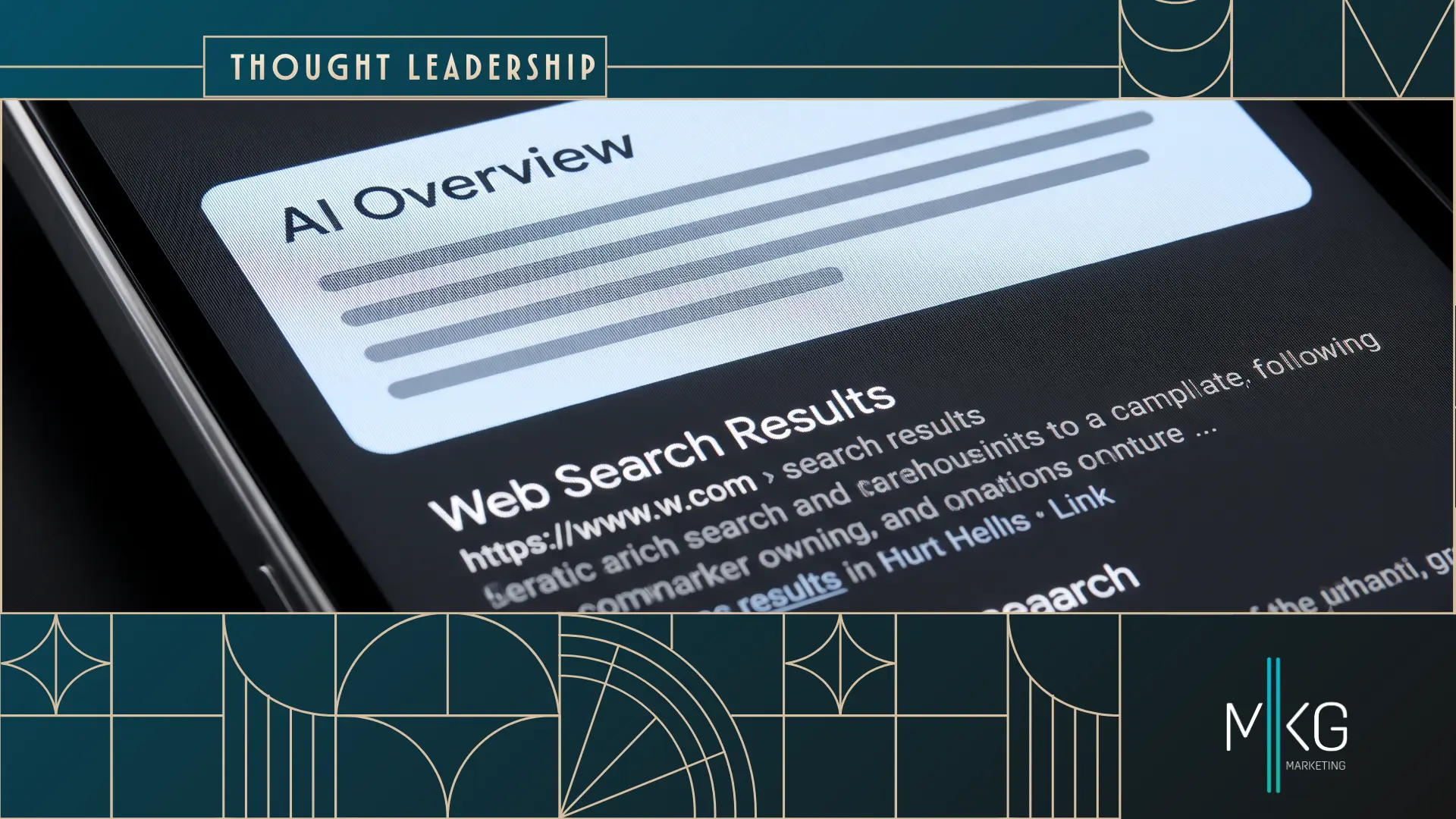
Well, yes, and that is an area that I like. I can write. I enjoyed English in all of school, but I wouldn't call myself a copywriter, and I would not say that I am anywhere near as good as the contractors that I've worked with, either. So I tend to do for myself. I focus on the what we are talking about. How do we get there? How do we talk to these people? How do we answer the questions? How do we educate them, the question, the big questions. And then the contractor tends to help me with, you know, maybe they can help with what the best channels are. They'll, they'll be a gut check for me. They are very often, if they're not experts in SEO, they're knowledgeable enough where you can do something good. And SEO, I feel like you would know. I feel like it's been changing to the point where you don't need to be quite so technically knowledgeable about it, because the whole point is search intent. The whole point is getting the right content to the person who needs it in the right place. And AI is doing weird things with that. Now, the point being, don't rely on me and oh no, no, just like, it's going to be real interesting to see what that does to content, considering what's showing up above the fold now and then ads, and then organic contractors, the content contractors I've worked out with have all been fantastic, and they all have they're almost generalist, specific, specific, generals or something like that, where they like, they know a little SEO, they know a little strategy, they know a little content, they know a little analytics and distribution, and all of the things that are encompassed under Content, which is very helpful to someone like me, who's I've got a bit of expertise in some of those areas, but not in all of them. And again, when you're a solo marketer, you need gut checks. You need folks to talk to. I think it's my community, my marketing community, has really grown, really just like in the last six or eight years. I didn't know any other marketers for so long, and I can't tell you how lonely that was and how hard it was to get work done. I relied on the internet so much. HubSpot, blog, like your friend.
Kerry Guard 38:18
I don't know what the catalyst was. Maybe it was LinkedIn, but it does feel like maybe it was COVID. But the community has definitely stepped itself up in terms of how we navigate the marketing world and lean on each other a bit more, which I am so grateful for. It's how we met. We met the marketing women's community. If you are a woman in marketing and you're not part of this community, hop on in. I will share a link. Yes, that is fantastic. The women who run it, we're actually on my podcast, Gabrielle and Natalie, wonderful humans who've built a wonderful network. And I think that has been an absolute fuel to how we find each other and find great people to work with. I just found somebody, I don't know if you know Matt Delman. He was on my podcast while ago. He's also a content writer in cybersecurity, specifically. I know you're more in the B2B SaaS and tax space, but these worlds collide all the time. Anyway, he just made a reference for me to somebody in his network who's a PPC contractor who's amazing. I can't wait to work with this human, so yes, to our network becoming so important, and thank goodness for that, because Google could only get you so far back at the desk. So yes to that, something that's coming up for me, Aerin, as you're talking about all these different channels, all these different activation areas, is I as one person. I. I don't know how your men are managing it all. You got a little PPC over here. You got some social channels activated. You got your content creators. Like, how is, how is one person? Are you keeping all of these things going? Are they all happening at the same time? Or do you generally, like, layer them? Talk to me about a little bit about your process, like, how you get these things up and running? It feels like it's all happening at once. I don't know if that's the case, though.
Aerin Paulo 40:28
Yeah, I mean, simultaneously is probably fair to say I, because I'm an anxious person. I got really good at reminding myself to do things because I was very worried I would forget, and that has somehow translated into me being very, very organized. So I typically have a project management system, whatever they allow me to get, or whatever I could get for free, depending on the budget, and I try to put everything in there. And since, like you mentioned, being agile certified and learning more about how that system works. I will very often do like a now, next, later list, and then have like a backlog, future log type thing for all my ideas, because I want to do all the things. And when I get contractors in the group, I add them to that, and we start having stand-ups. I typically, especially if they're at least part-time. If I have, like, a 20-hour-a-week or more contractor, we have a one-on-one, and then I try to do a stand-up with everybody. So all the contractors, we find the time that it works for all of them, plus me, or all of them, plus, you know, the couple other humans on my team, plus the contractors also. They're not humans, but you know what I mean? And we try to have a one-on-one and a stand-up every week so that everyone knows what everyone's working on. It's the opportunity to chat and get to know each other, because you're still a team, even if you're not officially on the team. It's an opportunity to ask for support. Sometimes you have to, kind of like, bug people to ask for help, and that's a thing that's a good reason to get in there. And it's also a really good time to bring up blockers. Like, is somebody else not getting something done, which is blocking you, or is there some red tape that I could help cut through? So yeah, to answer your question, a project management system. I'm also a huge fan of notion, or some similar tool for documentation, so that the next time you bring a contractor on, you have it all written down and you can just share it with them. Yeah, it's just been a lot of Yes. It's been a lot of anxious organizing, I guess is what can say about that?
Kerry Guard 42:41
Yes, I think that's so key. I love that you bring contractors in, too, in terms of a team-oriented way; I do the same thing. I have them join stand-ups. We have a retro every week, every other week, that I have them join. I even have them join all hands. Like, here's what's going on in the company, and here's how you're impacting it. Like, I think that's so key to making sure that they don't feel, I don't think, like contractors are just, they're not outsiders. They just have less hours, right? They y'all still need to get along and work together. And so I love that you're think that you plan that way, and you do the strength, you do the stand up, you do the one on ones, and you bring them into the fold. I think that's necessary to have a productive, organized team. So hats off to you, Aerin, for figuring that out. In terms of one of the questions I had for you in terms of writers, and I think this is hard to do, is capturing the brand's voice as a contractor.
Aerin Paulo 43:53
Yes, I agree. It's very hard to do. So the most experience I have doing that is in my most recent role, where I was at the startup for three years. I You can ask. I don't know if you've met Jess, but she was my contractor at compliance, so she can tell you more, but I think some of the things that helped us were getting super clear on the brand voice. We had a four to six-page document that talked about, yeah, it had examples, like, that's the thing. If you can visualize it or duplicate it, then it's a lot easier. So it wasn't just like, we're friendly, we want to educate people. It was, in fact, I think this was actually the brand voice we are, the aunt or uncle that you look forward to seeing at Christmas every year, and is an absolute expert in their field. They're super fun-loving. They're very relaxed. And you know that you can talk to them about sports or your kids, or you can ask them about their expertise in. In my case, tax, and they will totally give you no BS advice, and they'll break it down in a way that you can really understand it, rather than using a lot of jargon or confusing talk. So it was that specific. And then we would have examples, and we would say, like, here's what we don't want, because that's really important as well. And so we worked together. I believe Jess was a part of that, and we built out that document. And then I try very hard to give autonomy even to my contractors. I don't want to micromanage anyone. I want to. I'm holding people accountable, of course, but I don't want to, like be looking over your shoulder. So it's the first, you know, however long it takes for them to get comfortable with that voice, I or someone on my team is reviewing their work to make sure it fits, and then eventually they get the hang of it. You don't need to do that. You can spot check if you want to or if it feels necessary. But the idea is, they've become enough of an expert where they can switch gears. They have this document that you've built out that's really clear, and you also ask them regularly, " Is there anything that came up that felt unclear or that we should add to the brand document? I think those things make it better. It's not going to be perfect, because you're right. Being in-house is really helpful if you're a content writer, but I think that's a good way to go.
Kerry Guard 46:23
I love the like, aunt uncle piece, like actually attaching it to sort of a persona, like a person that you could feel like you were sitting next to and having a conversation with. Like, that's so cool. I'm thinking about that for a brand that is, I will ask that I feel away. I'm totally sealing that. That is fantastic. Aerin, I love this conversation, and I could clearly keep going help people make that leap. Now they've, they've been the first hire. They've brought on their hoard of contractors to help them get started. They're on their way now. They need to scale, and they need to go. Do they keep staying the course with bringing in the contractors, maybe a higher here or there? Or do they have to switch gears?
Aerin Paulo 47:16
It depends. It depends on where your company is. If you're a startup and you're you just went for your Series C, and you have a bazillion dollars, then it's a lot easier to say, take a look at the contractors. Ask them how much more they could be doing if they were doing it full-time. Assuming you trust your contractors, they will give you a good, solid answer on that, and you will be able to do the math of what's their hourly how does that translate to 40 hours a week, plus benefits, and then figure out the math of this that, if that makes sense, otherwise, I mean, honestly, if you can go and find contractors that will stick with you For a while, then that's great. I would keep doing that. If you have the bandwidth and you've triple-checked the numbers so that there won't be layoffs in the future. Ideally, then, I think hiring on a couple of in-house folks is always helpful, especially just because you have someone else available to help or answer questions or do a thing at the same hours you're working, for the most part.
Kerry Guard 48:23
That's a good point. That's not something we've touched on. Let's, let's, let's wrap this up with that. In terms of how you navigate the accountability piece with contractors, it's a lot easier to hold internal people accountable. They're subject to working with you and only you of everything that needs to go on within the company. But when you have people who are also working for other clients and their hours are a bit restricted, how do you communicate in a way that makes sure that those deadlines are hit? How do you communicate in a way that's probably a bit more asynchronous? I'm assuming that the project management system is a huge piece to that, but
Aerin Paulo 49:01
Yeah, slack in the project management system, so we communicate on Slack, and I personally, for my team, always set the expectation that, like, I do not expect that you're sitting on top of Slack waiting to answer me. Like that's not even for my full-time people, I'm not expecting that of you, but I would ask that you respond in a reasonable amount of time, typically a few hours. And for contractors, the ask is basically like, I'm going to leave you messages. I do not expect you to respond immediately, but I would appreciate you answering within a day or so, assuming we haven't already talked about you're going to be off your it's a weekend like those situations, and we include them in the project management system so that they know what to do when, if something's missed, we used clickup, which I really enjoyed, so it will send me an email, and then I can touch base with them and say, like, what happened? How can we prevent this in the future? And in my case, our contractors were so fantastic that we kept a lot of them for a long time, and they had their own OKRs that they were kind of responsible for, obviously, with me as a backup. So our PPC folks, they were trying to hit specific numbers, specific users onboarded through the ads. So they spoke to that every time we had a meeting as a group,
Kerry Guard 50:24
I love it. Wow. That's a lot of trust putting that on contractors to actually own numbers, I mean, as vendors, that happens to us, but I guess it's similar. That's awesome. I think that again, that brings it into the fold, that makes them feel empowered, that holds him accountable naturally. Oh my gosh, I love this conversation. And Aerin, I am. Ah, it's so helpful to just think about a different way to do it, especially when you're in a crunch right now, where there was probably a ton of layoffs that happened, and you went from having a whole team at your fingertips to being a team of one, and how you might navigate that. And this is a brilliant way to think about this lovely web of contractors that you bring in on very specific hours to do very specific things, to get things off your plate, you are don't have to do it all. It's really hard to like, navigate, and to feel you don't have to do it all. It's so true.
Aerin Paulo 51:24
I think getting to the point where you're comfortable calling out when you're overloaded is really important as well. Hopefully, you have leadership that supports that. But even with contractors, sometimes you can't do it all. Sometimes things have to be deprioritized. And when, inevitably, when people come to you and say, Hey, can you do this thing? Getting comfortable saying, absolutely, what can I push off in order to get it done? And also, when do you need it? By asking for dates, ask for dates, and ask for prioritization always and every time, very helpful. It's so helpful.
Kerry Guard 52:00
I'm terrible at that, and yes, to the importance of that. So, about Aerin, where can people before I ask you my last question, we do my people's first question? Where can people find you? Where can they learn more about if they want to become a contractor, maybe with you. What's the best place to get in touch? LinkedIn, yeah, good.
Aerin Paulo 52:20
Good home base for us all. For us all. My other stuff is all personal because I have a kiddo, and I keep that private for him.
Kerry Guard 52:29
Yes to that, yes, that I love. Ah, Aerin, last question for you before you are more than a marketer. In 2024, we've figured out this COVID thing. It's here to stay. We're navigating it. It is what it is, but we're traveling the world is open again. Remote work is here to stay. What are you most looking forward to in this new era, this new dot?
Aerin Paulo 52:59
That is a great question that I don't have because it's the answer is not nothing. I know that I you know, I am trying to. I don't do New Year's resolutions. I do words, focus words, and this year, my focus words are curiosity and balance. So balance to figure out, making sure I have that work-life balance. I'm signing off at the end of the day and not thinking about work, that sort of thing, and curiosity, both in learning new things and also questioning my own mindset when I'm thinking, you know, when you catastrophize, think about, why are you, why are you doing that? Does it need to happen? That sort of thing? And those words are, I'm hoping, going to help me grow as a person, maybe get out of my comfort zone, and do something interesting. I don't know what it is yet, though.
Kerry Guard 53:52
Well, I'll follow up with you and find out, because that's important work, and it's hard work, and I commend you for putting those words to work and figuring those out. It's yes to that we all, we all need to be doing both of those things, and good for you for putting intention behind it. Aerin, I cannot say it enough. I'm so grateful for this conversation. Thank you so much. Thank you, me too. If you liked this episode, please like, subscribe, and share again. This episode is brought to you by mkg marketing, the digital marketing that helps complex brands build trust with complex audiences through SEO and digital ads. Is hosted by me, Kerry Guard, CEO of MKG Marketing. And if you'd like to be a guest, ping me. Let's hang out. I'd love to have you on the shelf.