Chloe Addis
Chloe Addis helps global B2B technology companies scale demand generation across international markets by combining localized messaging, strict data compliance, and human-centered brand strategy.
Overview:
Chloe Addis breaks down the realities of running global demand generation across 60 countries and 32 languages, emphasizing that international marketing requires deep cultural localization, nuanced messaging, and strict region-specific data compliance rather than generic translations. She discusses how Headley Media balances compliance and tracking in an increasingly cookieless landscape, highlights why zero-party data like form fields remains crucial, and explains how her team built their strategic podcast, B2B Marketers Off the Record, to drive authentic human connection, build brand trust, and gather real-time market intelligence in an AI-driven landscape.
Transcript:
Kerry Guard 0:09
Hello, I'm Kerry Guard, and welcome back to Back on Track. As your host here, I like being in front of the camera, which is super fun. But more importantly, I really love being behind the scenes, where I run MKG Marketing. We're a demand generation agency for B2B tech, and we do it through two levers: search visibility optimization, where we help you get found in SEO and AI search, and paid ads visibility and demand working together. So, a conversation about building exactly that across 60 countries in 32 languages, that's right in my wheelhouse, and I've been looking forward to this conversation because, here's the thing, most global B2B companies get wrong, they treat international demand gen like a numbers game. Same generic campaign translated once, blasted across every border, and then they're surprised when engagement falls off a cliff. Hmm. My guest today has built the opposite of that. Chloe Addis is head of marketing at Headley Media, where she runs demand generation across seven tech verticals and 30-two languages for an audience spanning the globe. She's also the co-host of B2b Marketers Off the Record, so she's living the corporate media shift from both sides of the glass. She's worked partner marketing alongside retail giants, and she thinks about audience trust and data compliance at a scale most of us only read about. Chloe, welcome to the show.
Chloe Addis 1:32
Wow, thank you so much for having me. What an intro!
Kerry Guard 1:37
I'm so glad you're here. Yeah, that was a lot. I'm working on my messaging and my intros, so yeah, I'm definitely like still figuring out my own messaging. I I don't know how you feel about this because you're it's you're in an interesting spot, sort of working for a media and marketing company and also doing the media and marketing for that company, and it's
Chloe Addis 1 2:03
yeah.
Kerry Guard 2:03
it's hard to do it for your own shop. I find.
Chloe Addis 2:06
I think so. Yeah, I mean, there's all of that like transferable knowledge, and then I mean, exactly that. There's so many agencies out there, aren't there, that whose marketing for themselves comes last. It's just such a common thing, but no, you're right. Yeah, it's very meta doing the marketing for the marketing. Yeah.
Kerry Guard 2:29
exactly, exactly. It's so much easier doing it for our clients. It's so much harder doing it for ourselves. I find so I'm grateful that you're here today and you're gonna help me out because I am, I'm on the struggle bus. Before we get into it, quick warm up, quick warm up round for anyone who hasn't come across Headley Media. Paint the picture for us. What do you actually do, and who are you trying to reach?
Chloe Addis 2:54
Yeah, so Headly Media is a content syndication lead generation company, and yeah, we so we reach we work with technology companies. So we're lucky enough to have our own brands that are dedicated content libraries for across seven different verticals of tech. And yeah, we talk to we our those brands cater to technical professionals, and they we we essentially work with marketers in technology companies to help them reach their audiences.
Kerry Guard 3:32
I find marketers are the hardest to market to too. Am I crazy? Like
Chloe Addis 3:36
they, yeah.
Kerry Guard 3:39
We know too much.
Chloe Addis 3:40
We see through things. They're like, "Oh, you're doing this because it's like an age-old technique, and you're like, "Damn it! But yeah, I think that absolutely they can be the hardest. But that, I think, I try to look at that as on the positive side, where like you know, okay, they're they're bringing the best out of me. I've got to do my best work because I'm talking to people that know the game, so they do know the game.
Kerry Guard 4:03
I love that, but and I agree. There, the I talked to Jane Sarah a few weeks ago, and she she said something very similarly about how she does feel like marketers are in the same boat of helping other marketers out, and that there is that sort of camaraderie that sort of happens of like we get it like you're trying to do your own marketing and we are marketers and like we're all in this together so I really love I love that perspective that's that's lovely use it across seven verticals in 32 languages when you say demand gen at that scale what does a normal week look like for you I have to imagine the context switching is a lot
Chloe Addis 4:40
well so. yeah, and obviously, you know, it's not just me at the company, but you know, so it's what is essentially those statistic we call them our stats, and we joke about having them sort of tattooed on our arms with the first two languages. And it's over kind of 300 websites, 60 countries, etc. But those-that's essentially our our product offering of of what we can provide, essentially for for marketing campaigns to reach those audiences. So it is huge, and it's grown from you know the these engaged audiences, like I said, kind of on the technology front. So, yeah, we're we're we're very lucky to be to have those audiences that are engaged and kind of working across that. Yeah, so so day to day, I think it's it's campaign management. I suppose is is the main what the day day to day looks like, which you know I guess a lot of people can kind of relate to if they're part of a team or you know regional marketing manager or you know that kind of thing. Just or kind of on the smaller end of the scale, you're trying to do it all.
Kerry Guard 6:00
Yeah, so many marketing teams these days are lean and mean for sure. Yeah, in terms of the the you know yet this is the offering for these different countries in terms of being in these places, but I imagine you have to actually market there as well. Do you have teams in every country? Are you leading? Are are is your team from the UK sort of leading the charge? How's that structure in terms of marketing to these different these different countries? And how does language play a role?
Chloe Addis 6:36
Yeah. So I think to focus on the on the language element of it, so yeah, how how we're set up is our focus in the UK, and then we are running these campaigns in in country, in language, and so I think really the conversation for me is in that is in that area of okay, is like you know people assuming at the very basis, it's like, yeah, I'm a regional marketing manager, and then you just translate what you've got, and that will work in the local territory. I think, I suppose, to to kind of get into it and unpack what I think you're getting at, which is like, what are the challenges? What are the like? How do we do this day to day, yeah, and that sort of comes back to like recognizing that there are huge cultural like differences that you know something that works for you in wherever you're based. But you know, say say say it's US, say it's UK. That those languages don't. It's not just about translating the language. It's you know, does it especially when we deal with like technology content. So you know, those that even that kind of niche language is that much more specific. So does it translate okay in terms of the actual language? But does it mean like is it does it mean the same thing? So we've got a whole thing about learning your audience properly, like you know, learning and and and having that platform with which to reach those audiences from you, and and kind of looking. I guess one of the main things that I would say is, or one of the main challenges to overcome when you're looking to launch in a new country or region, whatever you're kind of looking at, is what assumptions are you making that you know you that are going to kind of come back and bite you? Because I think there's there's a lot of of value assumptions of kind of you know, and you just don't know like really to get down to it. You can be focused on the wrong content. You can be focused on the wrong people. Like it can be completely different buying group for a different country. It can be like you know made up of of genuinely different people, different job titles, or whoever it is that you're trying to target, and they can want different levels of information. You know, something that lands very well in the US may not land very well in Germany. They might want much more technical content, for example. And that is, yeah, that's before you then consider all the regional regulations, and you know what have we got to do to be able to fully be compliant in these regions and countries. So yeah, there's a lot to it.
Kerry Guard 9:36
Yeah, there's definitely a lot to it. I don't know that everybody always thinks about the compliance part of it, and you know, especially when you're talking about you know the EU versus the US, and then in the US you have compliance in different states, and then
Chloe Addis 9:56
yes.
Kerry Guard 9:57
the UK has got compliance versus how the rest of your. It's yeah, it's granular
Chloe Addis 10:03
and it's constant. It's constantly changing as well. You think you know it, and then it's like yeah, like you just mentioned, the states have another update, and then things are different in California or whatever, and you're just like right, okay,
Kerry Guard 10:18
yeah, yeah. How do you keep up with it all? I mean, to your point, it is constantly changing, and every place is a little different. So I feel like most people. I we actually this is perfect timing. I was actually sitting down with a compliance lawyer because my husband built a product, and we're in Europe, and so we want to make sure that we are compliant and all these things. And she's like, "You're already thinking ahead, because most people just go to this website and download these forms and check the box that they did the thing and they posted it to their website. So you actually thinking about what you know what the forms are and what they mean and what you're actually agreeing to is is well above and beyond. Are you finding that in in what you're doing as well, where there's those those folks who are just trying to, yeah, you know, check those boxes versus, you know, what's sort of the difference between checking the boxes and actually being compliant? Where do you see those gaps and those holes of, of where what people might be missing?
Chloe Addis 11:14
Yeah, I mean, it's huge. It's such a big thing, and like, luckily, it's not just me trying to deal with that on our side. You know, we've got teams devoted to this, and yeah, it's not just terms and conditions on your website, as you're kind of alluding to. There, it's it's a whole lot more, and yeah, every country and region needs to be absolutely dealt with. dealt with in in the way you know, for example, use Germany again. Have like double opt-in when you're you know generating leads, and and here we can't just rely on, you know, you need to have the the data processing, all of that documented. You know, is it legitimate interest? All of these kind of GDPR and like post Brexit era data compliance things, but yeah, luckily it's it's it's not just me that's dealing with it. But I think to touch on a point of the business and the industry of kind of lead generation in general, it's a real. I think you know it's definitely something that marketers need to be like at the forefront of their consideration when they're looking to, especially when they're partnering, like when they're doing their only generation. Absolutely, you know, firsthand they need to make sure that they have got whatever they need in terms of compliance and consent boxes checked. But especially when then working with a third party data. handler, supplier, processor-that those things can can get missed, or the the the waters is like you know lead generation is is vast. You know that they can def the mud the waters can get muddy. So it's it's kind of part of our, like the the way that that we kind of work and have the the transparency of this is built in from the beginning, with kind of you know the forms essentially is is where it where it happens and the that consent piece because it's yeah it's getting I mean it's it's it's huge, huge, hugely serious. But also, you know, there's a lot of places like if we if we bring it out less focused on lead gen and focus on kind of general marketing, there's a lot of places across the funnel now where you can be, you know, generating leads and interacting with people where you have got a loss of that information and the data and the tracking and like kind of where they've where they've come from. So I think at the point of validation and like you know generating a lead or anything like that, you really do need to be like right. Okay, I've I've got permission for this as a as a full process.
Kerry Guard 14:00
I was going to ask about data because I think that's probably why people don't do the due diligence because of how much data you lose, and because people can opt out and they do opt out, right? Yeah. So how are you balancing that on your end as a marketer of making sure that you are compliant and still tracking to make sure you have enough data to be able to make decisions.
Chloe Addis 14:32
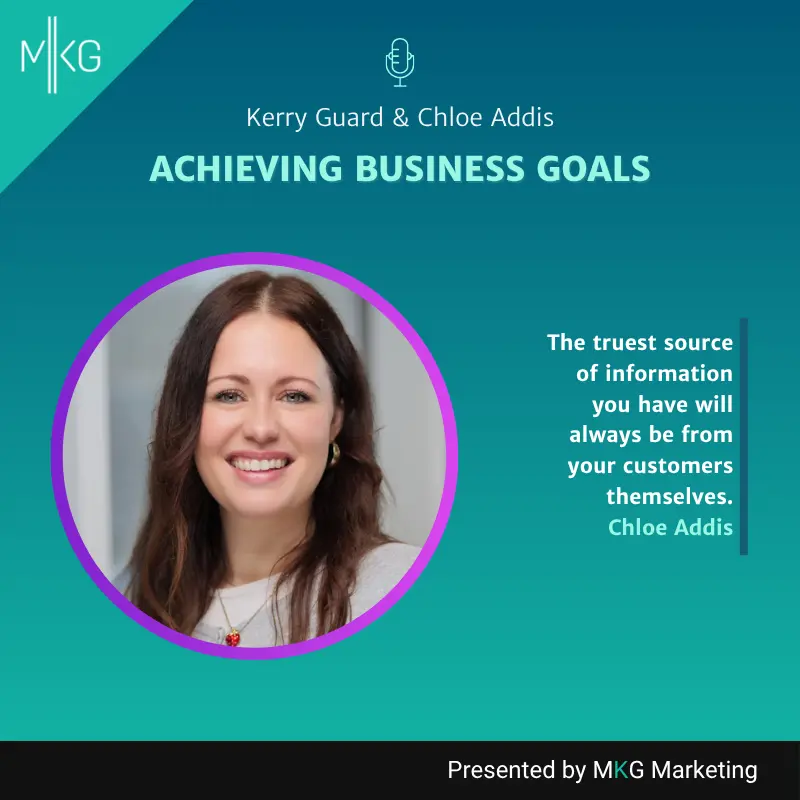
Yeah, I mean, I think it's a huge, it's a huge topic, and in some cases, it is it is a headache, you know. And in terms of like tracking through the website and things like that, there is for for what I'm seeing, kind of like you know Google, Google Analytics, and and things like this. There's a lot of information, like you know the cookie cookieless era, as we're kind of moving towards. Etc. So it's not it's it's not simple. I think that the one is something that I've always heard kind of about never forgetting the fundamentals of marketing, being that you know the truest source of information that you have will always be from your customers themselves, your customers and prospects, giving you that firsthand information. So whatever you can do at any stage to try and capture that, I think is great. Obviously, I'm not. It's not just to kind of perform in every single like you know. I'm not about creating barriers, but you know, if you want to be able to track, and you want to know where that prospect came from. Ask them. Like I think one of the most valuable things we have is just, you know, that that we're operating is on the bottom of our contact us form. We still have. Where did you hear about us? And that's kind of as I look at it, I'm like, you know, I've got all these other information sources, but that I know, like I trust more, and I do understand that if I think about it from my own point of view, and I was saying, "Where did you hear about me? I'd be like, "Where was the last place? So it kind of might be skewed by like last touch attribution, probably. But I think it's maybe like essentially you're asking them where's the most important place. Like, where did they kind of convert from? So it gives you some information, but certainly from them is is is hugely valuable.
Kerry Guard 16:32
Absolutely. I mean, you're like the fourth person recently to bring up that form fill and how important it is. I had a person on my podcast last week who he was the first person to say that he didn't care about that field and that the most like because he had figured out attribution with down to the UTM code, but I do think that even with those, there's compliance challenges and missing data, and so especially when you step out of the U.S. So I wasn't, I should have, man. I'm thinking of all these questions I want to ask Chris now about how he's navigating the global aspect of like where he's marketing. I'm gonna circle back up with him, folks. So stay tuned on that. But I do think in the meantime, back at the ranch, having that form field is still something we all could definitely be doing. I talked to somebody last week, and she said that 60% of her conversions, her customers, are coming from SEO and AI search, and she knows this because of that form field. So, I mean, it's a great baseline, right? Especially if you're about to launch a new website or optimize any new campaigns. To know, okay, this is our baseline. We have currently 60% of people are saying this is where they came from. So, if that number, you know, fluctuates at all as we launch this new website. We know, like, the first thing we need to go fix in which channel that that got rocked. Yeah. So kind of. I love that. I think that's. I've not given up on that form field, and in fact, I still still need to add that to our website. Let's talk about consistency because it's so important when you're marketing these days, in regards to messaging, especially right, and how AI search operates. Where it's not looking at links anymore; it's looking at how your brand is being talked about and how what you're saying versus what customers are saying, and as and what you know, vendors and third parties and all what everybody's saying about you, and is it in alignment? So messaging is definitely critical these days. I think people are finally on board with that. I hope, fingers crossed. How are you navigating that from a global standpoint in terms of helping to ensure that your messaging is both you know localized and consistent, so that everybody's getting the same message.
Chloe Addis 19:07
Umm It's a really good question, and I think we can look at it from kind of our point of view and our clients' point of view. And I think one of the main things about that is keeping it as simple as possible, but it also really heavily relies on the type, or is influenced by the type of tactic that you're that you're bringing to market. So, so if you can be as clear as possible and as simple as possible with the overarching message, like the the go to market and and kind of the key messages, your USPs and everything like this, then the the flow down is is you kind of to to a large extent, I guess a similar comparison is kind of allowing. So a lot we're seeing a lot of. Of employee advocacy on LinkedIn, so that's I think this is kind of a good example that I'm hoping a lot of businesses will be able to relate to, where there's the kind of initial training where they're like you know talk about these things and you know you give them give them some guidance, and then what you really want from employee advocacy is real connection and real relationship and real trust building and kind of all of that good stuff that goes on in there that is a bit messy, but ultimately is building something really real and like exactly I don't have to explain to you. You're nodding nodding along. It's why we do the podcast, but you know, it's. I think that's a really good something to draw on in that same that that kind of relates back to it as well. Is that you know there there will be things that are inconsistent, but that if you're on a on a regional level, if you're understanding that is, I mean, it's kind of as we as we like mentioned earlier, understanding your specific audiences in region and understanding that there will be nuances and there will be differences. So you will have to use different language, obviously different language, but different like meaning behind the language, you know, different ways of explaining the same things, and to a level accepting that as long as it stands true to what your company is trying to achieve and your values. That's my my personal my personal take on it. Anyway, I think that you know there has to be an allowance for that kind of nuance and understanding on the local level. So yeah,
Kerry Guard 21:49
So the pillars, yes, you have the pillars in terms of your of what messaging points you want to hit in terms of what makes you different, but how you explain those changes depending on who you're talking to. Which as it, it's it's just
Chloe Addis 22:02
yeah.
Kerry Guard 22:03
Even if you're talking to a marketer, but they're all in different countries, it's kind of the same idea as as account based marketing in that regard. It's just instead of yeah, role changing, it's the country changing and your message has to change with it
Chloe Addis 22:15
the country, what they care about. Yeah, absolutely, absolutely.
Kerry Guard 22:22
That makes a ton of sense. I think that's oh man, it feels Chloe. It feels big. It feels obviously yay for not doing it alone. In terms of all of this, we're we're sort of talking about a lot of different pieces here. What is your as demand generation gal working for Headly? What is your specific role in in in driving the business forward?
Chloe Addis 22:54
So yeah, as my as head of marketing, and also like obviously I know we're going to come on to to talk about the podcast because that's what that's what we were kind of connecting about originally. But yeah, I mean, it's obviously it's I mean, obviously day to day many many different facets of of marketing, but it is truly about about the connection with technology marketing managers and trying to drive that on the level of both brand and you know ultimately we're we're here as part of the marketing department that support sales, aren't we? You know the and that's that's how that's how I view it. Luckily, yeah, I'm very fortunate to be able to work within a sales and marketing department that work very closely together, which I know that is not the case. There's often the great divide between sales and marketing, and so I think, yeah, don't know anything about that. No, but I think, yeah, to be, yeah, we're that that that's like we're kind of in a in a lucky situation there. I know not everybody is that lucky, but that's essentially what we're contributing to revenue, aren't we? Is is what we're what we're trying to do. So in short answer, I always like take it back from the day to day. Obviously, I can go into any of the day to day aspects if you'd like, but it's kind of I always separate into those two main buckets. We need to like you know the north star is making sure that we are providing that loop all the way through, from nurturing and developing contacts and developing relationships, and handing off to sales and being able to track that revenue through for our contribution to to prove what we're doing, to prove that marketing works, to get reinvestment, and to and and then. And then part of the wider plan is being able to go off and and do those individual things and having the budget for the awareness, having the budget for those like really valuable pieces that you want to test and and things like this. So I think I don't know if that really answered your question.
Kerry Guard 25:21
No, I mean, I I think that's what that's marketing is big. Like, there's a lot of moving pieces to it, and as the global head of marketing, yeah, you are you're sort of the visionary behind making sure all the pieces are moving towards that north star, and as as you should be, and that's a very big job, especially for the size of your company. So hats off to you. You talked about the podcast. I'm working my way towards that. So thank you for bringing it along. How does you know? So you just you started the you you have a podcast. Tell me what made you start a podcast and how you are planning for that to contribute to those, you know, those two things that you mentioned in regards to not just your role but the company as from a marketing perspective.
Chloe Addis 26:11
Yeah, absolutely. I feel like our podcast has been like a long time. I feel like it's a natural evolution of everything, and it kind of it brings everything together, like the synergy of like what we're trying to do with. It's born out of relationships and it's for relationships and it's kind of to show that. But yeah, so I I it's called B 2b Marketers Off the Record and I co-host it, which I think, obviously, most people do assume that co-hosting is like two people together and then like inviting people on. But we we're kind of separately co-hosting, as in I take some of the episodes as head of marketing, and then our associate managing director Freya takes some of the episodes too. So we're essentially dividing and conquering the workload of it, but it is born out of conversations that her and I have had for years, and that we have also had with our clients. So it's called off the record because it is kind of these behind the scenes conversations that we were like, this is where the valuable stuff happens. It's less like day to day. What are you doing? What are you like? You know, what's the results? What are the numbers? And it's more like those bigger picture conversations that enable. Yeah, just take just take you out of that. Have the macro view. And when you're like, okay, well, where are you headed with this? What's the next like 12 months, looking like, what do you think about the industry? Like, what do you think about the landscape? How is it changing? What are the big things that you're considering? The challenges? What are people doing wrong? What do you think you're doing wrong? What do you want to change? You know that type of conversation that her and I have been having, obviously, as part of the same same team, and then also, like I said, kind of with technology clients. So we recognized that thread between everyone. Like we're all just marketers. We're all just trying to do the thing, you know. So it's kind of, and we would be having these conversations with those as part of campaign briefings, and it's it's off the record, it's behind the scenes because it's it's like extra information that you need to know that informed the campaign before you can you know you just go ahead and and do this part of it. It's like all of the thinking and all of this is what we're trying to achieve, and this is where we're trying to go. Because obviously, sharing that information enables a better campaign, and enables better follow all of this. But it does it stops there. So we were like, we're sitting on all of this interesting information. Let's start having these conversations and a: see where it goes, b: build the relationship, and c: show like show us and show the capacity and the information and that different level and and connect on a different level. Of course, I don't need to explain podcasting to you.
Kerry Guard 29:19
No but to the audience who might be thinking about it? I think this is a prime time for podcasting. I mean, I've been doing it since 2019 I've been doing it for a while, and for me, it was never about necessarily building an audience that's a nice happenstance that's been slow and steady, you know, for the last six years. And it was very much about us having the same thing of like just having these really interesting conversations and wanting to have them in a way that we could capture it. And I think now with AI search in particular, it and how YouTube impacts your your visibility, either being a guest and or hosting your. Own show is a huge contributor to that. For all the things we've been talking about in terms of consistent messaging, in terms of being able to have something authentic, and AI search seems to really love when things are really in depth, which oh yeah, this naturally does. You have a really interesting format, unlike mine, which is a little more off the cuff, as as most shows, most shows, some shows tend to be. It's unusual that I run into somebody with your format. So walk us through what your format is and how you got there.
Chloe Addis 30:41
Yeah, so it is six or seven questions. I mean, I think we started out saying it was five, but then, as all things marketing do, it grew, and so it's really kind of formulaic. So we bring people on, like I said, the kind the type of questions that we're asking. I think it starts off with a look back. So you know what's one thing you've changed your mind on in the last 12 months, and then it kind of goes, okay, what are you focused on? What's one thing you think most teams are doing that they should no longer be doing? Like essentially, you know, where are you placing your bets? What budget are you protecting? If you know, I mean, if you if the budget is reduced, what's your one thing? Like you know, we're really kind of digging in. So there's a couple of reasons we did it. Actually, loads of reasons we did it. One of them was that you know, for simplicity. So for thinking about the edit and then thinking, oh, actually, we could edit the same questions together. We could like thread a whole piece and be like, these people all think this, yeah. So like, for kind of to get a like a pulse on, okay, well, a few people are thinking that like these these leaders all view this topic the same, or like you know to get an an idea of of the market, so so for that reason, but also so that we could almost exactly that because a lot a lot of these podcasts are kind of more about if or if you don't is more about what what's your specific thing, and obviously people kind of use it as a as a PR mechanism, which is obviously quite right because that's that's what they're for. They're for they're for reach and and an audience and things, but that isn't what we wanted to focus on because then we would be sort of diverging from this off the record idea. You know, it came out of these conversations that were more strategic, and we didn't want to then focus specifically in on on the tactics. So we didn't want to kind of interview one person on their specialism, if you like. So we were like, right, we'll keep everyone from all different sort of roles as well. So it also meant that we can talk to people who are from agencies, from huge, you know, corporate global tech companies, but also smaller, you know, like like like your kind of clients that work with like post startup phase, that kind of unicorns, etc. You know anyone, also so any type of company, but also any type of title, job title. You know they could be the regional marketing manager, as we've mentioned, but they could be the CMO. They could, you know. So we've got that kind of balance, and then we're digging into: Are you seeing the same things? Are you doing different things within your type of team or your subset of that team to really give us like a really broad understanding of the different things affecting those in marketing at the moment? And so yeah, has it's shown us already. So I think we've got maybe as you know I don't know if we said it's actually only just launched. We're in our second month, and we've got four. We think we've done 14 episodes or something like that. We just released episode number seven or eight this week. Gosh, I really should know. But we've already got some themes, but then also showing the diversity as well, like you know that actually you can ask the same question to a bunch of people and think, you know, when I'm when I'm saying what's the big biggest change, like that you're seeing in your marketing right now, and expecting everyone to turn around go well AI, but actually everyone is, you know, there has been a lot of AI, but it's been that effect for them. Like it's been what that's enabled them to do, or what that's stopping them from doing, or you know, the the resulting focus because of the impact of AI. So it's kind of it's allowed us to explore a lot of different things, really. See
Kerry Guard 35:00
That’s so cool. Yeah, I really loved that because I, like I said, I hadn't run into it, and I love how you're thinking about it from not just a podcasting standpoint, but almost from a research perspective of really trying to understand the market. Which is, yes, it's a. I tell everybody that hosting a podcast has been the best university course I've ever attended for the last six years. Yeah, it's you get yeah you learn so much from so many different people and for how they think about marketing and you can see the trends. What trends are you seeing? You said you've you have 14 episodes more on the way. It's still early days, but you know, obviously AI is popping up. But what are, you know, what's one big? Let me ask it this way: What's one big surprise that you're starting to see that you didn't, that that caught you off guard?
Chloe Addis 35:54
I think I don't know if it's a surprise, but I think it's like cemented a few thoughts and feelings that that were there. So I guess I will go down the AI topic because it is such a huge thing that is affecting marketers. But what I've seen is that it's causing like obviously there's there's a whole topic of conversation of how are we using it, what are we doing, what software are we using, how much efficiency are we creating, and that's all in and of itself fantastic. It's great to kind of share those ideas, but when I'm obviously the type of conversation that we're having that are a bit more strategic is kind of actually that there's the the counter to that, and that you know actually people are thinking, well, what are we like? There's a lot of AI content that has arguably leveled the playing field for marketing, you know, and that enabled people to produce a lot more, but then it's like, how are we? It's everyone looks the same, you know. It's it then raises a question of differentiation, and so what I'm finding is that, or the trend that I'm hearing people talk are that the focus then is shifting to trust and relationships. So almost like the whole existence of the podcast itself is like to create that point of difference, and you know get have those relationships, and and they are smaller. They are like as in a smaller kind of community, but also that they operate in the kind of the dark funnel, if you know what I mean. Like you can't ever exactly prove that the influence, but it is is part is part of brand building and awareness, isn't it? But it's it's a lot more focus on that. A lot more focus on people, the human element of it. Not like protecting people. That's also you know part of the of the thing. When you say what's one one thing that you would protect, a few people have said people. Like you know you can get rid of my budget, but don't get rid of my people, which is very human, and it's it's quite a heartwarming part of the podcast. Yeah, so so that's yeah, you know, there's there's faith in humanity. I'd like you know bringing marketers back together. It's good. It's good. So yeah, kind of .
Kerry Guard 38:44
Yeah, the human aspect is so, That's so cool. Yeah, I mean, I think the human aspect of marketing is making a comeback. I'm gonna say yeah, and I I agree. Yeah, and it's nice to hear that that's what's happening in the data.
Chloe Addis 38:58
Yeah, yeah, yeah. You know, we forget our roots, really, don't we? It's all about human connection psychology and and things like that. We get too into the day to day of like, no, it's data. It's you know, but yeah. At the end of the day, we we've a lot of lot of that phrase that people buy from people. You know, coming back to how are you trying to sell, and you know, moving away from the kind of boring B 2b and moving into this kind of more fluid space that is potentially being influenced by all sorts of different media available and yeah, our modern lives.
Kerry Guard 39:38
You said the podcast is helping out from a branding perspective. It's clearly helping out from a research perspective. You are a demand gen marketer at heart. How is it playing into the demand gen, the revenue, the pipeline, and sales? Is it, or are you are you keeping those separate? How how are using it in that regard?
Chloe Addis 39:57
Yeah, I think we are. You know, I like anyway. You'd love to be able to say, "Well, actually, it's generated. Like, you know, people have come directly to us and said that podcast was great. Let me buy. Here's my purse. The dream wallet. Yeah, exactly. But no, and I think I think I am. My my view is that they are separate beasts at the moment, and it isn't necessarily about the figure, like as in the viewing figure. Obviously, we've only just launched, so we're not expecting. Like we're very very proud of our 111 followers on LinkedIn. Should be. I know it's not bad, right? Six weeks, but we, yeah, to that point, it isn't about that type of the numbers and kind of. I mean, and and kind of as we have spoken about in this conversation, it's not trackable. It's less trackable anyway. You know, we're we're struggling with attribution, not me specifically with many things, but you know, as a as a function, attribution is a is a is changing, and yeah, I think it's definitely sitting more on the on the kind of brand awareness side and the the content and the feedback it's more for for us at this stage it's definitely more about that sentiment and about connecting people and and and yeah people and they go oh I'm so I feel so seen like you know this that when he said that on that episode oh my god or you know having those little aha moments, or oh, nobody said this before. Like it's those kind of things that actually we're like, that's what it's meant for.
Kerry Guard 41:50
Oh, I love that. I so many people talk about how they've been able to turn podcasts into, yeah, into these demand gen sort of ABM motions and plays, and there's definitely a place for it. Hats off to those folks who've been able to do it. I am not one of those people. Not been able to figure that out. So I, so for me, it has very much been a relationship building, relationship building, and if it does lead to the path of us being work together, that's like amazing, but it is more of that like nice to have versus
Chloe Addis 42:26
yeah,
Kerry Guard 42:28
you know, running it in terms of a system that ultimately generates leads. Yeah, it's gray and sticky, and doesn't always make me feel with that mindset. I've always sort of struggled with with that sort of feeling about it when people, i mean are very clear that this is why they do it. It's like I get that,
Chloe Addis 42:47
Yeah, and
Kerry Guard 42:54
other aspects.
Chloe Addis 42:55
Okay, yeah, and I think it kind of as you've mentioned about partnerships, I think it comes back to that, isn't it? It's like if you're going, you know, you're hosting guests and things. If you're clear about that, it's an alignment of values, isn't it? Then, then okay. But in how I see the format is is different to that, but again, anything I suppose you know, any part of marketing. There's so many different tactics that can be turned on the head and used for something else, and you know that's that's kind of what we have at our disposal. Really, is the ability to use a different tactic for something else. You know, you could be running a an an ABM informed lead generation campaign, but actually it's focused on your existing customers. Like you know, we can kind of change things up. Why not? Like it's it can work. I can't. There's obviously going to be many many examples, but yeah, I I think that this, like you said, this is long form, and there's so many other points as well to it. I mean, yeah, if I didn't mention LLMs and that you know the the content and those and and having the connection with those people is that it's building our authority, isn't it? It’s building that recognition. So yeah, that's obviously a key part of it as well.
Kerry Guard 44:24
Absolutely, Definitely, definitely. You're only 14 episodes in, but I gotta tell you, like most people don't make it past five episodes. So seriously, hats off to you. That's amazing. You've already cleared a milestone. Keep on, keep it on. I love that it's called off the record. I love the format, like I mentioned. What's one thing you've learned in the last six weeks? You meant you said that you wish you had known from day one when you started. Like to all those people who are about to start a podcast right now, what's like one solid thing that you're like, I wish I knew this from day one.
Chloe Addis 45:02
I suppose it's like every marketing endeavor is that you need a process. Like I know we we we've tried we've and we've done well I think, but it is like you know you're initially kind of testing the waters and you've got like a format and it's all just an idea, and then you jump off the edge of that diving board, and you're like, "Oh, we need this now! Like, we should really have the brand sorted. We should really, you know. And yeah, I think it's kind of been, yeah, the the process. Once we realize, like, no, this needs to follow this thing. We need to every Monday or whatever, be like, okay, who's who's lined up? Who's in for the the pre-call? Who's in for like you know all of that stuff? It's a real organization thing, which obviously, again, that's you know a core part of your marketing skills is being able to organize things, project management. But yeah, I think for for something that is also creative and has that like the human element and being like this is going to be so fun, which it is. Like I'm like talking to the guests is is fantastic. Obviously, you're gonna you're gonna come on and be one of our guests, which is I cannot wait for because I think we're gonna have a great conversation too, but yeah, it's different like this. Obviously, because I'm used to having like being asked the question, like now, yeah, responding to the question, thinking God, but yeah, yeah. No, I think exactly that. It's just it's it's a learning. It's a learning curve, but if you've got all your ducks in a row, like yeah, make sure that it's all planned out beforehand, which I suppose is very very basic. You need advice.
Kerry Guard 46:52
You need a system. It isn't. It isn't. So many times I feel like this is. I'm actually spoiler alert. All right, I'm gonna put this out in the universe, and it's gonna be real now. I'm actually writing a book that is all systems thinking when it comes to marketing. Like everything needs to have a core system on how it operates, so that you can when you add the next thing, your it has its own system that plugs in. And so when you're you're essentially building this marketing engine, and all of each aspect has got to be functioning on a system, I lay out our content system. I'm going to lay out our podcast system in terms of how we approach SEO and ads. All those systems need to operate individually and be measured separately, but then they need to be connected and be working together. And so, yes, systems thinking, especially in the land and era of AI, is
Chloe Addis 47:46
yeah
Kerry Guard 47:46
critical, absolutely critical. Couldn't couldn't agree more. Clearly, because I yeah because I'm writing a book about it. Anyway, yeah,
Chloe Addis 47:56
fantastic. I mean, that was the yeah definitely a scoop that I've managed to get out of you.
Kerry Guard 48:02
I may have mentioned it. I don't know, but yeah, that's we finally like really aligned on on like what it is. And so when you said it out loud, I was like, I'm so glad somebody's saying it because I'm gonna I'm gonna do a whole thing about it because it's it's not just project management. Project management's piece of it, but it it needs to operate of how you move from one thing to another and how you move things through and how they connect. So yes, have think and sometimes you can't build the system until you're in it. So I think that's okay too. Like you guys didn't really know what all those pieces were until you were in the thick of it, and everybody's system's going to be a little different depending on your resources. So,
Chloe Addis 48:45
yeah, absolutely, and it changes. It changes over time. It's like you know, you're launching a podcast and nobody's heard of it, and it's just an idea. So you're not really, you don't have anything to go off of. Whereas then you've got some episodes, you've got your branding, everything's out there, and people are coming to you to be like, "Can I come on your podcast? And it changes the game, doesn't it? So actually, like, what's going to set you up initially, and what you want is is what's going to drive it it forward. And then you know, like you, I think we kind of mentioned before this, it's it kind of not run itself. I mean, I wish it would run itself because there's a lot that is involved. But you know, it gets easier the more the wheels are greased. I suppose.
Kerry Guard 49:31
Absolutely, absolutely. It's why you have all these episodes banked and why you're booking people six weeks out, and why my team has content written through January, right? Like when you have that system up and running, it can start to compound, and that's yeah, that's why it's yeah yeah it's so hard to get started. But if you can get started and start building the system around it, the yes, it will definitely get easier for sure. And give you breathing room, yeah. Oh my gosh, Chloe, I could talk to you all day. I and I'm so glad you're doing a podcast because it's just I, I'm even thinking about podcasting in the sense of like if this is how one of the levers we can pull for AI search, because there aren't many. If you really think about it, we can't really go on Reddit and start talking about our brand. That would be a big no-no. We would get in a lot of trouble. We can't really write reviews about ourselves going on Google Business or g2 Like we have to bring our customers in to try and do that, and that's like pulling teeth. It's really hard to build that visibility and consistently-it's essentially going back to the olden days of building brand in the way that it was just showing up with consistent messaging, right? At the core of what it is, and Linked and YouTube is a great place to do that, and doing it in a way that you can have a great conversation with somebody. I'm even going to start one. I'm going to start a show that is literally just me and my ghost writer, and we're going to hang out and we're going to unpack a single topic that I know people are searching for, like how do I get found in AI search? Right. So there's so many different formats out there that people can try. We, I just there's three right there between what Chloe is doing of very clear questions every time, bringing on different guests. There's a little bit more freewheeling of what I do, and then there's this other way of like it doesn't need to be this big thing of always having new guests on every time and trying to create these relationships. It depends on what your outcomes are, and I think Chloe laid out some really beautiful outcomes of what she's trying to accomplish, mine's very base, very relationship based as well. There are some people who do this for a lead gen, and it works really well, and they're intentional about it, and they're transparent about it, and it works. So I, I'm, I'm with you, Chloe. I'm backing you up. Get started and build a system around it, and do the thing. I want to just keep asking questions and talking to you, but we are at time. Where can people find you? Where's your podcast? Where can they listen? Yeah, amazing. So, yeah, like I said, it's called B 2b Marketers Off the Record,
Chloe Addis 52:13
and it is hosted within the Headly Media website, but it's also available on Apple Podcast and Spotify and YouTube, the clips and like the the full video, but yeah, find me on LinkedIn. I think is is the main place. Everything grows from there, really, doesn't it? That's where where everything's happening. But yeah, absolutely. It's been fantastic talking to you. Thank you so much for allowing me to come on. And yeah, I could I could talk at hope it's been useful.
Kerry Guard 52:43
Oh, so good! No, thank you so much, and I and and thanks for riding the wave with me in the beginning as we found some other interesting topics to unpack that I surprised you with before we got into into the heart of our conversation around podcasting. So I appreciate you, and I appreciate you listeners. Thanks for joining us. Shout out to Leanne for the introduction. We appreciate you. This was awesome, and we will be back. I am away next week. I'm heading on over to Switzerland to see my very best friend, and then we'll be back the week after, where I'll be having a previous guest back, where he is going to unpack what it means to build a audience and using AI to help you do that. So I'm very excited about that show. Be sure to tune in. But thank you all so much. Thank you again, Chloe. So good to see you.
Chloe Addis 53:29
Thank you.
Kerry Guard 53:29
So grateful for the conversation. And I'll see you all in a few weeks.