Christopher Collier
Christopher Collier helps B2B organizations build high-performing marketing teams by combining servant leadership, strategic thinking, and data-driven growth.
Overview:
Christopher explains why AI is most powerful when paired with human expertise and why great marketing still depends on strong strategy, clear targeting, and continuous optimization. He shares how his team approaches attribution, AI-powered content optimization, account-based marketing, and pipeline measurement while emphasizing that marketers who continually evolve, experiment, and focus on customer needs will be best positioned for the future of AI-driven search.
Transcript:
Kerry Guard 0:10
Hello, everyone, and welcome back to Back on Track. Today is going to be an amazing conversation. Before we get into it, a little bit about our sponsor, MKG Marketing, who makes this possible. We're a B2B digital marketing agency: paid media and search, SEO plus the newer stuff everyone's arguing about, AEO and GEO, getting your brand to show up where buyers ask AI a question instead of typing it into Google. It's nice to have variety. I saw somebody say that today. I was like, that's so true. We don't have to just Google it anymore. We have options. We do it for B2B tech and SaaS companies with lean marketing teams-the ones who don't have time to figure out whether the AI hype is really wild-they're also trying to hit pipeline. Doesn't matter what we call it; we just need to make it happen. Let's do it. Let's get after it. Which is exactly what Chris and I are going to actually talk about today-the AI hype-and we're going to address the big giant technicolored elephant in the room, and we're going to waste no time doing it. So, Chris, welcome to the show.
Christopher Collier 1:05
I am very, very excited and very, very happy to be here, especially since I love that you picked up on my Technicolored elephant in the room. I did reference your credit
Kerry Guard 1:14
for that.
Christopher Collier 1:14
No, no, no. You can, you can coin it. That's yours.
Kerry Guard 1:17
No, I was it was beautiful how you said that right before we started, and I was like, "That's happening. Yeah, yeah.
Christopher Collier 1:23
I think it's. I think it's because one, it's changing so fast, and there are so many facets to AI. I mean, you're using AI now to help create content, create video, to do marketing research, to see how you can augment yourself against the competitors. Design graphics. You know, I've been designing graphics since I was 12, and I saw some of my really good buddies and mentors. They give me the eye, but I tell them like, listen, I get the baseline, and then I bring it into Photoshop, and then I kind of, you know, augment it a little bit, and I don't know. For me, it's a great tool, and I don't think anybody should shy away from it.
Kerry Guard 2:11
But that's the thing, right? Is that it's a great tool in the hands of people who know what to do with it. Correct. That's where it's getting convoluted, and a lot of AI slap is sort of entering the realm and making it very noisy.
Christopher Collier 2:29
It's kind of, you know, it's kind of like around the early 2000s when I was in college, and you had everybody who bought a DSLR camera, and all of a sudden, they're a photographer. And one of my dear friends, Kim Fetro, actually went to school to become a photographer. You as well. And so, the one thing that I understood, just because of my design eyes, is I'm like, yeah, you can take high-quality images. Doesn't mean you're taking great photos. What's your, you know, the rule of thirds and how are you framing things, and so AI is very much similar because you need to know what good looks like, you need to know what bad looks like, and ultimately it's like the other analogy I use is anybody can pick up a hammer. It doesn't mean you're qualified to build a house. So you're only as good as you're. The tool is only as good as the person wielding the tool.
Kerry Guard 3:30
It's true. It's true. Those are great analogies. I could talk about photography all day. I lived, grew up in the dark room, and had my professor's senior year actually kicked me out, and we're like, I know you want to do this in the dark room, but these images need to be like really big, and you need to print them on like a beautiful textured paper because I had done my thesis was taking books and turning them, turning the pages into landscapes based off of what the words were saying, and I did it with a four by five camera where you could like throw things out of focus.
Christopher Collier 4:05
Oh yeah.
Kerry Guard 4:06
And I so I still got to live in the darkroom and develop the film, which was wonderful. But then I scanned all the film in, so I was still working with film, which was good. Scanned the film in, and then I blew them up. They were like nothing enlarger could do easily, and then the paper was a matte paper, like a book, like the paper of a book, and so it totally changed the dynamic. But like that's the same with AI in the realm of like how does AI help you make something you couldn't have done before or make it better than it ever could have been because it's in the hands of somebody who knows what they're doing and they can think beyond what the medium initially gave them. I think, yeah.
Christopher Collier 4:45
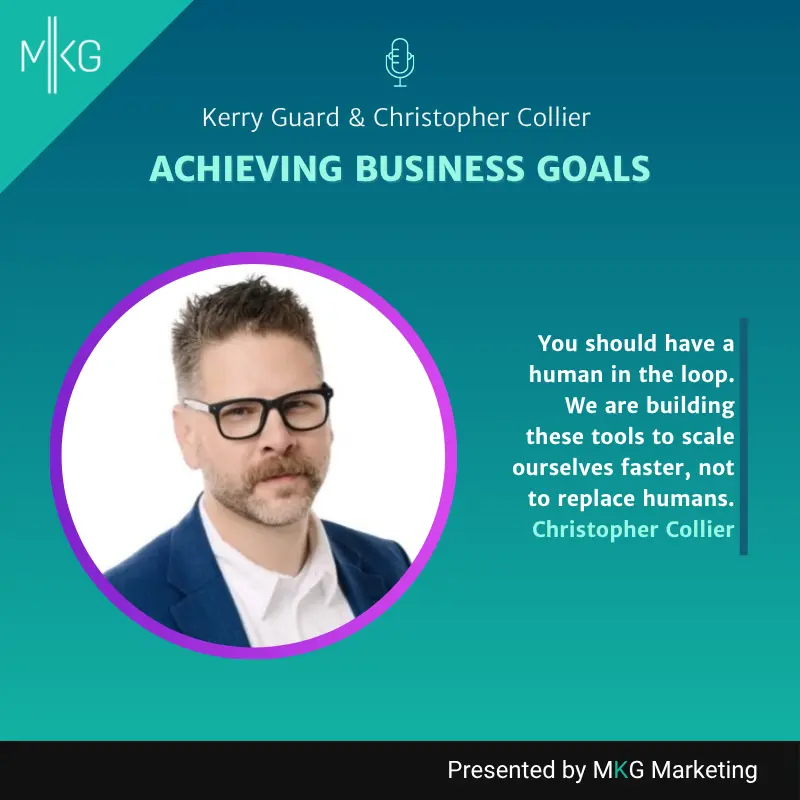
Let's keep the sorry. Let's keep double-clicking into this because it's something. It was actually an ad I saw on LinkedIn yesterday where I don't know if they're calling it the human revolution. They're revolting against AI, but they had two images of a ballerina. One actually was a real ballerina. The other one was the exact same ballerina, but done in AI. Now you could tell by looking in the audience because they were all looking forward. Everybody was very uniform. Basically, in my opinion, it was like T2, James Cameron's T2, where everybody is the exact same. Which, by the way, came out 35 years ago this summer. Which, for some of you, you actually remember when it came out. That's how old you are now. But I totally I'm 45. So yeah, I was 10, just like begging my parents to watch an R-rated movie. But I totally agree with you. I think for me, it allows the human brain to be even more curious and have more options for the imagination to just grow. Because whatever your brain thinks, you could then prompt it, and it gives you kind of an idea, and then you can run with it. But I do, I do believe that where we're headed, and where the pendulum is already swinging back, is that you have to have a human in the loop. You should have a human in the loop, and that's ultimately why we're building these things is to scale ourselves up faster, not necessarily to replace humans. That was the biggest thing when all this started coming out in what November of 20 no 2223 I can't remember.
Kerry Guard 6:33
23 yeah
Christopher Collier 6:34
Yeah, but I think it was that was 22. It was November 22, so when OpenAI released ChatGPT
Kerry Guard 6:41
Oh my gosh! But time flies.
Christopher Collier 6:43
I know, I know. But everybody was like, "Oh, how can we become more profitable? And what can we do? Where you know, and I called it out too. I'm like, you know, a lot of SEO agencies are going to go the way of the dodo, which was sad. But also, too, a lot of modern-day business, you know, there's ebbs and flows. But the thing is, a lot of these SEO agencies, like yourself, they evolved. They evolved now to HEO and AIV, and so humans are finding out ways to use this new tool to still make their businesses a reality and to go deeper, right?
Kerry Guard 7:18
So, like for us, of course. coined so many taglines now, having done my positioning and messaging, and one of them is "more is not more," because so many of these other agencies are promising to do more, when really you need to optimize, go back to basics, and work with what you have before you start adding on.
Christopher Collier 7:42
I love that.
Kerry Guard 7:43
But also, to go deeper, like we can get so much more research. We can pull so much more data together. Yes, you could use a tool, but what if you could use multiple tools? You look across your analytics, your Google Search Console, your Semrush, or insert SEO tool here, pull that all together into Claude, and then actually analyze how people are finding you. More importantly, how are they converting, and what are they converting off of? Because I had a great conversation with somebody today where she's like, "I know people are coming through this page of what is an SDR, but nobody's converting off of it. Of course, nobody's converting off of it because everybody has what is an SDR page these days because that's what you needed to create authority that you just don't need anymore. So yeah, you don't need that page. Let's go build authority around who you are and what you bring to the table, and go more intentional and deeper into your expertise than creating more of what's already out there.
Christopher Collier 8:44
That brings up actually an amazing point because that's something that my SEO specialist within my team, and you know, for everybody listening, I cut my teeth in SEO and SEM. That's where I built a majority of my career over 15 years before I got into leadership, and then had to, you know, I come from a design background. In fact, was it sophomore or junior year? I made such good friends with the art teacher that he just let me be his TA. And the TA was a joke because I only had to enter grades, you know, twice a semester, but I did it because there were certain things that I loved doing in his class that he just let me do all the time. Ring making, ring making. Like, I was really lost: was it lost-wax molds, and like carve the wax, make a mold, burn the wax out, then throw sterling silver in and actually make rings. Those are some of the pros. Yeah, it was actually super fun, and so I actually took advantage of different mediums of art just to kind of grow my brain. But what Blake and I did is, you know, I'm like, you know what? We have all this old content, and the old adage. More is more, more is better. You need all the content. It needs to be internally linked. I'm like, here's the thing. Now with AIV and what I like to coin HEO, which I think is the new, newest, newest one, but you know, human experience optimization, which I like that the best. Like, how is the human experiencing the content, gathering the content, and absorbing the content? But I told him, let's take anything that's older than 2023 and let's ask Claude to run- just run a whole program of what can we kill, keep, augment, and so we ran. We got rid of 200 blog pieces, and a lot of them were fluff. And I also told my team, too, I don't want non-branded fluff anymore. It's got. I don't even care if we don't even launch anything for three weeks. If it's, you know, total, total baloney, I don't want it. And so we ran this huge project where we were able to do an audit and build content. I built a series of six agents that kind of ran through some steps: where 300 ones should go in place, which ones should be augmented, which ones should be killed, and we were able to do. I would say probably what would have taken a team of three or four, maybe four or five months, maybe longer, in three to four weeks, just between the two of us. And he actually ended up having to do most of it because I'm my time split between the rest of the team and the rest of the organization. So that's one. You know, it just kind of goes back to more and more.
Kerry Guard 11:37
What was the outcome of that, though? Like, you know, usually when you cut content, the big like you're about to like lose a ton of visibility and ranking and all of the things in the old days, but like I got to imagine the opposite sort of happened when you focused.
Christopher Collier 11:53
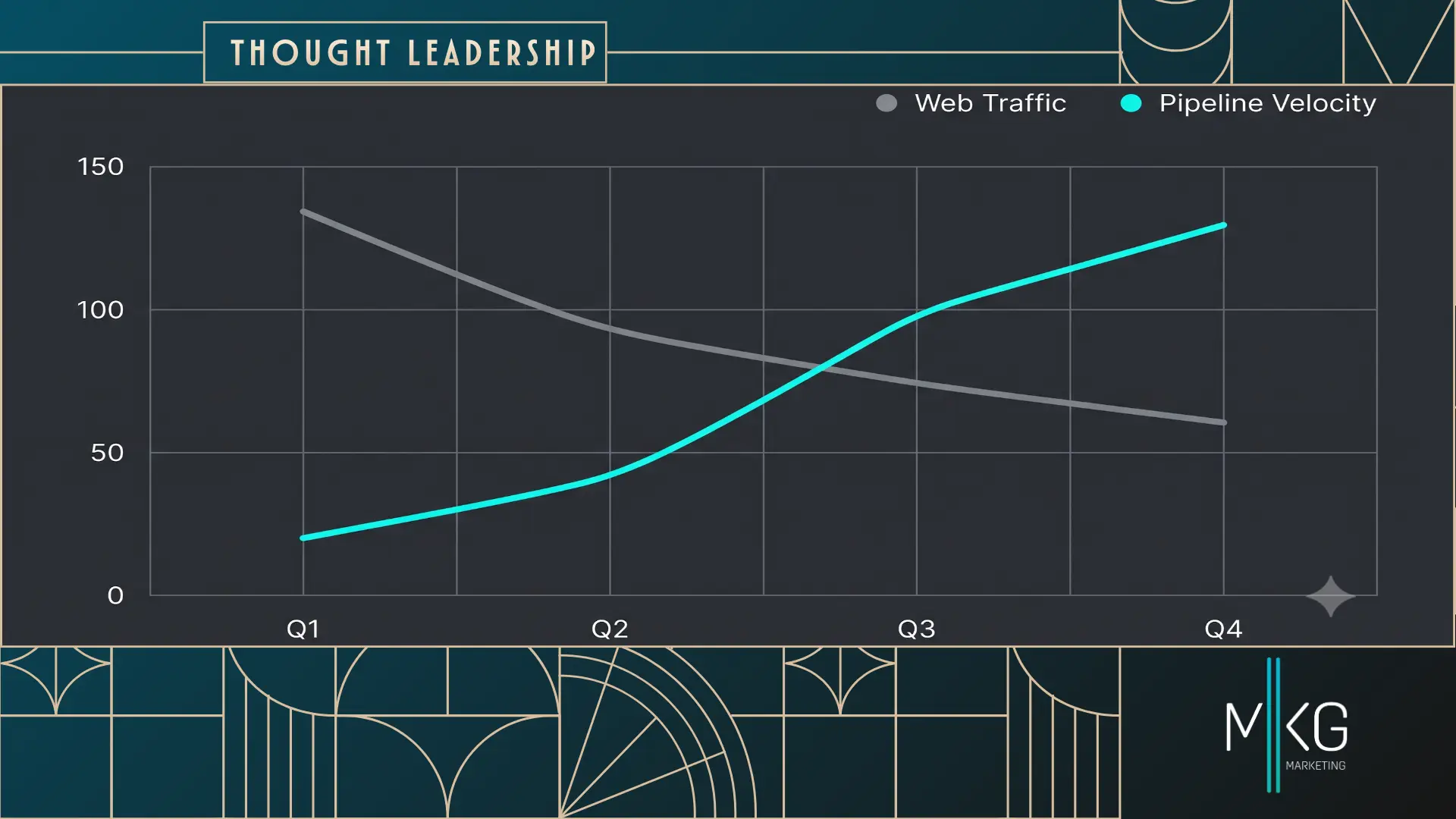
You know, it's Kerry. It's so funny. Our Semrush AIV score keeps going down. One thing we have searched is that the entire EHS and, well, the whole environmental health and safety software platform industry is sliding down big time in AIV. So it's not just us; everybody is sliding down. So we're still sliding down there. But I told Blake that in my experience, with all my years doing SEO, there's usually a huge crash before things equalize and you start to climb. Now, in my Data Studio dashboard that I built just to track our traffic, because we're a HubSpot house, and HubSpot and GA4 track things totally different, so you're making a face. So I, yeah. So, but the crazy thing is, we're up like 100% in traffic now. I've been able to cut a ton of bots out of it, or try to get same same, and my team's gonna listen to this. And like, you did, and that's what I've been doing at night. So I, I think it's working, but only time will tell from, you know, Semrush and some of these other tools that we can use to monitor it. What I told Blake is, you've been in augmentation creation hell for a month. Go do some fun projects. Let's get some fun projects for you to do. Then let's run some new reports after things have settled out and see where we are.
Kerry Guard 13:32
So time to settle down totally.
Christopher Collier 13:34
100% 100%. So I will. I'll follow up with you, and we'll circle back.
Kerry Guard 13:40
Yeah, we'll circle back. I do want to know, though, because in our prep call a few weeks ago, you did mention that while traffic was down, conversions were holding.
Christopher Collier 13:51
Yeah.
Kerry Guard 13:51
Is that still your traffic up now? But is that still the case?
Christopher Collier 13:54
Well? And and when I and when we had the prep call, I was only looking after HubSpot data, and so this week, actually, in our growth meeting, we have a weekly growth meeting. It was one of the books I read. I can't remember, but we have a weekly growth meeting where I have our demand generation, my marketing operations manager, and then our SEO professional. The four of us get together, and we talk about what we did, where did we went, what did we experimented with, and what we need to stop doing. What do we need to be doing more of? This was the first time that I'd gone into Data Studio in a while, and so I looked at the last 30 days. Traffic was going down. Well, that's because we started having huge spikes in May. So from January to June, we were actually up over 100% from where we were. So now I've got the team digging into the why. Now, if we were to go back to our prep call and just compare from HubSpot to HubSpot, yes, traffic has been falling probably five to 10% month over month. That's the norm over the rest of the. We're private equity-backed, but overall the other portcos that's the same thing too- where everybody's falling, and that's why we're trying to get really ahead of the game from an AIV perspective. But conversions are maintaining. We've launched HockeyStack to do a lot more attribution tracking, and for the most part, we're getting better quality leads because the content is better. And and whereas it may not be a direct correlation of an LLM is pulling us up, and then people are being directed straight to the website, it is where they're doing a lot of their research, and then maybe they're going ehsin.com straight into the URL in the browser, and then going directly to the website, and then doing their due diligence, and then you know saying they want a free trial or request a quote.
Kerry Guard 15:54
Are you on your forms? Do you have that lovely little box that says "How did you find us? And do you have it open-ended?
Christopher Collier 16:01
No, because we've got. I'm a big attribution guy, and you know, when I took the seat almost three years ago here, one of the biggest things we needed to do right away was UTM parameters to get conversion tracking properly installed. And so the reason why I don't do that, Kerry, is because, especially from an open end standpoint, and the volume we've got is that sometimes it's really hard to connect the dots, and so that's why we we we implemented Hockey Stack, and then I would say we've got attribution down to probably 95 96% accuracy, where I can, I we can go into any channel, and so ROI.
Kerry Guard 16:46
That's unheard of.
Christopher Collier 16:49
I yeah. Well, all marketing leaders should be in the same mindset I've got because your job depends on it. Your job depends on you spending what little budget you've got, and being able to show what multiple of return you're bringing in on every dollar you spend. And if you can't do that, you're literally just throwing darts in the dark and hoping the money pipeline grows. It doesn't know.
Kerry Guard 17:15
Right? It depends on your business and like how, yes. So like, is your business more transactional? Because the more transactional businesses are stuff. So it's not okay. So you have more of a long cycle and all of that fun job. Yes.
Christopher Collier 17:29
Yeah. The average sales cycle is probably, you know, for mid markets 90 days, and then enterprise can go up to a year.
Kerry Guard 17:38
Yeah, that makes sense.
Speaker 1 17:40
Yeah.
Kerry Guard 17:40
Okay, so I gotta know then, like, how are you tracking attribution, and how are you tracking multiple touch points? Because that's always, like, like going off of last click. It's generally going to be, especially these days, SEO to some, you know, organic in some regard. But you got other channels at play, especially from a dark social standpoint. So, how are you? You said your UTM codes. Are you basically slapping a UTM on the end of every single URL for everything that you do?
Christopher Collier 18:11
Yeah, yeah. In fact, and from a paid.
Kerry Guard 18:15
I love it.
Christopher Collier 18:16
Yeah, from a paid perspective too. It's, I mean, it's clear down to the keyword level as well. And I learned that.
Kerry Guard 18:21
Yeah, and that's a little easier to do from paid.
Christopher Collier 18:23
It is, but most people don't do it. And, you know, my former demand it takes time. And my former demand generation manager, Mohammed Bozo, shout out. He would be like, hey, MQLs are flowing. Lots of, you know, like this is great. I'm like, yeah, cool. Like, this keyword is bringing in a lot of MQLs, but in six months it never opened up any pipeline. Why is that? And it hasn't. So kill it. And he would look at me shocked, like, what? We're like, no, no, we're not looking at volume. We are looking at quality. I would rather spend two to three times more for an MQL if it's guaranteed to open pipeline versus a bunch of them that would be purely tire kickers and brand awareness.
Kerry Guard 19:15
Yeah, but
Christopher Collier 19:15
I mean, to answer the rest of your question with Hockey Stack, we're getting so much better at doing all the different layers of touches that a prospect and potential future customer will take in order to get to that point. Because all of our channels, I mean, we've got organic, which I would split into the organic, old school search engines. Then you've got your LLMs. Then you have paid, which we use Bing, Google, and LinkedIn. We used to do Reddit, but after Reddit's traffic was cut by 50% when the LLMs were launched, we kind of went away from there. Then you've got. You know, webinars, third-party content syndication, you know, just a multitude of things. So we're able to now show that, okay, and wait, and actually, I'm kind of a first-click guy. I'm like, how did they get in first? Like, they could have researched a bunch before, but they finally submitted. They submitted the form on this one, and so I'll go. No, that's paid. No, that's organic. No, that's this, and it's worked out for me in my career. But you know, and other people may be like, no, you're not doing a U, or you're not doing, you know, a multi-touch attribution.
Kerry Guard 20:38
But you know, it's too hard to do all of the. You have to sort of hang your hat on something. I'm glad you're not hanging it on last click because I feel like that's not really telling you anything. Because, as I said, I feel like the way the customer journey is sort of netting out, and it's not completely this way yet. But I think where it's headed, you tell me because you have more data on this. But I feel like it's mostly going to end up in the organic bucket where that's not how they learned about us, learned about you to begin with.
Christopher Collier 21:05
100% And you know, it's like what I, my sons, I love my sons dearly. They're 25, or the youngest turns 20 next Friday, and they still don't know what I do, and they've both decided we encourage our boys either, you know, college or trades. That's the two options that you've got in life. Their college tuitions were paid for. Mom was very brilliant and started trust funds when, you know, they were little. But they don't want to go to college, so they don't like this. We're going to go buy a vacation house if they decide to do anything with it, but they still don't know what I do, and I'm sitting there explaining things, and I'm trying to do my best before they gloss over because everybody in our family has ADHD, so I explain them. Listen, I'm trying to basically I'm the guy with the sandwich board on the corner, and I'm screaming, "Come buy my sandwiches, and then I take the person, and I take them to the cashier, and I'm simplifying things. But the cashier's the salesperson. I'm like, okay, this person is interested in buying a sandwich. Now you convince them on what sandwich they want, or you give them the options. But then I go further, and I tell them, listen. Also, too, you're asking a girl. She says no the first 50 times, but you're staying persistent. She finally says yes the last time. Did nothing before get any credit, or was that you constantly showing your value and kind of giving the reasons why she should say yes on the 50th time, and so that's why I like the first time because that's the first impression.
Kerry Guard 22:47
Yeah, yeah, that matters, especially nowadays. You gotta build the trust. I'd love to know what your data is because you actually have the data. I mean, Dream Data did this ages ago where they discovered it was like 18 months from first impression to booking a call. I think Six Sense also proved that it's like three vendors are decided upon the minute they book that sales call. I would say now that vendors are decided on before they even come to your website.
Christopher Collier 23:15
Yeah, yeah, right. Yeah, yeah. I would totally agree. And actually, I forgot one channel too. We run ABM because I started running ABM when no one knew what ABM was. We started working with Terminus six years ago, and I know you know Six Sense in demand or demand base, or yeah, they were before that. But those are the three. I actually use Enrich. Shout out, they're, I think, the best platform out there, especially for your money. But the data, and that's the thing with Hockey Stack, is that we started to see some of these things, and also too, everybody's contemplating Hockey Stack, and Hockey Stack, you're not going to like this. It is one of the most difficult platforms I have ever implemented. We had to hire a third party to come in and help us. And I'm not a dum dum. I run all the Martech. I run all the operations. I evaluate the tech. My operations manager and I, and my former operations manager and I, we spent months trying to get this going. And my philosophy is, you buy it, you get it going in two to three weeks, so we get a baseline. Exactly, yeah. And it's hard, and even now, customer service is not great. So if you're listening, Hockey Stack, that's what's up.
Kerry Guard 24:37
What's hard about it?
Christopher Collier 24:39
They have a philosophy on how you should track things and how you should do things in your CRM, rather than being a little more flexible and understanding that not everybody is cookie cutter. And they kept quoting their CEO, like, "I do it this way. I'm like, "That's cool. I've been doing this longer than you've been alive." So you know, it's not to say that I'm smarter than you, but there are just different ways of being able to do these things, and you need to be a little more flexible. Granted, I think it's growing pains for a fantastic Ferrari platform. We were actually going down between Dream Data and Hockey Stack, and Hockey Stack came in at the 11th hour and cut their ice by a bunch because we were signing on with Dream Data. But what we're seeing now is, I mean, there is just a ton of touch points. There are so many more touch points than we thought, and the buyer's journey is a lot longer. And you're right: by the time they've come to your website and they have they have made a decision, or they're down to two to three solution providers that they will actually go with, or they'll decide to vet out by that time. And so it kind of goes to like with my ABM philosophy as well. With intent scores, you're not hitting them at, you know, 10 to 18 points, and it varies by industry, it varies by size of company, it varies by a lot of different variables. You're kind of out of the conversation by the time it hits 40, 50, 60, 70. Like they've made the decision, or they've got an incumbent, and they're validating other ones to maybe get their incumbent to drop price. So, anyways, I'm rambling. So, throwing the ball.
Kerry Guard 26:30
That's yeah. I haven't actually. I'm not as ABM versed in terms of platforms, and my team's worked in them a bunch. But the intent signal is interesting in terms of, yeah, I would imagine you want to get in there early when the signal's starting to like show, but not be definitive. That makes a ton of sense actually for when to strike and build on that and be part of the build versus coming in too late. That, yeah, that makes total sense.
Christopher Collier 26:59
We actually just worked with Enrich too. They've gotten a lot better at their QBR level to provide insights and suggestions on how you if you spend this and you reconfigure your campaigns, you could expect X Y Z amount of extra pipeline to drop, and then if you're nurturing it properly, and you multiply it by your close rate, you know here's the additional close one ARR that you could have drop into your revenue buckets. We just relaunched it yesterday, and it's kind of similar to what I had ran in my previous lives, but it's also more simplified, and it's more of a four stage where you've got hot in market, cold, and engaged, and those are pretty, yeah, and they're pretty they're pretty self-explanatory, and then we break it down by the top five industries that we play well in, and so specific.
Kerry Guard 28:03
Yes, to all, like I think this is where certain channels are definitely going to flourish more because, especially ABM being a great example of that. Like the more it feels like, the more specific you get in terms of your ICP and who you work with, and the problem you solve, the better you're going to do because that's what's going to get rewarded right now, and not because there's so much noise and everything's so generic that I did a big research project that I'm working on for Cyber Marketing con, and I looked across multiple verticals within cyber. Pulled about four to six clients, companies, four to six companies within that, and what I found was that my hypothesis was that the big enterprises probably were getting mentioned in LLMs more often than smaller startups because they just have a bigger digital footprint, and AI search rewards you having a lot to say across multiple platforms, especially if your customers are talking about you. But turns out that once you get enterprise, your message has been so watered down that you're not getting recommended because you just do so much for everyone that they're actually rewarding the smaller companies that are very specific in the problems they solve and who they solve them for, so they're more likely to serve those up versus the incumbents. So I think what you're saying makes a ton of sense in terms of like getting really specific, not just in your message, but also in your ideal customer, and really understanding who you serve and really marrying the message to that. Especially now, it's just, yeah, reform.
Christopher Collier 29:57
Yeah, I mean, nailing it. You know. I keep mentioning Blake Bauer, who's on my team. His father was my mentor, still really good friends. I've known Blake since he was six. He started house-sitting for us when he was 16, and then I started mentoring him. And then you know, he asked me for, you know, he's like, "Hey, if I get a degree in marketing, you know, and I was like, "Listen, you get a degree in marketing. You keep really good grades. You do these other things, i.e., GA four certification. Get up to snuff with HubSpot. Learn SEO because I and here's my point. I asked them in these curricula, what are they teaching you? We both went to Washington State University, go Cougs, and the 4Ps are still applicable, but it's still an archaic way of simplifying what marketing has become. Marketing has changed more so probably even in the last six months than the last 20 years, and it all comes down to targeting. It's the targeting you. It's the targeting and who you're targeting. But the targeting really, I think for me, it encompasses your ICP, the personas were in there, and then where where's the where are the personas sitting? Where are they reading? Where are they looking? And so you could wrap up the 4p right in there. Now the pricing, that's not marketing anymore. That's dictated by product. That and perhaps maybe in a multi-level conversation with probably product sales, maybe a little bit of marketing based on their research and what they're seeing the market doing, and and you know, like we just released our MCP connector from our, you know, going back to AI, so we can connect directly to Claude, and that was something of a hot conversation with us where I was like, listen, no one's going to buy it if we charge X Y Z, like no one's going to do it. Other platforms are giving it away for free. You know, if we're doing an early adopter thing, you've got to drop the price. But my point is targeting, targeting, targeting, targeting. That is the most important thing. You could you if if any marketing leaders listening to this could gain anything from our conversation, I would say spend most of your time on ICP and targeting.
Kerry Guard 32:17
I sort of said it in my opening, and actually it's shifting right now because we're an iterative company, and I'm just an iterative learner. I get data, and I get signals, and then I make changes, and so we've always worked with VPs of marketing who sit in that early stage- not early stage like startup, but in that scale-up. Like, okay, they have a thing, and now they need to either go to Exit or Enterprise, and like we come in and we help them from an SEO and digital ads perspective, bring those channels together, and like create the whoosh. And so.
Christopher Collier 32:53
I like that. But what I found was whoosh.
Kerry Guard 32:55
But what I found was it was even more specific than that in the company size, it we actually work with a lot of companies who've been around for a really long time and just really dependent on sales and never really got their marketing act together, and now they're starting to think about how to actually do marketing to support their sales team, and they that's like where we get brought in, which is inter, which is like an interesting find I had. I'm like, okay, I can actually target that. I can look at companies who've been around for a long time, who have stalled, aren't really growing, haven't been growing for a while, and probably need to change. What used to work for them in terms of growth is no longer working. Who are those folks? And so, by dialing that in just a little bit further, I'm now able to message them a little bit more intentionally and showcase case studies about exactly how we've helped companies exactly like theirs start the growth path again to enterprise and exit. And it's just an easier story to tell when you know exactly who you support.
Christopher Collier 34:02
And two, I like the callout with VPs. I'm a VP. I've been doing this for, I've been, I'm one of those crazies that actually got a marketing degree from college, and then it's unheard of. And then all of my other peers that graduated with our marketing degrees, I don't know of one who works in marketing. Kyle went into construction, and then another friend. She's a CRO, but it's a good background to have a marketing background, you know, if you're in sales, but when you hit VP level, you probably should have the level of expertise and the experience in the head that I do, and I'm not trying to top myself. Like I've. I've been in the weeds, and I've been grinding it out for 20 years, and I've only been in leadership for four or five years, so it's been a long haul, but I like that you call out VPs because a lot of times too, you've got people that are stubborn and they think they know everything, but in reality, one they either don't have the team properly set up to do what you can offer, or two, they don't know what they don't know, and what they don't know is they need help. Yeah. So yeah.
Kerry Guard 35:35
I know. I, I VPs are the ones who generally hire us, and I think that's a good point, and I don't. I usually find that they do try and do it for as long as they can themselves until they can't.
Christopher Collier 35:48
And so they're worried about the jobs, you know, especially if you're a VC and their resources are limited.
Christopher Collier 35:53
I mean, I have a small team. There are five of us total, and how I set up my team is everybody's got their so much, so much, and I mean AI is a part of it. But we actually, you know, Mo Mohammed, who was the incumbent marketing manager, and when they hired me, he was like, "Listen, everybody in the company, you've taken me as far as you can, and we need to bring somebody in who's actually got? Who's done this and has a lot of experience? He was doing both sides of the man-generated operations, and he actually ran out, and he started his own marketing agency, Butter Marketing. He actually stole that from me, but actually I stole it from a Mike Myers skit on SNL, where he's like, you know, I'm going to give you a topic. Here's Butter. Now talk amongst yourselves, but I split his role into two because I'm like, listen, we're missing the boat on DG; we're missing the boat on operations. We need to have two professionals in there. So we brought Ivan and brought Wes in, and so now we're a team of five: product marketing manager, AIB SEO professional, DG professional, and then ops person. Now everybody's got their specialties, and there's a lot of overlap because a team should not be running in silos. There should be collaboration because that's where the best ideas come from. I come in as I have a very foul mouth, but I'm I will be I will be PC. I just come in, and I'm the utility player, and I will do the grunt work. I will do the crap work. I go, guys, my strategy that we collaborate on, but ultimately my name's attached to it. And if we fail, if you fail, it no no, it's me. I fail, and so I give them the autonomy to run these departments. I come in as a utility player. If they fail, I don't point the finger at them. I actually take all the blame and wear the bullet. Well, sometimes it's bulletproof. Best to kind of give them that ability to breathe. Not sure where my point was. My ADHD is kicking in.
Kerry Guard 38:03
We're just talking about VPs and how they tend to try and do as much as they can. And so it sounds like you really brought in a strong team, and now you're playing the support player because you can do it all because you have done it all. But you don't now have to do it all, but you can fill in the gaps because you know you know enough to be dangerous. That's what I'm picking up.
Christopher Collier 38:26
Yes, yeah, and I mean, yeah. So thank you for bringing me back. So it it comes down to in the VC and PE world, and I think everybody's who's listening, who's in these roles and who's working for PE and VC, and and again to to to all my friends who are running the go to market teams and the PEs that I work with, it's no knock against you, but if there's a lot of times there's imposter syndrome, and and also too like you're scared for your job if numbers are not going the right way and you do not know what you're doing. My philosophy is, I raise my hand up very fast. I'm like, we're going the wrong direction. I do not know how to correct this. I either need to bring in outside help, either via the go-to GTM teams at the PEs, or I need to go get expertise just to help us get a lift and figure things out. I see too many times VPs where they don't do that, and then their heads on the chop, the chopping block, and then also the the business is not doing well either because now you've waited another quarter, two quarter, half to let that movie play out, where at the end everybody dies, whereas you should have been like, "Hey, the plane crashed. Here's the flare. Helps coming in. They're dropping in food. The dog sleds are coming in. If anybody's seen the movie Alive, that's what I'm quoting right now. But none of them live, by the way. But.
Kerry Guard 40:00
Spoiler alert!
Christopher Collier 40:02
Spoiler alert!
Kerry Guard 40:03
I do want to know because I love this, and I do think we don't always raise our hand because we're not sure when to raise our hand. And I love that you're saying raise it as early as humanly possible. What's that leading indicator for you? Is that like the initial? I don't want to call them MQLs because I love what you said to your demand gen person: like, yeah, we're getting a ton of MQLs over here, but let's be real, none of them are actually shaken out. So, what is that? That could have been a vanity metric, sort of hiding the reality of what was happening. So, is it MQLs? Is it pipeline? Like, what's sort of that moment where you're like, we've got to turn the ship around because we're going to start going in the wrong direction any second now.
Christopher Collier 40:43
Yeah, so my EVP of sales, John Nichols, and I work very closely together. Cesar Maraquin, who's our VP of customer success at EHS Insight, we call ourselves the GTM Trifecta. So we're the triad. We're the leadership of revenue coming into the company, top of funnel, closing the deal, keeping the deal, keeping the customer. We pride ourselves that although we do fight like brothers sometimes, we are extremely close, and that's how every revenue team should be in a company. And if you're not like that, you guys should figure it out because you should be. The first thing I always ask John when pipeline. So to answer your question, pipeline is the most important thing that a marketing team should be providing the sales team. Now there are arguments, and John and I are always trying to get the sales team to do more self-sourced, sales-generated pipeline, which we all know from an outbound perspective, is getting harder and harder every day. But I will do the Glen Gary Glen Ross, where I'm. I will go. Are the leads shit pipeline's not growing, and that's the that's the that's the one report that I am refreshing four to five times a day. Have any new deals been created today? What's the attribution of where they came from? Okay, I do brag a lot. Marketing, my department, sources 90-8% of the pipeline for our company. I'd like to give a pat on the back for me, but no, it's it's it's my team. It's my team. It's a we, not a me. So that's the main thing that I will look at: why is pipeline not growing? And we had a little bit of a blip in Q2 where, you know, pipeline was slow. You've got to go back and look at the historical data. Q2 typically tends to be a lower-generating pipeline for us, and I think it's the time of year everybody's going into the summer, but I will ask. Okay, pipeline's not growing now. We need to now we need to work backwards. Now everyone's like, whoa, MQLs are the starting point, and then they go to SQL, and then, you know, maybe there's pre-op and then op. I'm like, yeah, okay, great, but if no pipelines are being generated, there's your clear indicator, and then you start working backward. I'm like, okay, well, what's the conversion metrics? Okay, conversion metrics with everything over a blended landscape looks great. All right, then we need to look at it by channel. Has one particular channel started to maybe flounder a little bit, or did they trip at the starting line? Oh, okay. Well, this one's flopped. This one's been one that has been, you know, let's just say Google Ads. Google Ads has been fantastic at creating pipeline for us. Why has it been floundering? Is cost going up? Is it not generating the same quality and quantity that we have in the past? And so, you know, it allows me, if we look at pipeline first, to start unraveling the mystery backward as it leads back to MQL. So whereas I say MQL is a vanity metric, and it's not the most important one, it also is too. So it's kind of a double-edged mystery quandary.
Kerry Guard 44:02
Start, though, yeah, and that's probably how you figured out that, yeah, we were getting a lot of MQLs from this one keyword, but when you start a pipeline and work your way backward, like there are no there's no pipeline from that keyword. We need to turn that off. We need to figure out what keywords are developing that, so we can put more money into those other keywords.
Christopher Collier 44:21
Exactly, exactly.
Kerry Guard 44:23
I have a gazillion more questions.
Christopher Collier 44:24
Let's go.
Kerry Guard 44:26
But we're almost at time. We've got to do a follow-up.
Christopher Collier 44:31
I know
Kerry Guard 44:33
We're gonna have to do a follow-up in a few months when you have more data. Last question for you is, in terms of AI and the technicolored elephant in the room. Circling back on that, yeah. Where are you looking? You know, you have all this data that you're sitting on. It's all good to look back and say, based on what happened, this is what happened, but... What are you thinking about in terms of moving forward? Where are you sort of placing your bets? Where are you building up, you know, more resources around certain things because you're like, that's where it's headed. That's where we need to do more. Are you doubling down on what's currently working, and more is not more?
Christopher Collier 45:19
I mean, that is a really good question, and I don't know if I've got a well-thought-out answer, so I might mumble and kind of stumble a little bit here. Yeah, I mean, ultimately, it's monitoring what ICP would be searching for. I think it's iterative changes of the content to continue to make it better. There are also areas of our website that, you know, when we launched our new website in August of 2024, which everyone would call geriatric, we like to continuously evolve the website over and over and over, so it's never stagnant. We're now rebuilding it like so. We serve multiple different industries, and we have 30-four modules on our platform. It's going up or going down depending on the day with consolidation and new launches. But there is what we have seen: elaboration of the industry. So whereas before it was okay, like, oh, we serve this industry and we do this, and we do that. Now it's a matter of really long-form is back in a way. So really building out that industry page because that person that's landing on it, we're big in oil and energy. They're not going to want something that is just like a half page. Like it just fits the screen, and that's it. There's no. You need to be exhaustive and listen. This is what we specifically do for your industry. Same thing with the modules. Here are all the things that we do with this module. So we're in the process of rebuilding all of those pages because with an AI V mindset of if somebody's searching for this module or they're searching for EHS safety platforms within this industry, we need to be seen as a thought leader. It comes back to being a thought leader. There's brand awareness, thought leadership, and then looking shiny. No, I'm actually, you know, don't have to be polished. No, but
Kerry Guard 47:36
No, but those are two. Those can totally be the two pillars, and then you can start going down into the customer journey deeper, but those are definitely the two pillars right now that are like that have gotten lost in the sauce over the years as we all tasted leads and gamified lead lead lead lead capture and sort of lost lost sight of like what actually brought those leads in to begin with, which is absolutely those two pillars of brand awareness and thought leadership, and we need to get back there. So when you're not doing more, you're doubling down on the pages you have and how the audience has changed. I think positioning and messaging should be like a painting, and it should never be finished.
Christopher Collier 48:16
100%. I mean, and also, my philosophy and my team love it. Like, if it's not broken, break it, redo it. I mean, we did that with ABM. We do that with the website all the time. We do that when we're evaluating. Okay, well, attribution is working. Like, can we get better? Break it. And my team, I think, likes that because it's a never-ending quest and also mystery for just getting better over time, and it causes you to never be stagnant. You know, a lot of people are like, set it and forget it. In marketing, you better be you better be changing every single day, week, month, six months, year. If you're not evolving, you're in the wrong discipline of business.
Kerry Guard 49:04
And I think that's the perfect place to wrap this up. I'm so grateful for this conversation, Chris. Me too. Where can people find you? They want to learn more about you and the company and want to stay in touch.
Christopher Collier 49:16
I mean, I'm always open to DMs on LinkedIn. You can find me. My name is Christopher. I think it's my full URL. Christopher Lee Collier, same middle name as my father. But I work for EHS Insights. We're an environmental health and safety platform. But if you want to reach out to me, pick my brain. Please don't try to sell me something because if you are an agency or you're somebody who does demand generation or anything. I've been doing it longer than you, and I'm probably better than you. But I'm happy to have a conversation, and I'm happy to chop it up. Yeah, but I don't, I don't need services right now. But I am happy to share knowledge because that's another thing I'll end with too. Knowledge should be shared, and it should not be captured. And I've had people in our company say, "Well, like, where you're kind of giving, you're kind of giving the playbook of how to be successful with what we're doing. I'm like, "Yeah, that's cool. Somebody at a competitor could try and pick up the recipe, but the cake's not going to turn out the same.
Kerry Guard 50:17
No, no, absolutely not. There's so much in there; I think we only skimmed the top of probably everything that your team's got going on. I can attest from an SEO and digital ads perspective, the nuance is endless for both of those. So hats off to you and your team for really completing so much of the dream from an attribution standpoint, from understanding how to measure success, having sales and marketing alignment, there's so much here that marketers and and especially VPs in in a similar seat are struggling with, who would love to have this, you know, all of these things, and you just gave them so much hope to be able to have them. So thank you for that. I'm so grateful. And yeah, I'll people definitely go reach out and go hang out with Chris, as I will be. We'll be following up. We'll be having another conversation. So be sure to tune back in to that. It's going to be. I would
Christopher Collier 51:16
I would love that. I would love that. Let's do it again.
Kerry Guard 51:18
Absolutely. For everyone listening, if this hit home, go connect with Chris on LinkedIn. That's where he shows up and keeps it real. And if you're one of those lean B2B tech teams trying to hit pipeline while everyone around you is arguing about whether the AI hype is real, that's the room for MKG Marketing Libs. Come find us. Happy to help. We're here live every Thursday. Share the episode. Tag a marketing leader who needs to hear it, and it's not you- problem part- and we'll catch up with you next week. Thank you all so much.