You just closed your Series B. The capital is in the bank, the board presentation is locked, and the mandate from your investors is non-negotiable: scale net-new ARR, accelerate market penetration, and do it with predictable efficiency.
To hit these aggressive growth targets, your first instinct is to take the paid media playbooks that successfully carried you through Series A and double down on the spend. You pump more capital into your core digital acquisition channels, expecting a linear, proportional scaling of your backend revenue.
Initially, the dashboard looks spectacular. Your marketing team or agency presents reports filled with green upward arrows:
- Click-Through Rates (CTRs) are holding perfectly steady.
- Total Impressions are hitting record, all-time highs.
- Cost-Per-Click (CPC) looks highly optimized and efficient.
On paper, the top of your marketing funnel looks healthier than ever. But when you log into your CRM and look at the executive revenue dashboard, the reality is starkly different.
The net-new sales pipeline has stalled. Your sales development representatives (SDRs) are sorting through a mountain of leads that go completely cold upon outreach. Your account executives are complaining about empty calendars, and your backend pipeline conversion rate has quietly dropped by a devastating 25%. Despite spending more capital than ever post-funding, your cost to acquire a customer (CAC) is soaring, and your capital burn rate is outpacing actual pipeline velocity.
The metrics that look good on marketing slide decks are completely disconnected from cash-flow reality. The traditional B2B demand generation playbooks—heavily reliant on buying generic ad impressions, chasing abstract vanity metrics, and blindly trusting ad network automation- are fundamentally broken.
To protect your capital and restart your revenue engine, you must diagnose the structural flaws in modern ad networks that cause this backend leakage and transition from an impression-chasing model to a pipeline-velocity framework.
The Double-Whammy: Blended Inventory Bleed and Platform Fatigue
The core reason your backend pipeline is deteriorating while front-end metrics look healthy is a structural shift in how major digital ad networks operate. The software landscape has experienced a massive wave of algorithmic automation. Platforms have quietly removed granular user control in favor of artificial intelligence-driven, multi-placement campaigns.
1. Google Demand Gen Campaigns & Blended Inventory Bleed
Originally introduced as a replacement for legacy video discovery formats, these campaigns are built to drive engagement across Google’s vast ecosystem: YouTube, Gmail, Discover, and the Google Display Network. On paper, this level of automation looks highly efficient. In practice, it introduces a structural issue: Blended Inventory Bleed.
When you spin up a standard campaign with these settings, the ad network packages high-intent premium search and video inventory alongside low-intent fringe placements. The underlying algorithms are engineered to chase the lowest-cost clicks and impressions needed to hit your daily spend targets.
As a result, your budget is steadily redirected away from true in-market buyers into automated mobile apps, low-quality YouTube surfaces, and accidental taps on mobile swipe feeds. The platform will proudly show you an optimized, low Cost-Per-MQL, while the reality in your CRM is that you’re funding non-intent traffic that has virtually no chance of becoming a closed-won opportunity.
2. LinkedIn Ad Fatigue
Simultaneously, B2B software companies are hitting an absolute ceiling on professional social channels due to severe LinkedIn Ad Fatigue. As massive amounts of venture capital pour into identical target audiences, decision-makers are being inundated with repetitive, formulaic single-image ads and gated PDF lead-generation forms.
According to data compiled in the 2026 LinkedIn Ads Benchmarks Report by Dreamdata, non-branded search and standard social click-through rates have experienced noticeable industry-wide compression as buyers tune out generic corporate messaging. When your target audience develops ad blindness, automated bidding systems often serve your ads to peripheral, less relevant segments of your audience to hit your volume targets. You end up paying a premium for clicks from users who have the right company name on their profiles but have absolutely zero buying authority or intent.

The Fatal Flaw: Pipeline vs. MQLs
If your internal marketing performance is tied to Marketing Qualified Leads (MQLs), your team is naturally incentivized to run campaigns that feed this algorithmic dilution. An MQL model views every form fill or content download as an equal unit of value.
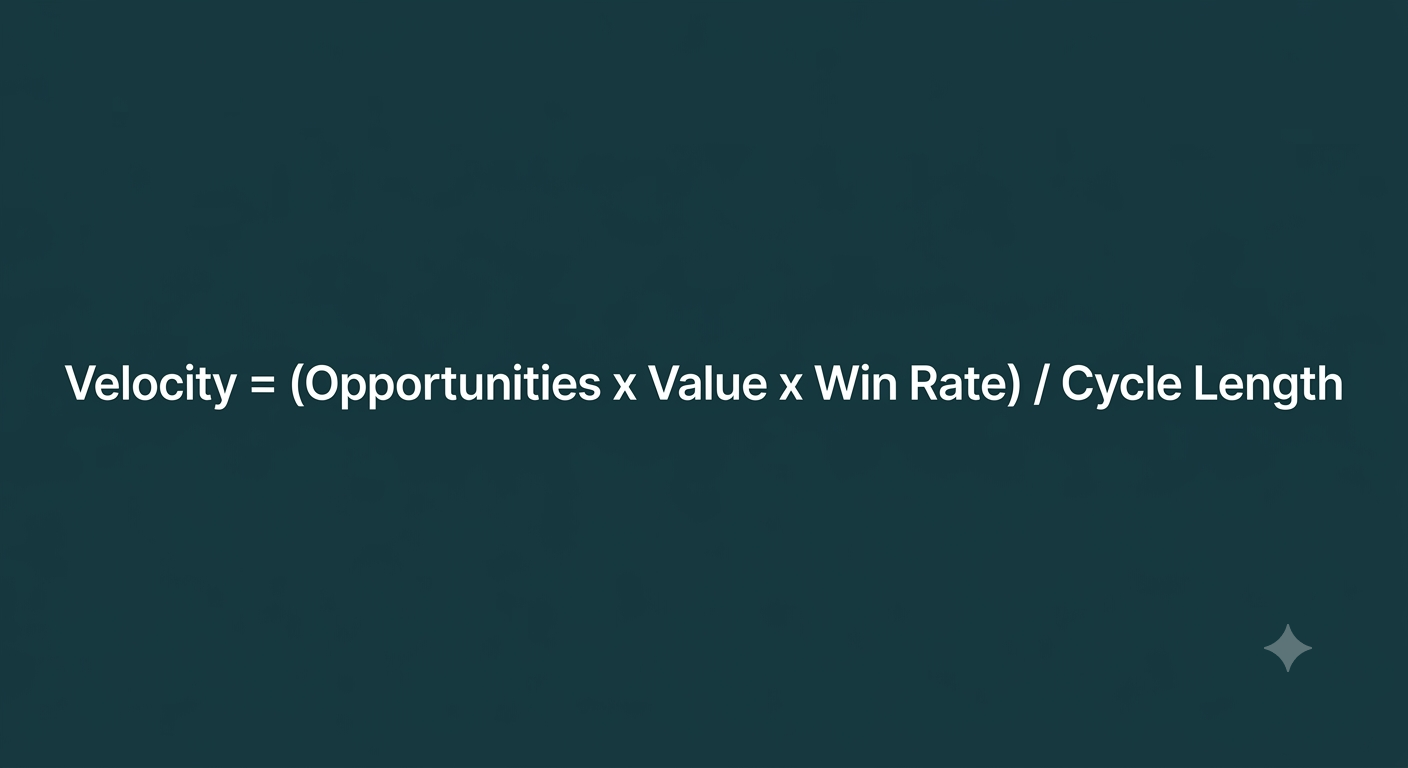
Optimizing for MQL volume completely ignores the critical business metric: pipeline velocity. Pipeline velocity measures the speed at which a prospect moves through your sales cycle and converts into actual revenue. It is governed by a simple mathematical relationship:
Pipeline Velocity = (Number of Opportunities × Deal Value × Win Rate) / Sales Cycle Length
When you allow Blended Inventory Bleed to flood your CRM with low-intent leads, you negatively impact every single variable in this equation:
- Diminished Opportunity Quality: Your total number of qualified opportunities decreases because sales teams waste time calling invalid leads. This creates internal friction, slowing your organizational momentum and frustrating high-performing sales representatives.
- Depressed Win Rates: Your win rate drops significantly because the baseline buying intent from automated placements is non-existent. Leads stay stuck in early discovery pipelines indefinitely, inflating your apparent pipeline without contributing to actual bookings.
- Expanded Cycle Length: Your sales cycle length expands dramatically because SDRs must spend weeks chasing and filtering out accidental clicks, burning through critical sales development resources and delaying market penetration.
To scale predictably post-Series B, you must ruthlessly eliminate the distinction between marketing metrics and sales reality. Every single dollar deployed into paid media must be measured not by the volume of contacts it generates, but by how effectively it accelerates velocity through the active pipeline.
Systemic Accountability: The Path to De-Risking Spend
Stopping this cash burn requires a fundamental shift in how you structure, audit, and hold your paid media channels accountable. You cannot treat paid media as a slot machine where you pull the lever of ad spend and pray that revenue emerges on the other side. You must treat your paid marketing as a highly predictable, mathematically verified system built on absolute truth and accountability.
De-risking your post-funding ad spend requires a rigorous architectural overhaul of your marketing campaigns across three core operational pillars:
Pillar 1: Decoupling Blended Placements and Enforcing Guardrails
The first immediate operational step to stop the bleeding is to regain control over where your ad creatives actually display. You must move away from default, fully automated campaign settings that give ad networks a blank check to distribute your budget across low-value inventory.
- Isolate Video Inventory: Within your Google Demand Gen Campaigns, you must actively decouple your video inventory from standard contextual display feeds. YouTube inventory must be managed and optimized as an independent channel.
- Enforce Strict Exclusions: You must upload comprehensive placement exclusion lists that block your ads from showing on mobile applications, gaming channels, and non-business video content.
By aggressively trimming away peripheral placements, you force the ad platform's algorithm to deploy your capital strictly into premium, high-intent viewing environments where your target B2B buyer is actively consuming professional content.
Pillar 2: Synchronizing Ad Networks with Offline CRM Signals
Ad network algorithms are incredibly intelligent, but they are entirely blind to your revenue reality unless you feed them the correct data. If you only pass front-end conversion signals (like a whitepaper download or a generic form fill) back to Google and LinkedIn, their machine-learning models will continuously search for more people who exhibit that exact surface-level behavior.
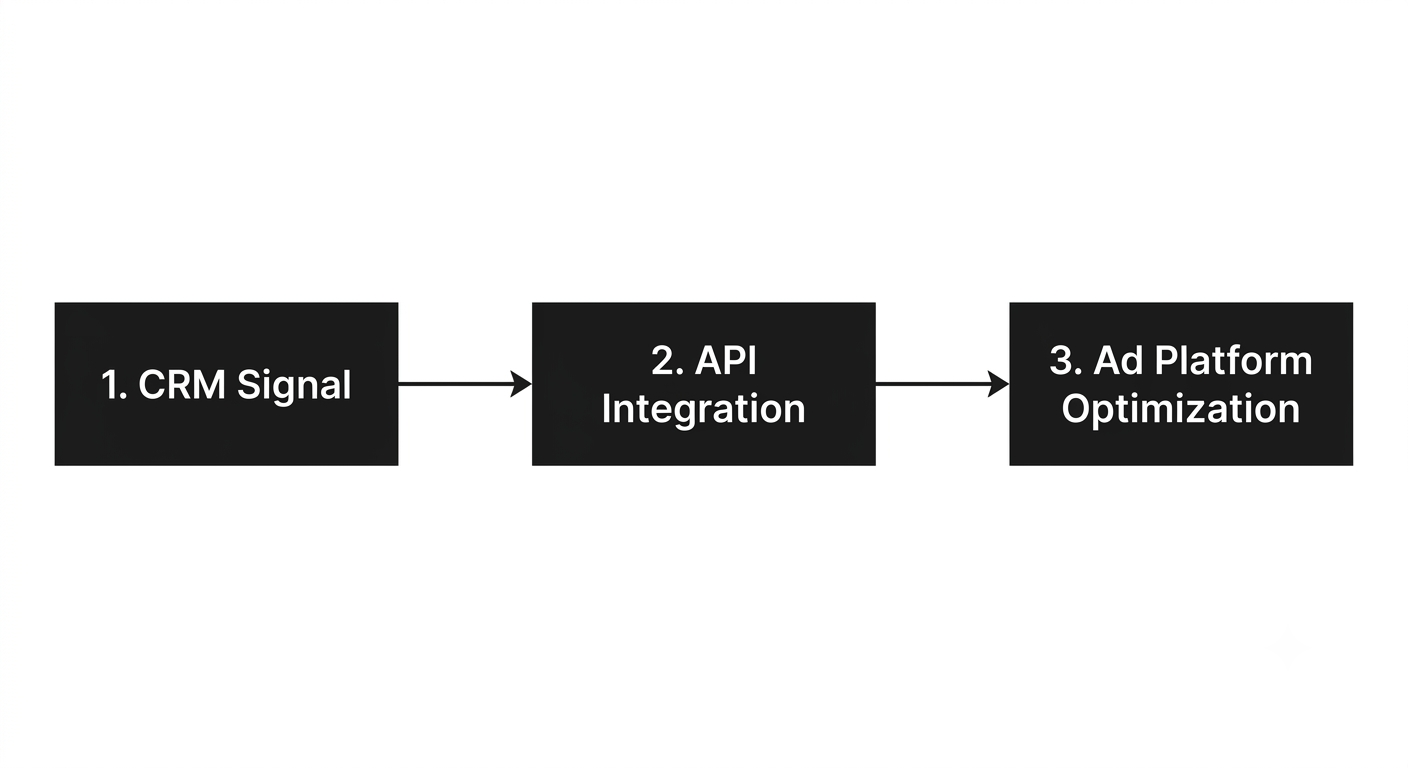
To fix this, you must establish an automated, real-time feedback loop between your CRM (such as HubSpot or Salesforce) and your ad network accounts. By leveraging Conversational API (CAPI) integrations and offline conversion tracking, you must pass deep-funnel milestones directly back to the ad platforms:
- Sales Qualified Lead (SQL) validation milestones.
- Formal discovery meeting completed tracking.
- Pipeline opportunity value verification.
When the ad network’s bidding engine realizes that a specific sub-audience or placement is generating genuine pipeline velocity while another is only generating dead-end MQLs, it will automatically shift your budget away from the automated bleed and focus heavily on high-intent conversion pathways.
Pillar 3: Establishing a Unified System of Attribution Tracking
You can no longer trust self-reported attribution metrics inside individual ad platforms. LinkedIn will claim a conversion if someone merely saw an ad within 30 days, and Google will do the same for a basic search impression. The result is a heavily distorted performance picture, riddled with double-counting and inflated ROI figures that hide systemic waste.
You need a unified, multi-touch attribution model that captures the full behavior of the B2B buying committee. With modern enterprise deals involving roughly 10 stakeholders across many digital touchpoints, your measurement must focus on account-level engagement, not just isolated individual clicks. Track every paid interaction alongside organic, direct, and content syndication activity to identify exactly which paid motions are compressing your sales cycle and driving clean, consolidated pipeline growth.
Protect Your Runway by Demanding Pipeline Truth
As a Series B founder, your core obligation to your board, your team, and your runway is ruthless capital allocation. Clinging to legacy, volume-driven paid media tactics in today’s highly automated ad ecosystem is a near-certain path to burning cash.
Stop applauding inflated impression counts and cheap, top-of-funnel leads that evaporate as soon as sales engages. Insist on full visibility into your downstream data. Require your marketing team and agencies to connect every ad dollar directly to qualified opportunities, improved win rates, and faster sales cycles.
By deliberately separating blended network inventory, integrating your ad platforms with real CRM pipeline data, and managing paid media as a fully accountable, measurable system, you can strip out marketing waste, de-risk your growth runway, and build a predictable pipeline engine that positions you to dominate your category.
Summary
Scaling after a Series B round means moving beyond volume-based marketing metrics and focusing on real pipeline velocity. When top-of-funnel indicators (like impressions and CTRs) look strong, but pipeline conversion falls by 25%, the underlying issue is almost always a mix of platform automation and audience fatigue. Google Demand Gen and similar products use blended inventory that quietly redirects your budget away from high-intent prospects toward low-value, accidental placements in mobile games and low-quality YouTube surfaces. At the same time, decision-makers are tuning out generic corporate outreach as systemic LinkedIn Ad Fatigue sets in.
To escape this growth stall and stop wasting capital, B2B SaaS founders must enforce rigorous, systemic accountability across their paid media programs. Practically, that means taking three immediate steps: separating video inventory from broad automated feeds to prevent inventory bleed, implementing offline CRM tracking so that deep-funnel milestones are pushed back into ad platforms, and rolling out multi-touch, account-level attribution to track the full buying committee. Stop optimizing for cheap MQL volume that overwhelms your sales team. Protect your runway by insisting on uncompromising pipeline visibility and tying every paid media dollar directly to revenue acceleration.