B2B procurement is undergoing a fundamental restructuring. For the past twenty years, the B2B buying process has been defined by human-to-human interaction. Marketing teams built websites to persuade, inform, and nurture human prospects. Companies focused on mobile design, conversion paths, and lead forms.
That era of human-centric commerce is ending. By 2026, a massive portion of B2B spend will be mediated by AI agents. This is a shift in the fundamental infrastructure of the global economy.
In this environment, a website is no longer just a digital brochure for a human audience. It is a data source for an automated vetting process. When an AI agent is tasked with finding a vendor that meets specific security, price, and capability criteria, it does not analyze copy in a traditional sense. It does not assess branding or testimonials. It evaluates the site as machine-readable data. If a digital presence cannot be parsed, validated, and structured by an agent, the company does not exist in the procurement funnel.
This transition is the emergence of Agent Readiness Optimization (ARO). The winners in 2026 are the companies that stop treating their websites as destinations for humans and start treating them as dynamic, structured knowledge bases that AI agents can use to provide direct answers and make procurement decisions.

The Reality of Agentic Procurement
Agentic procurement is the process of delegating the vendor selection and vetting phase to an AI agent. Instead of a procurement manager spending weeks issuing requests for proposals and scanning websites, they provide an AI agent with a set of constraints and objectives. The agent scans the web, analyzes the technical capabilities of potential vendors, assesses compliance, compares pricing, and shortlists candidates.
This process is objective and data-driven. It removes the friction of subjective marketing claims and replaces them with an audit of the technical layer of a web presence. When an AI agent visits a site, it looks for specific, unambiguous data points to synthesize an answer. It needs to know API capabilities, pricing, uptime guarantees, and security certifications.
If this information is trapped inside an image file, buried in a document, or obscured by marketing copy designed for humans, the agent ignores it. It does not include instructions for inferring meaning from general articles. It needs structured, machine-readable data to provide a direct answer.
Many B2B companies have a disconnect. They have invested in high-end design, video, and storytelling. While these elements have value for human stakeholders, they are often invisible or confusing to an AI agent. The technical architecture of most corporate websites is designed for visual display, not for programmatic extraction. To succeed in the era of AI-mediated spend, companies must implement a strategy that prioritizes machine-readability.
Moving Beyond SEO to Agent Readiness Optimization (ARO)
For years, SEO was the primary discipline for increasing visibility. Teams focused on keywords, search intent, and ranking in search results. Agent Readiness Optimization (ARO) is a different discipline. ARO is not about ranking for a search term; it is about providing the definitive, structured data that an AI agent requires to vet a vendor and provide a direct answer.
ARO requires a shift in how digital assets are structured. It requires implementing a technical semantic layer. A semantic layer acts as a translator between raw data and the AI agents that need to consume it. It ensures that when an agent asks, "What are the core technical capabilities of this platform?", it receives a direct, unambiguous answer, not a marketing description.
This involves several components. First, it requires using standardized schemas, such as Schema.org, to define the entities on a page. By marking up content, a company tells the AI exactly what each piece of information represents. Second, it requires that data be accessible and consistent across the entire web presence.
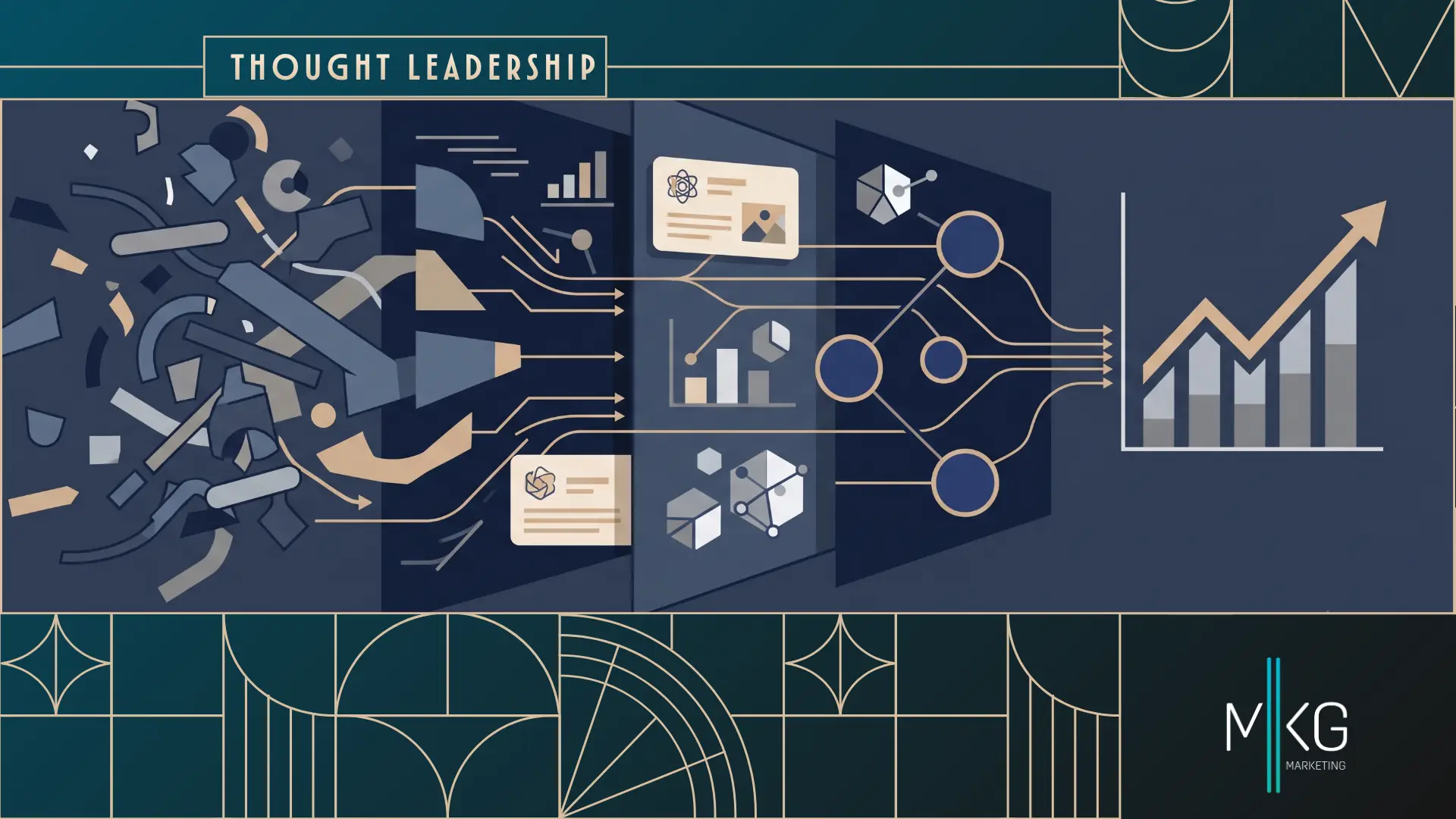
When a company treats its website as a knowledge graph, it maps the relationships between products, technical specifications, and organizational data. It creates a clear, interconnected structure that an AI agent can navigate to build its response. It moves from unstructured content to structured knowledge. This allows an AI agent to build a profile of a company without needing human intervention.

The Systematic Approach: Treating Your Site as a Knowledge Graph
The approach to this challenge is to move beyond the page-by-page content strategy and view the website as a comprehensive data system. It is necessary to focus on integrating services and technical architecture to create a resilient knowledge graph.
Superficial fixes are not effective. Instead, a technical audit of a site’s ability to communicate with AI agents is required. A company must analyze its ability to output structured data and ensure that technical documentation, pricing structures, and capability matrices are fully indexable.
This involves specific operational steps:
- Intent-Based Categorization: Structure your content based on how an agent classifies information, rather than how a human visitor navigates a menu.
- Data Prominence: Surface your most critical technical and commercial specifications within your structured data to ensure they are instantly discoverable during an automated audit.
- Machine-Ready Compliance: Format your compliance documentation—including security protocols, certifications, and uptime logs—for machine-learning ingestion, so automated systems can verify your credentials without human intervention.
This approach requires collaboration between your technical and marketing teams. The marketing team provides the strategic narrative, while the technical team ensures it is translated into a language agents understand. By combining these perspectives, a brand ensures its authority is reflected in its machine-readable data.
When a company treats its site as a knowledge graph, it prepares the business for the future. It moves from a model in which it hopes marketing materials influence the buyer to one in which it actively supplies the data the agent uses to confirm fitness as a vendor.
Why Machine-Readable Content Wins
The primary advantage of having a machine-readable website is the velocity of the procurement process. An AI agent is not slowed by human schedules or traditional sales bottlenecks. When a site provides the answers a company needs immediately, that site becomes the direct, verifiable option.
Key advantages of machine-readability include:
- Always-On Availability: Unlike human sales teams, AI agents operate 24/7. Your site is being vetted for procurement regardless of time zone or office hours.
- Removal of Friction: AI agents do not wait for sales representatives to respond to emails or demo requests. They require immediate, self-service access to technical data to complete their vetting process.
- Instant Verification: By surfacing specs, security protocols, and pricing in a machine-readable format, you allow an agent to confirm requirements in seconds, positioning your company as the most efficient and low-risk choice.
Contrast this with a competitor whose site is visually polished but lacks the technical structure required for indexing. That competitor is filtered out by the agent before a human ever sees their brand. This is an automated process of elimination. A company may not even know it was considered for a procurement mandate, nor why it was passed over.

The Competitive Advantage of Structured Data
The transition to ARO is a competitive advantage. Companies that understand how to present data in a structured, semantic format will have an advantage in the automated B2B marketplace.
Consider the difference in how two companies present service levels. One company uses an infographic with text that an agent cannot parse. The agent cannot process the information, which creates a high level of risk. The company is filtered out. The second company uses a structured data table that clearly maps service levels to technical specifications, accompanied by schema markup that validates those claims. The agent ingests this data instantly, verifies it against the procurement requirements, and flags the company as a candidate with high confidence.
This second company wins because it made the task easier for the agent. It demonstrated operational maturity. In the era of AI-mediated spend, technical documentation is sales collateral. API references are landing pages. Compliance data is the brand story.
Organizations must build this infrastructure. They must move from a focus on brochures to a data-driven model. A website should act as a sales engineer, providing the data agents need to select a company as their preferred partner.
Recalibrating Your Digital Strategy
If a digital strategy is currently too human-centric, now is the time to recalibrate. This is not about sacrificing brand voice or the experience provided to human visitors. It is about adding a layer of technical rigor that makes the site work for both the human buyer and the procurement agent.
A structured approach to ARO involves a technical audit of the existing infrastructure. Companies must analyze where data is hidden, where structures are brittle, and where opportunities are lost because information is not parsable. They then implement a structured data strategy that enables knowledge to flow into the systems that drive the majority of B2B procurement decisions.
This is not a project that can be delegated to a generic agency. It requires a combination of technical capability, strategic oversight, and an understanding of how AI models consume information. It requires the discipline to treat information as a system.
By controlling the technical semantic layer, a company controls its future in the B2B market. It ensures it is not left behind as spend shifts to vendors who have built the infrastructure to support AI-driven answers.
Final Thoughts: The New Era of Visibility
The transition to AI-mediated procurement is a significant shift in the business environment. It requires a change in mindset—from how to persuade the buyer, to how to provide the data the agent needs to select a vendor.
We specialize in the intersection of services and technical architecture. We help clients navigate this shift by building websites that are robust, structured, and intelligent. We provide the technical backbone that allows a business to thrive in a world of automated decision-making.
Do not let a brand fall into the gap between traditional marketing and AI-driven procurement. Organize expertise, structure data, and build a digital presence that's future-ready. The era of the agent is here. Ensure you are ready.
Summary
The landscape of B2B procurement is shifting toward agent-mediated models. This transition necessitates a shift from human-centric web design to Agent Readiness Optimization (ARO), which prioritizes machine-readable content and structured semantic layers. By treating a website as a knowledge graph, a company allows AI agents to autonomously vet the business, verify technical capabilities, and provide direct answers for procurement mandates. The competitive advantage now lies in the ability to present pricing, specifications, and compliance data in a way that is easily consumable by the systems that drive the modern B2B economy.