Paid social has a credibility problem—not because it stopped working, but because platform and CRM stories don’t line up.
You’ve seen it: the platform says, “conversions are up,” sales says, “We can’t find these people.” In-channel, numbers look great. In the CRM, they don’t. That gap doesn’t just confuse—it creates friction.
Marketing thinks they’re delivering. Sales thinks they’re getting ghosts. Leadership thinks they’re paying for an activity no one can defend. That friction is costly: it slows decision-making, erodes trust, and pushes teams to chase easy metrics instead of real revenue.
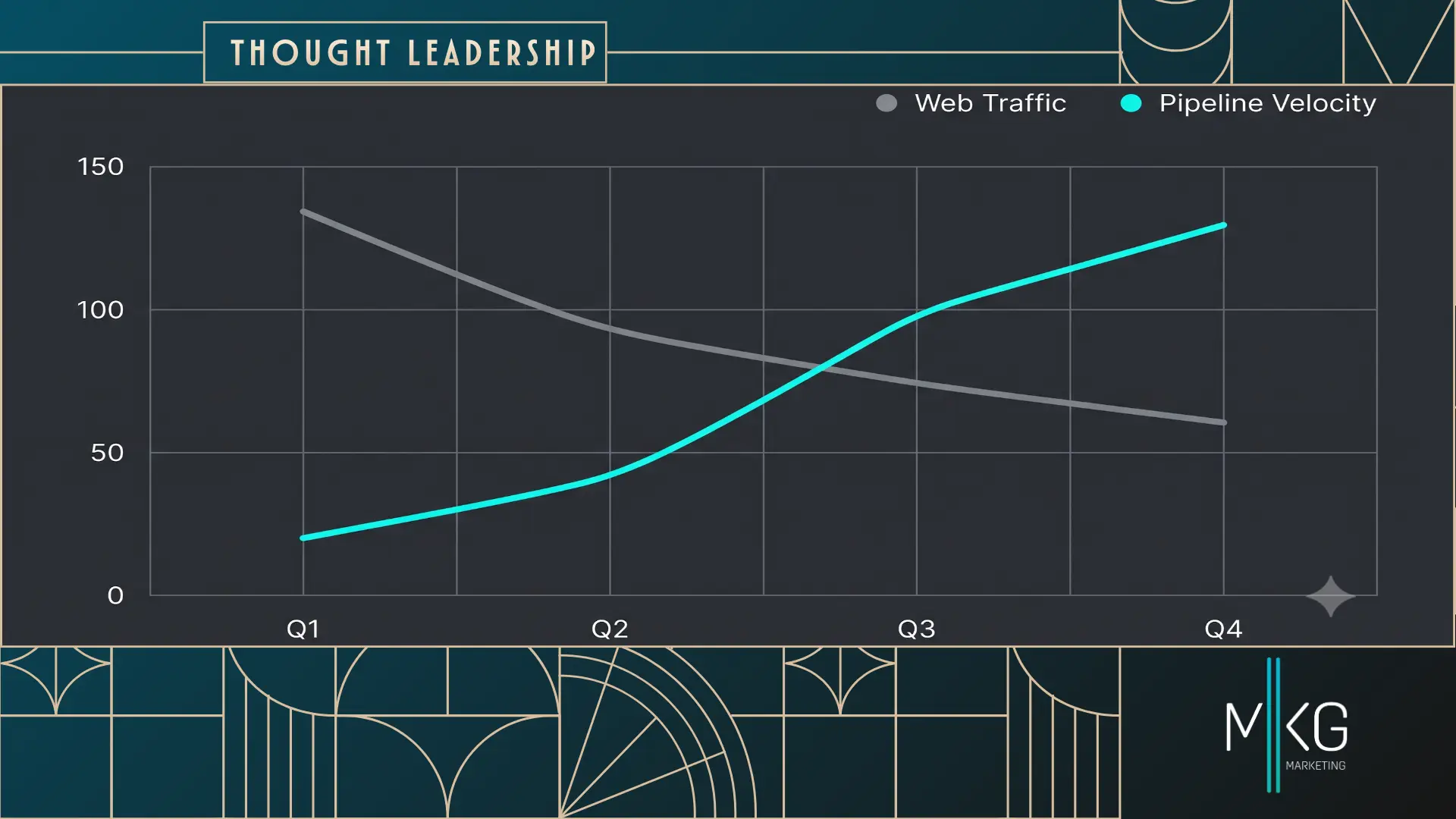
In 2026, this gets worse. Privacy changes, modeled conversions, partial tracking, cross-device behavior, and AI optimization make platform reporting more aggressive—sometimes “right” in-platform and still wrong where it counts: your revenue system.
That’s the problem: an attribution mirage—what happens when measurement turns into marketing.
The fix isn’t abandoning paid social. It’s rebuilding truth and accountability from click to closed-won.

The Chaos Hook: When “Conversions” Don’t Exist in the CRM
Here’s the chaos: platforms like LinkedIn can report conversions that never show up as real records downstream.
On paper, it looks like success. In the CRM, it doesn’t exist.
This shows up in a few familiar ways:
- Leads appear in a platform dashboard but don’t exist in your CRM.
- Leads exist, but the source is wrong or missing.
- Leads exist, but sales can’t contact them, qualify them, or tie them to revenue.
- “Conversions” spike after tracking changes, but the pipeline doesn’t move.
- Marketing optimizes toward what the platform calls a conversion, while sales judges success by meetings and revenue.
And then comes the predictable meeting dynamic: marketing defends the report, sales rejects the leads, and leadership gets stuck trying to reconcile two realities.
This isn’t a “marketing vs sales” personality problem. It’s a data pipeline problem.
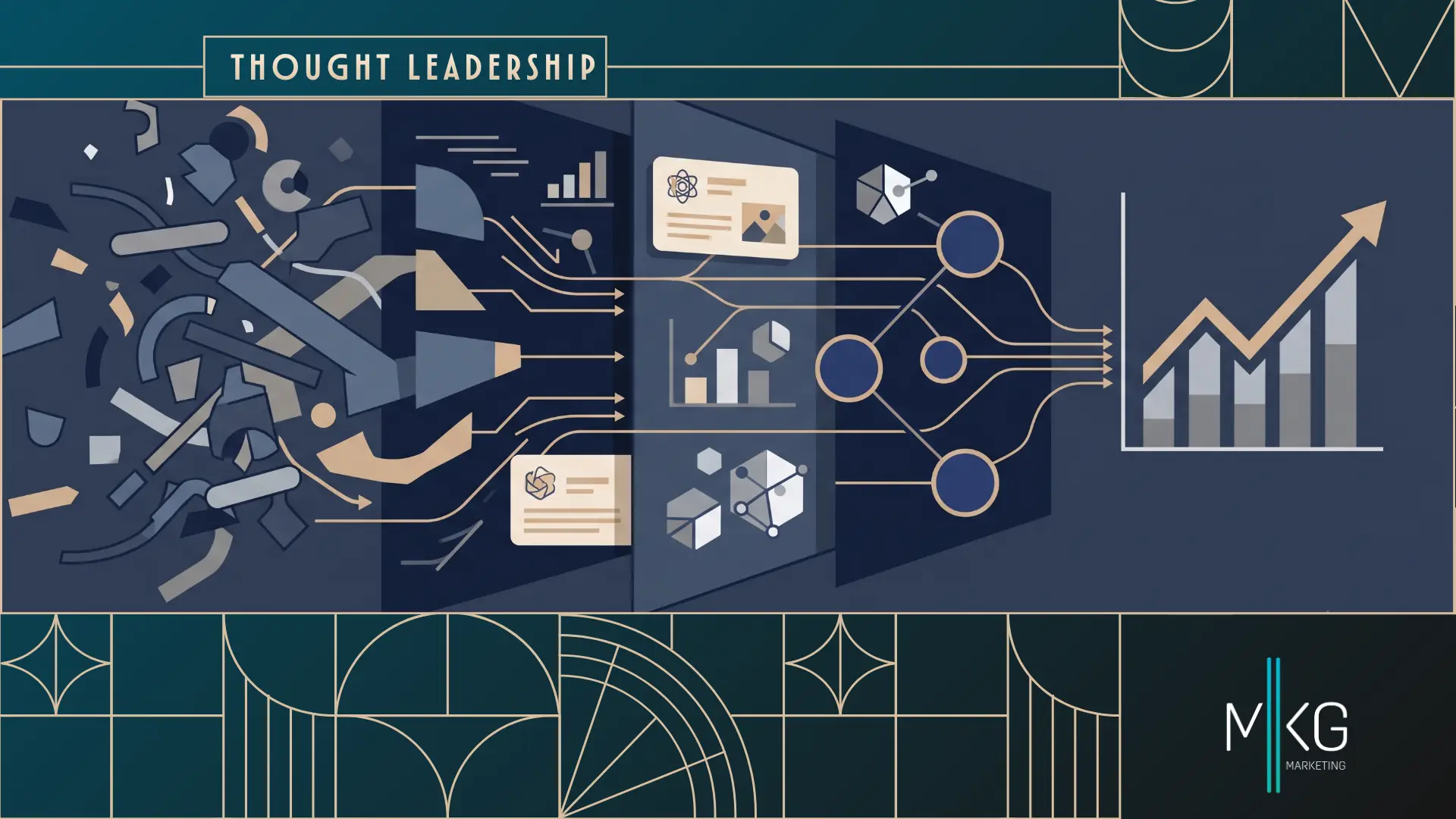
If the pipeline from click → form → database → qualification → opportunity → closed-won is broken anywhere, you’ll get mirage metrics. And the more you spend, the more confidently wrong the story becomes.
The MKG Pivot: Truth + Accountability (TRACK) from Click to Closed-Won
At MKG, we treat this as a TRACK problem—specifically, the pillars that keep performance honest: Truth and Accountability.
Truth means we don’t accept platform-reported success as reality. We verify it in the systems that carry revenue.
Accountability means marketing performance is tied to outcomes that matter—meetings, opportunities, closed-won—not just clicks or in-platform “conversions.”
Here’s the practical version.
LinkedIn reports 48 conversions last month. Sales says they only worked on 12 new records. We don’t debate the dashboard—we trace one conversion end-to-end:
- Click → UTMs captured
- Form submit → submission event fires
- Form tool → UTMs stored with the record
- CRM sync → lead/contact created or matched
- Routing → owner assigned, no silent rejects
- Sales disposition → qualified or not (with a reason)
- Progression → meeting → opportunity → closed-won (or it stops)
When the numbers don’t match, it’s almost always a breakpoint: duplicate counting, UTMs dropped, CRM rejects/quarantine rules, or “conversions” that matched existing contacts and never became new pipeline.
That’s the pivot: optimize to what the business can prove—not what the platform can claim.

The Truth Audit: How to Validate Paid Social Performance End-to-End
If you want to solve the mirage, you need to stop debating dashboards and start tracing the pipeline.
Here’s a practical audit sequence we run.
1) Start with one conversion event—and follow it like a detective
Pick the primary conversion event you’re optimizing toward (form fill, demo request, contact form, etc.). Then map the actual path:
- Click captured → landing page loads → form submit → thank-you event → platform conversion recorded
- Form data captured → routed to CRM → assigned to owner → disposition recorded
- Meeting booked/held → opportunity created → outcome logged
You’re not looking for perfection. You’re looking for breakpoints—places where reality disappears.
2) Verify identity resolution and deduplication
A “conversion” isn’t valuable if it creates duplicates, overwrites existing contacts, or gets routed incorrectly.
Common issues:
- Duplicate records for the same person across sources.
- Auto-enrichment tools overwriting attribution fields.
- Form tools passing partial data (missing parameters).
- CRM rules that block creation when required fields are missing.
If sales can’t find the record, nothing else matters.
3) Validate attribution fields where decisions are made
This is where the mirage often lives. The platform sees one story; the CRM sees another.
You need to confirm:
- UTMs persist through redirects and form tools
- First-touch and last-touch logic is consistent
- “Source / Medium / Campaign” fields populate reliably
- Offline conversion uploads (if used) match the right records
If your CRM attribution is inconsistent, your reporting will become political.
4) Build a reconciliation report that both teams trust
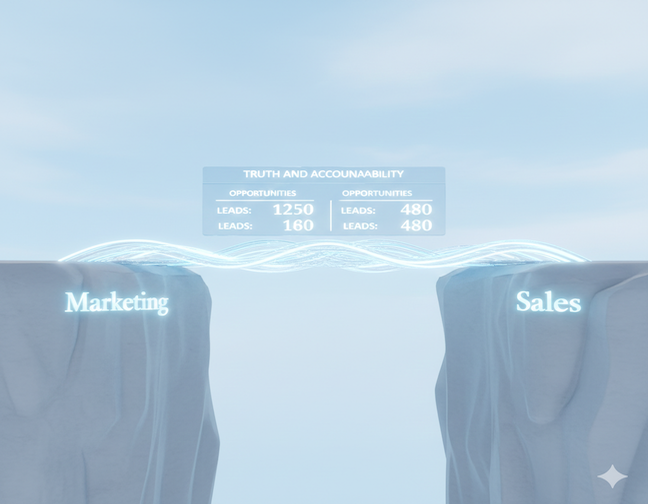
This is the bridge to Marketing-Sales Alignment 2026: one shared scoreboard.
A reconciliation report answers:
- How many platform conversions became CRM records?
- How many became qualified conversations?
- How many became opportunities?
- What’s the lag time by stage?
- Which campaigns produce real downstream movement?
This turns “platform performance” into a business conversation.
What Changes When Truth and Accountability Are Non-Negotiable
When you run this audit, three things happen fast:
- You stop paying for invisible outcomes.
Campaigns that “look great” but don’t produce real records get exposed. - You regain control of optimization.
Instead of optimizing for platform-defined conversions, you optimize for verified signals that feed into the pipeline. - You rebuild trust between marketing and sales.
Because the conversation shifts from “I swear these conversations are real” to “Here’s the chain of evidence from click to closed-won.”
That’s what Truth does. It stops the arguing.
And Accountability makes the next step possible: changing what you optimize for.
In 2026, paid social won’t be won by the teams with the flashiest creative or the biggest budgets. It will be won by the teams who can prove what’s real.
Because when measurement becomes marketing, the only way forward is to audit the truth.
Summary
Platforms will keep reporting conversions. The question is whether those conversions survive the journey into your revenue system. If your LinkedIn “wins” don’t appear in the CRM, you’re facing an attribution mirage, and it will keep creating friction until you audit the click-to-closed-won pipeline. Using the Truth and Accountability pillars of TRACK, validate identity, attribution fields, routing rules, and stage progression, so Paid Social ROI is defensible, and Marketing-Sales Alignment 2026 becomes a shared reality, not a debate.