The internet is drowning in content, and your buyers are getting picky.
Not picky about the "let’s compare five options" way. Picky in the I’m not reading any of this way.
That’s the Content Inflation Crisis: the supply of content exploded, the average quality dropped, and trust became a scarce resource. AI accelerated the problem by making it cheap to produce words that look convincing but say nothing. The result is what people are calling AI-slop—generic content that feels polished yet strangely empty.
And the consequences are real.
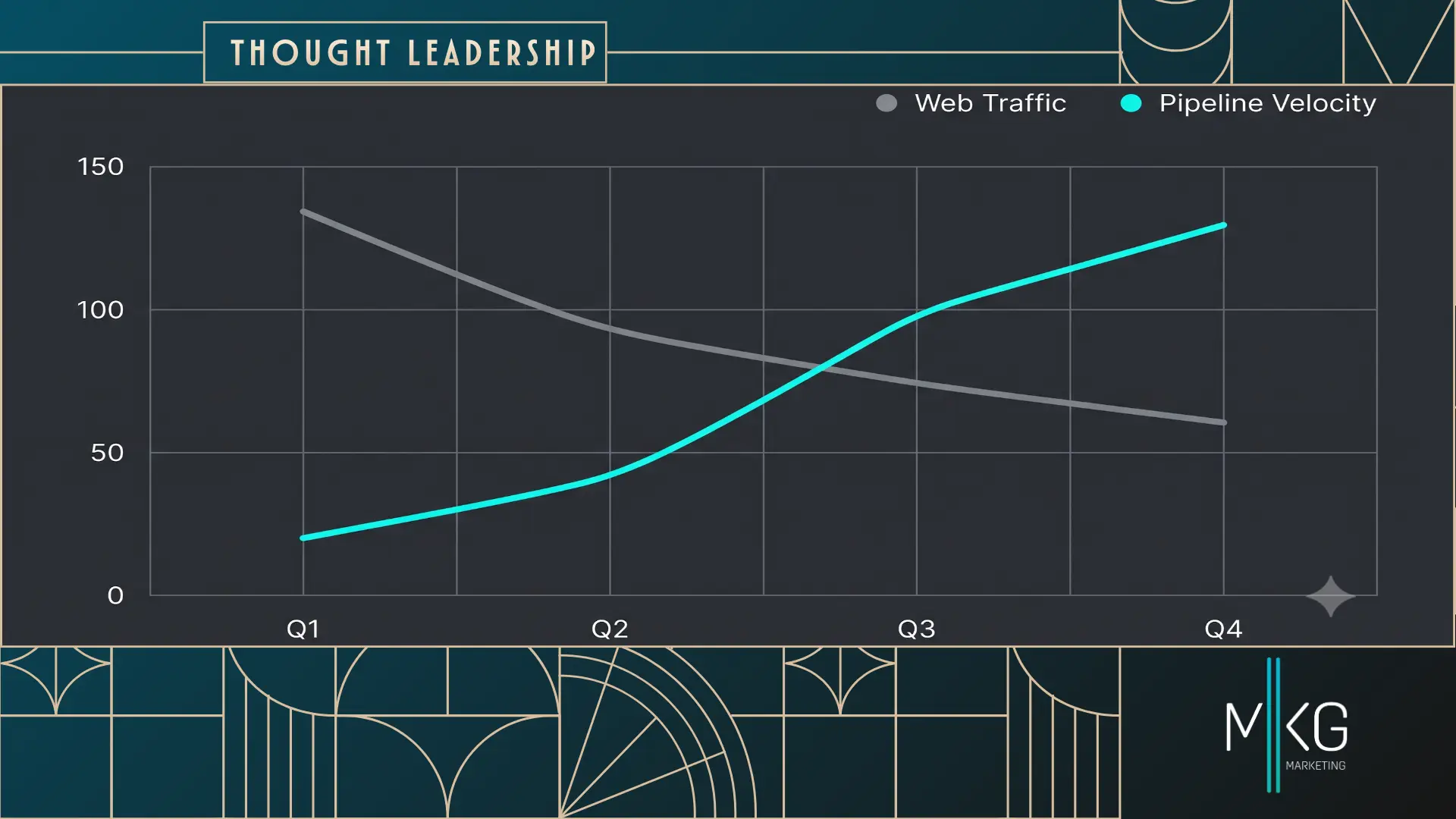
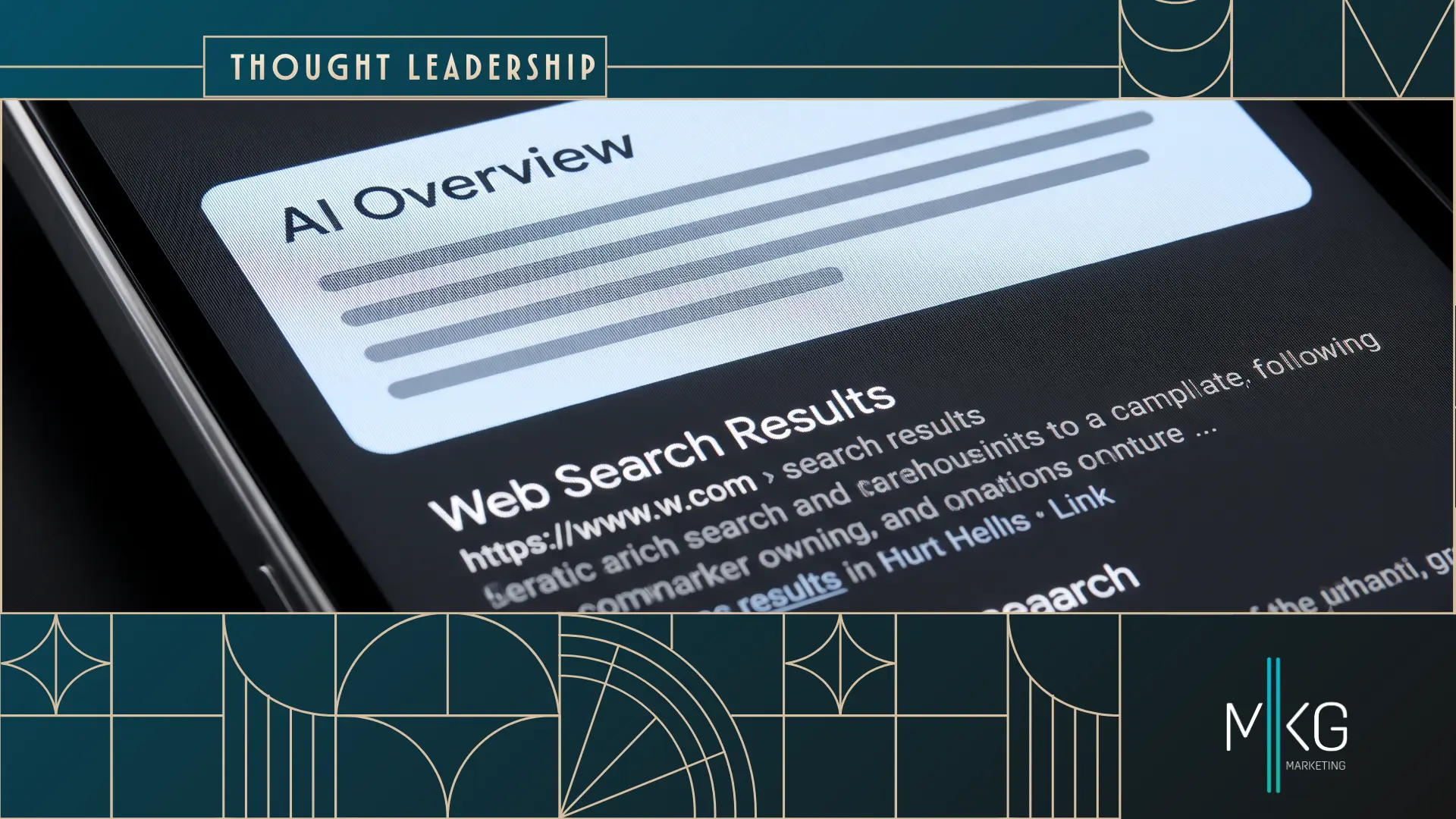
Gartner has predicted that traditional search engine volume will drop 25% by 2026, as people shift from classic search toward AI chatbots and other virtual agents. That isn’t just a traffic forecast. It’s a behavioral forecast: fewer clicks, fewer opportunities to win the visit, and more decisions made within summaries.
So even if your content still ranks, it may not perform. Because buyers are filtering faster, and AI systems are summarizing the web into shortlists.
In other words, content isn’t competing for attention anymore. It’s competing for trust.
If your current strategy is to publish more, 2026 will feel brutal. More content will not solve a trust deficit. It will usually make it worse.
What works now is the opposite: fewer pieces, more substance, and a system built to compound authority over time.

When “More Content” Produces Less Impact
Here’s the chaos: marketing teams are shipping more than ever, and results are getting harder to prove.
Buyers have learned to pattern-match fluff. They can smell a generic article from the first paragraph. They skim, bounce, and move on—or they ask an AI tool to summarize the answer without visiting a site at all.
That creates a nasty double bind:
- Your team publishes more to keep up.
- The market is less trusting as average content quality declines.
- AI systems summarize your category using sources that seem more credible than your own.
- Your top-of-funnel traffic becomes less predictable, even when rankings look fine.
This is why traditional content marketing is starting to feel ineffective. It’s not that the content stopped working. It’s that mediocre content is no longer tolerated.
And if your brand blends into the sea of sameness, you don’t just lose readers. You lose Brand Trust—the real currency now.
Knowledge + Consistency (TRACK) in a World of AI Mediocrity
At MKG, we pivot out of this inflation trap by leaning on two pillars that don’t care about trends: Knowledge and Consistency.
- Knowledge means your content is led by real expertise—insight the market can’t get from a generic rewrite. It’s opinionated, specific, and grounded in experience.
- Consistency means your expertise shows up predictably over time, across topics, and across formats, so trust compounds rather than resets with every post.
This is where most brands get it wrong. They think authority is a content volume problem. It’s not. Authority is a signal quality problem.
And in 2026, signal quality faces a new requirement: it must survive AI.
That’s why we connect TRACK to SVO (Search Visibility Optimization) and Generative Engine Optimization. The goal isn’t just to be discoverable. It’s to ensure your best human insights are the ones AI engines actually cite when generating answers.
Because if AI systems become the front door, you want your expertise to be the source material—not someone else’s summary of your category.

What Authority Looks Like When AI Is Doing the Summarizing
If you want to build authority in this era, you need to understand what AI engines tend to reward.
They don’t love your brand. They love what they can confidently reuse:
- Clear definitions
- Specific frameworks
- Distinct points of view with reasoning
- Examples, constraints, and lessons learned
- Consistent language across your site and footprint
- Proof that sounds like reality, not marketing
This is where AI Governance in Marketing matters. Not as bureaucracy—as discipline. Governance is how you prevent your brand from becoming an inconsistent set of claims across dozens of posts written by different people (or tools). It’s how you enforce a shared voice, shared definitions, and shared standards so the market—and AI—can learn who you are.
Authority is built when your content is:
- Original (not a rewrite of what’s already ranking)
- Structured (easy to extract and summarize)
- Repeated (reinforced across multiple angles over time)
That’s the play. Not more content. Better signal.
The SVO Playbook: Make Your Expertise Citable
SVO is the operating system for modern visibility. It forces one question: Will this be trusted, reused, and cited—across surfaces?
Here’s how to execute SVO without turning it into an endless content project.
1) Pick 3–5 “authority lanes.”
Most brands publish across too many topics and end up owning none of them. Choose a small set of themes where you can be unmistakably helpful and consistently specific.
This is the foundation of Content Strategy 2026: focus beats frequency.
2) Build answer-shaped assets, not generic posts
AI engines tend to cite content that is structured like guidance:
- “What is X?” definitions with clear boundaries
- “X vs Y” comparisons with tradeoffs
- “How to choose” decision criteria
- Step-by-step frameworks
- Common mistakes and how to avoid them
These formats aren’t trendy. They’re extractable.
3) Add proof that can’t be faked
Authority doesn’t come from adjectives. It comes from evidence:
- What you tried
- What happened
- What you changed
- What you learned
- What you’d do differently next time
This is where human content wins. AI can generate generic advice. It can’t generate your lived pattern recognition.
4) Standardize language across the footprint
If you use five different phrases for the same concept, you dilute your signal. Consistency matters for humans and machines. Define your core terms, naming conventions, and positioning statements—and reuse them across content.
That’s governance again. It’s also how you stop AI from summarizing you inaccurately.
5) Publish less, but publish on purpose
The goal is compounding authority. That only happens when each new piece reinforces a lane, links to the core assets, and adds a new layer of depth.
If your content calendar is a roulette wheel, authority won’t compound. It will reset.

The Bottom Line: Authority Is the Only Moat Left
In an era of AI mediocrity, the brands that win won’t be the ones who publish the most. They’ll be the hardest to replace.
That requires a shift:
- From volume to signal
- From generic to expert-led
- From one-off posts to consistent authority lanes
- From ranking to Generative Engine Optimization that earns citations
- From content output to Brand Trust as the metric that matters
If Gartner is right and classic search volume drops meaningfully by 2026, the brands that survive will be the ones whose expertise shows up in the answers, not just on the results page.
The Content Inflation Crisis is real. But it’s also an opportunity.
Because when most content becomes noise, the market becomes desperate for signal. And if you build with Knowledge, enforce Consistency, and run SVO like a system, your brand won’t just be visible.
It’ll be trusted.
Add in a Call to Action section here that guides users to the next logical step (link to SVO Services page,
Book a Discovery call, Join our Newsletter.