Jenna Nelson
Jenna Nelson is the founder of HerAIgency, helping founders harness AI and automation to scale sustainably, reclaim their time, and grow without sacrificing their vision.
Overview:
Jenna Nelson joins the show to unpack how search, content, and attribution are changing in 2026. They cover why content now has to work for both humans and machines, how interactive AI tools can replace static lead magnets, and why visibility needs to become the new leading indicator. Jenna also explains how to think about AEO, GEO, and SEO as one connected system, what metrics still matter when traffic drops, and what to do first when your pipeline starts to go quiet. If your old tracking playbook isn’t making sense anymore, this episode offers a practical way forward.
Transcript:
Jenna Nelson 0:00
The answer, and the complicated one, is you're writing for both. We still need to be producing human-readable content. I still want you to produce things that, when you read them back to yourself out loud, make sense and sound like something that a human wants to interpret. However. We also need to acknowledge the fact that machines are reading our content and our information as well, and that machines read it differently than a human does. Machines are not seeing your branding. They're not seeing your pretty logo. They're not focusing on the animations on your page; that's not what a machine is reading. So structuring your content in a way that is machine-readable is really, really key.
Kerry Guard 1:01
Welcome back to Back on Track. I'm Kerry Guard. If you're a B to B founder or small marketing team looking at a CRM full of direct and organic leads, and you have no idea which of your marketing bets is actually paying off. You are not alone. Between AI snippets, killing the click, and dark social hiding the conversation, the old tracking playbook. I hate to say it, folks, cliché or no, cliché is dead. Today, we're talking to Jenna Nelson, founder of her AI agency. A Oh yeah, AI agency. I love it. How to Survive the shift to zero, click search, and why your visibility is about to become your most important leading indicator. Jenna, welcome to the show. Thank you for having me. I'm excited to be here. So excited to have you. I could talk about this stuff all day. But before we get straight into it, warm up. Sesh. Before we dig in, let's clear the air. Give me the one sentence reality check for these 2026 it's, we're only two months in. The buzzwords are out of control, so let's rate them in here. Zero click search, yes, yes. One sentence, reality check for these buzzwords in terms of, like, what do they mean to you? And is this a good thing or not a good thing?
Jenna Nelson 2:24
It I don't know that it's good or bad. It's neutral, it's just a change. I think that's the one-word sentence. We are in a very evolving world of digital search right now, and what you kind of have to do is adapt. I think we're in the Adapt moment right now. So there's a lot of change management happening. There's a lot of old tricks dying off, and then new opportunities that are, you know, available to basically, kind of get in while it's still early. And that's kind of what I think is really beautiful right now, is that a lot of people haven't started that transition yet, so there's a lot of opportunity maybe for some smaller businesses to make up some ground against some of these, like really established entities, just because they haven't started that switch yet.
Kerry Guard 3:20
Stay tuned, folks, we're going to unpack all of that one sentence for dark social.
Jenna Nelson 3:28
You know, it's not as scary as it sounds, and there are ways to surface good content and your content without playing that game.
Kerry Guard 3:38
We're going to unpack that, too, folks, the contact us page as an attribution source.
Jenna Nelson 3:50
Kind of irrelevant at this point. I think people are finding you in so many different ways. If you're still relying on just a contact us page. You're leaving a lot of opportunity from other pathways.
Kerry Guard 4:08
And last one for you, impression, volume.
Jenna Nelson 4:15
That's a vanity metric. It's, you know, you want to pay attention to that. Obviously, there's some data there, but I don't care if you're getting 10,000 impressions, if they're the wrong impressions, or impressions that are never going to convert because it's not your audience; they're kind of meaningless.
Kerry Guard 4:33
The right impressions for sure, for sure. All right? Jenna, yeah, up Jenna, when the click disappears because AI is answering the question on the SERP, how do we shift our messaging? Are we now writing for the LLM or the human who's just reading the snippet?
Jenna Nelson 4:55
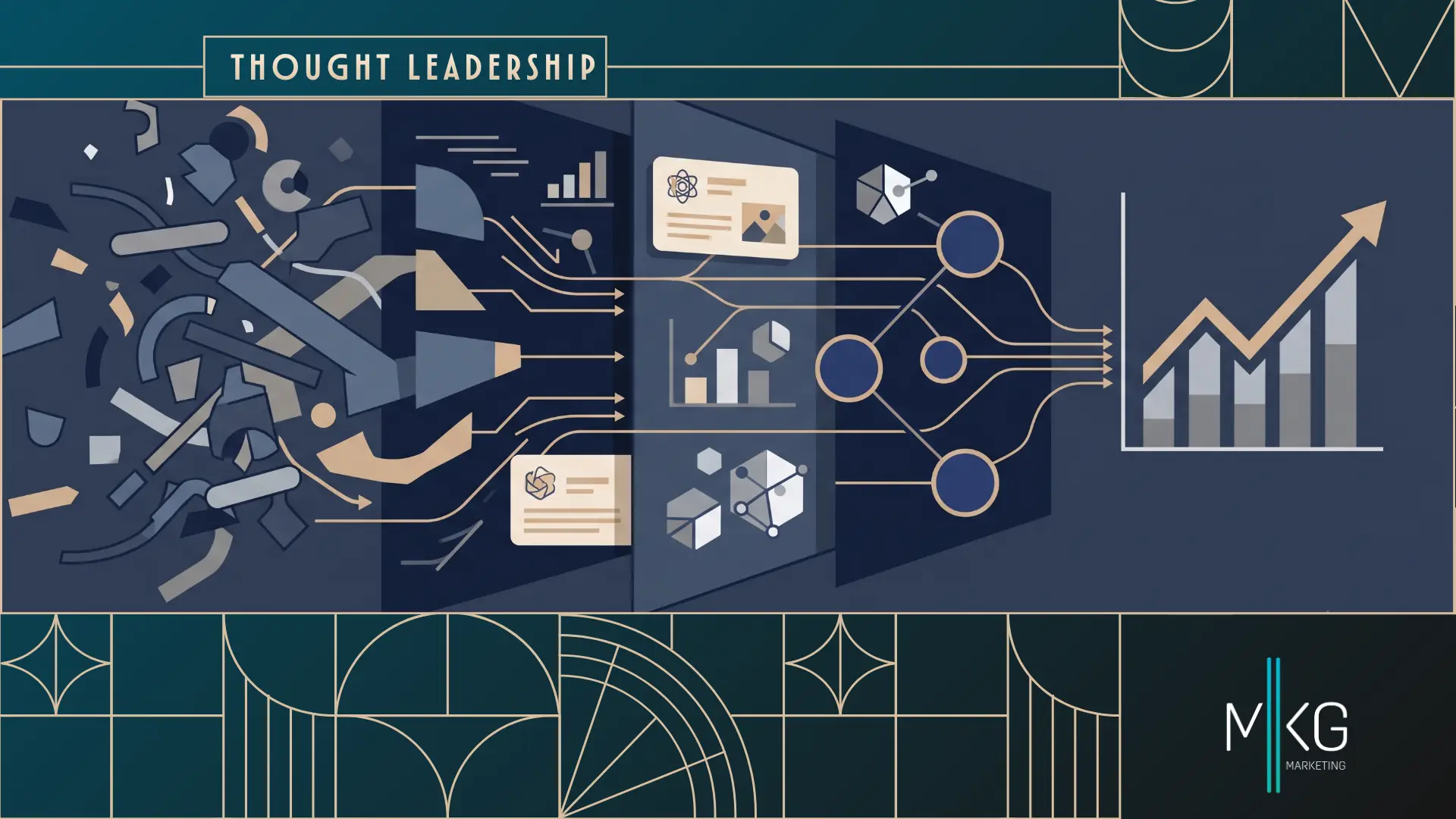
The answer, and the complicated one, is that you're writing for both. We still need to be producing human-readable content. I still want you to produce things that, when you read them back to yourself out loud, make sense and sound like something that a human wants to interpret however. We also need to acknowledge the fact that machines are reading our content and our information as well, and that machines read it differently than a human does. Machines are not seeing your branding. They're not seeing your pretty logo. They're not focusing on the animations on your page. That's not what a machine is reading. So structuring your content in a way that is machine-readable is really, really key. Because ultimately, we're trying to give that machine a roadmap to surface our content so that a human gets to it. Ultimately, that's the goal, right? Like we want a machine to surface it so that it gets in front of your audience, which are, in fact, humans, hopefully.
Kerry Guard 6:01
Yes they are, yes, yes they are. It is important. I totally agree that you need to do both. I was talking to somebody the other just the other day, and they mentioned that their company is making a shadow website. And I was interested. They're like, Yeah, we don't expect people to come here. I was like, but you expect it to show up at the llms? And they're like, Well, yeah. And I was like, and the humans who want to verify where the contents coming from, you don't think they might click through to see what the content is saying. And they were like, oh.
Jenna Nelson 6:36
Yeah, that's such an interesting concept. I'm working on a project right now where we are trying to take essentially a completely unknown brand and unknown concept and get them quoted in line in the LLMs. And we've been having that conversation, right? It's like, are we writing for the human? Are we writing for the LLM? And it's both. And so, you know, I've gone back and forth with their team a lot, where it's like, here's why I'm structuring it this way, because my goal is to get it surfaced in the LLM, but also I need it to pass the human checkpoints as well. So that's an interesting conversation, for sure.
Kerry Guard 7:16
You said that static PDF is dead if we can't get a white paper to see who's interested. What is the one interactive asset a small team can build to identify intent in a zero-click world?
Jenna Nelson 7:31
So I love basically interactive AI tools as a front entry point to your to your content, to your to your business as a whole, static PDF, as I said, they are dead. Nobody wants to just read a PDF anymore. We want something that actually helps us do something, or figure something out, or get to the answer. We want tools. So I really like and really, you know, for my clients, I'm building these front-end interactive tools that do two things. One, they pre-qualify for, you know, it's saving a lot of time on sales calls. It's saving a lot of, you know, kind of mismatch between, is this really a fit for this person? And I think that's good on both the client side and on the business side, right? Like we don't want to get honest, I don't want to get on a sales call and spend an hour finding out that this isn't the solution that's meant for me or right for me. That's a waste of my time, and it's a waste of the business's time. So that it does that one thing, it also creates that initial brand experience, which I think is really powerful as well. It can you can put coaching tidbits in there. You can kind of set expectations for, like, how your process works, or how working with your business works. So I think it's a great initial brand touch point that, you know when trained properly, when it is usable and functional as a tool, I think it gives your audience that initial like comfort level of, oh, they get it. They know what they're talking about. This is the right answer for me, or this isn't the right answer for me. This is way off of what I'm looking for, and they kind of self-excite themselves through that process.
Kerry Guard 9:24
So are you saying somebody comes to your website, but instead of having a PDF to download, they start interacting with an LLM, essentially, that's totally trained on all of your information and content.
Jenna Nelson 9:36
Absolutely. Yeah, I have that on the front end of my own website. It's like a strategist advisor. So it helps them kind of find, like, their initial point of entry with me, like, where are you Where? Where should you go? Do you need to book a call? Do you need to go this way? I think it helps cut down on confusion. You know, a confused mind doesn't buy, so I think that's a great first entry point. I have clients who, you know, might have a self-guided course or something, or they have, like, a one-on-one program, and we've got these, you know, tools at the very beginning that help them kind of self-evaluate where they are and which path to take. So, yes, I think that when you bring somebody to the website, the very first thing you can do is interact with them and collect their information, right? Because we want that on the back end. We want those leads. We want that information in our CRM, but also help funnel them to the right place. I think that's a really powerful tool, and it doesn't require, you know, them, to download something and then probably leave it in their inbox and never actually come back to it, which, let's face it, is what's happening to most of your PDF lead magnets at this point, because it's become so oversaturated, nobody's reading them, right? Or they're, you know, oh yeah, I want that checklist. Well then, they're never coming back and using the checklist, so they're never getting to that next step that you want them to take. This is instant. It happens, you know, immediately, and it's quick. You know, most of these tools, I would say, if somebody's spending more than three minutes with it, they're probably bouncing. So it's quick, and it's efficient. And I think that's really where we're at as a society online right now. We want quick answers. We want answers. We want to move forward. We want to get to the next thing. We want to personalize Exactly, exactly.
Kerry Guard 11:32
Yeah. What an interesting way are you using a tool to help you build these? Are you vibe coding it? How are you building these tools?
Jenna Nelson 11:41
Yeah, so it depends on what I need it to do. I am a huge supporter of mind pal. I love the Mind Pal platform and how we can customize those individual kinds of agents and chatbots. So I build, for most of my clients, I build on Mind Pal. Sometimes a custom GPT will do it, but you're really limited there with what information you can write back or how you can collect that lead information; it requires a lot more steps. So I really like the mind pal process, because we can web hook it right back to the CRM, and they're getting, you know, name, email, maybe the whole chat, if you want that. So I'm a big, big Mind Palette supporter. And then you know, lovable is another good option. You can create a lot of quick no-code stuff on lovable as well.
Kerry Guard 12:31
Heard a lot about lovable. Lovable, yeah, lovable, yeah, I love. Okay, that's a clear directive, right there. Folks. Zachary Walker, thanks for joining us, sir. Lovely to see you. He says, truly developing content for two entirely different audiences is a marketer's dream. That might be sarcasm. We feel you, sir. We feel you. Yes. Let's talk about leading indicators. You mentioned them earlier in terms of when we were talking about, when we alluded to them, in terms of impressions. If we can't see the path from LinkedIn to the website, what are the three metrics in your brand visibility spreadsheet that actually matter right now?
Jenna Nelson 13:15
Conversions, first of all, like, let's start at the top right. Like, if the content, I don't care how many leads you're getting. I don't care about your return on ad spend. If they're not converting, it's fairly useless. So I think, you know, conversions are top still the thing, right? Like, that's the most important. Obviously, you know, there's a case there for, you know, if maybe they don't immediately convert, but they become a follower, or they're opening your emails. I think email open rate is still really important. Email is still kind of one of the top revenue sources in terms of, you know, click through. So I think I want to see your email list growing, and I want to see people opening those emails. I think that's probably my secondary metric. Yeah, absolutely. And then, you know, third, you know, if you're using paid ads, certainly that return on ad spend is really viable and important to pay attention to. And that's that goes back to conversions. I see it all the time where they're like, oh, yeah, my ads are converting by, you know, somebody's filling out a form, or they're entering the funnel, but they're not converting. And I'm like, well, then your return on ad spend is actually not what you think it is, because they're not going all the way through and becoming a customer. So, yeah, that's the paid ads approach. Certainly, you know, social impressions and followers, that can be really relevant, but it can also be a vanity metric. You know, again, if you've got a Facebook page with 10,000 followers, but none of them are ever going to buy from you, it's a vanity metric. It's not really it's not helpful.
Kerry Guard 15:00
Yeah, I've been thinking a lot about LinkedIn, because I came from like, you know, two years ago, where I was sort of on this, like, up-skilled, like, I was on this lovely trajectory of impression sort of compounding and growing. I think a lot of us were, and then all of a sudden we just got our, like, cut off at the ankles, out of nowhere, where impression volumes incredibly dropped, and then it felt like it was an uphill battle to get any sort of engagement back on. I'm working with, I've been, I've been talking and working with Evan Patterson, who's more about, like, the DMS, like, who's sliding into your DMS. I imagine that's a really lovely indicator these terms of chats and what it depends on your audience. If you're B to B and you're on LinkedIn, but you can you get is your content actually creating that behind-the-scenes conversation? I think it is a new sort of indicator.
Jenna Nelson 15:51
Absolutely engagement is extremely key. Regardless, whether it's in the DMS, whether it's in the comments, right? Like that's helping surface your content, there's a difference between somebody just viewing your content and kind of moving right past it and actually engaging with it. There's a big difference there.
Kerry Guard 16:10
Yeah, there are definitely lurkers. We appreciate you, and however you want to engage. You know, that's up to them. But, yeah, it's definitely a different world. It's just a different world. So, that dark social, it does sound big and scary. Let's talk about that for a sec, because we mentioned questions of it being a thing. Help me, like, how do you see dark social, and why doesn't it feel scary to you?
Jenna Nelson 16:35
I think you know, ultimately, what I, you know, recommend for any brand is that you need to be putting forth content that resonates with your audience and that reaches the right people, and ultimately, you know, kind of on the dark social side, and everybody defines that slightly differently. That can be, you know, paid traffic that's, you know, meant to scrape, you know, away from your, you know, the brand keyword competition, that's a whole thing. But ultimately, you know, I think dark social, just like, like black hat SEO practices are, they eventually weed themselves out as what they are, you know, and if you are putting the right messaging out, if you're reaching the right audience, if you're resonating with that audience, ultimately, I think while it's frustrating, and you know, there's certainly some some competition there, I think you you filter out the people that are really going to buy, I think that's The big thing with dark social is realistically, those probably aren't reaching buyers anyway, and ultimately that's that's what we want. So it's annoying, and it's frustrating. So is black hat. But I think you know, realistically, you know, do the right thing, and you're going to get the right audience back.
Kerry Guard 18:04
When you say, do the right thing. What are you? What do you mean by that?
Jenna Nelson 18:09
Yeah, so, certainly helpful, educational content, right? Like, I am not a fan of putting content out for the sake of putting out content right. Like, it needs to do something. It needs to have a strategy behind it. If you're hiring one of those, like $99 a month social media companies that just push something out every a graphic every day. Because, yes, stop, right? Like, yeah, maybe your follower counts are increasing. But are they buying? Probably not. So that's not quality content. It doesn't look good on your brand, and it doesn't move the needle any, so what I want is thoughtful, helpful content that your audience actually wants to consume. And I think if you're doing that, you're building the right audience and the right base, even if it takes longer, right like and it does. It takes a lot of content touch points these days to convert somebody to a buyer. But if what's out there is good and helpful, it is going to compound eventually, and it is going to reach, you know, an audience, even, even if it does take longer than it used
Kerry Guard 19:27
to, I find there's a disconnect between what we think is helpful content and what your audience actually might need. Are you seeing that disconnect, and how are you helping solve for it?
Jenna Nelson 19:41
I think, I think that's true, and I think it's about where the content is, existing, you know, on a blog or a website or even LinkedIn. I think people are more likely to be looking for that really, you know, impactful educational they want to learn something. Certainly, on YouTube, that's true as well. You know, on Facebook, TikTok, Instagram, you know, more often than not, people are they're Doom scrolling, right? And they want to be entertained more than they want to be educated in that moment. And that's where it gets tricky. So I like to use those as like the hook, right? Like, that's where you get them interested in you. That's how you get the eyes, but then, but you know, in terms of like, your actual content that's meant to convert, most likely that's not going to happen on those casual browsing socials. That's going to happen, you know, on your website, that's going to happen in your blog, that's going to happen on your long-form video content on YouTube, that's where that transition is. So I think really, what I would encourage people to do is utilize each platform for what it's best at, and not try to shoehorn, you know, really high authority content onto TikTok, because that's not usually why people are on TikTok, whereas on LinkedIn, nobody's wanting you dancing on a reel either. That's the wrong fit there. But like, if I saw that on LinkedIn, I'd be like, What are you doing? You're just embarrassing yourself. Stop. So, you know, utilize the platform for what it's meant for, and why match match viewer intent with your content.
Kerry Guard 21:31
Essentially, it sounds like the top of the funnel. Well, that's a whole other subject we could unpack, but I'm going to roll with it because it's a touchy subject. But before we dive into that, in terms of those impressions and that first, that more brand awareness building, top of funnel awareness stuff, it sounds like video is really helpful there, and it's a king.
Jenna Nelson 21:58
It's King right now in 2026, it really is, and it's short form, honestly, like the long form video content is kind of starting to tank a little too, like we used to watch 45-minute YouTube explainer videos. Nobody's doing this bad anymore. Those are the days, right? Yep, it's shorts, right? And they keep getting shorter and shorter, right? Like, we went from like 15 second views being kind of the metric that we were paying attention to, to now it's like three-second views. So you have a it's a very short window of time to hook somebody. So yes, I think video content is just, you know, what people are interested in. Now, it's how people want to learn and how they want to interact with your brand. And two, I think, you know, as we move more into this AI forward world, while I think there's a great place for AI video and even AI avatars have a useful place in the world, people respond to human on camera, and that kind of unproduced, unbluffed, raw content is what stops the scroll now, because the scroll otherwise is highly produced, or AI avatars, or AI video. And so, you know, whereas you know, five years ago, we wanted your videos to look polished and professional, now we're moving back towards a Nope. Just give me, give me what's real. Give me the info that I want. I want a real person behind it. I don't care if you're walking down the street while you're talking to me; it's fine. So certainly that method of communication is where everybody wants to be right now,
Kerry Guard 23:47
My kids call AI video fake, which is completely fair, totally fair. They're not wrong. It's just interesting, because that word has such a con as it comes with so much weight when you call it, like the untrustworthiness of it, but you said there's a place for AI and AI avatars tell me more about what that place is and how we should maybe potentially be thinking about it.
Jenna Nelson 24:16
Yeah, you know, I think one thing that I always say is there's a lot of people that just aren't comfortable on camera or don't have the time to be on camera all of the time, but that doesn't mean that you don't have something valuable to say or that you can't produce content that's going to be helpful to your audience. So you know, as an example, I work with a lot of attorneys and small attorney firms, and it's not a good use of these attorneys' time to be making short form videos all day, every day, right? Like that is not they are billing $400 an hour. That's not what I want them doing with their time. So those cases can be. Really good for an AI avatar for, you know, short-form content, because people need that information, right? Like they need to know about, yeah, no, go ahead.
Kerry Guard 25:11
Go ahead. I was just gonna say it's also just such a high-trust industry, though. So how do you balance that with them getting the knowledge, but also being able to trust if it's not a real person.
Jenna Nelson 25:23
I think that balance is what's really key, right? Like, I would not want your entire brand to be AI avatars, or AI-led content, and that's true of any content. If all of your social media content is AI-written, it's probably not going to hit the way that it should. I think it's, you know, using it strategically. And you know, maybe you're producing one really good long-form material a week, that's you in front of a camera, or handwritten blog posts, or whatever that might be. But then we're using AI to create snippets from that long-form video, and maybe B-roll and things like that. So I think there is just a balance, and that balance is probably different for every industry, right? Like you mentioned, like this is a high-trust environment, you know, for legal services, certainly. But I also think there's, you know, something to be said for just getting the eyes on what you might be trying to explain to them and make sure that people know. So finding the balance in your individual business is really important.
Kerry Guard 26:34
Such a balance, it's all about we're balancing it all. It's I think there was a video, there was this wonderful meme going around. Of a gal standing on a table with, like, her leg crossed and, like, holding plates up, like, and she was like, this is marketing too.
Jenna Nelson 26:48
Absolutely, right? Absolutely. And it's changing every five minutes, like there's a new tool or new system or something. Like, every hour, it's exhausting, exhausting.
Kerry Guard 27:00
Speaking of just a lot changing, a lot going on, one of the things that I'm now being able to structure and create visibility around is how I'm talking about it, which is the way that search has changed. But oh my gosh, the acronym soup of all of the things, like our poor audience, no wonder why they're confused, of like, not knowing what to do or what they need or what's happening. How? How are you sort of seeing this? We talked about it initially a little bit earlier, but in terms of the industry as a whole, from a certain perspective, when somebody comes to you, and they're like, My Organic Traffic is down, yeah, and I don't know what to do about it, right? How are you helping them navigate this like, craziness? You got AEO, AIO, yeah, all of them. AI, SEO, yeah, you got all of it. So, yeah, how are you cut through all that?
Jenna Nelson 28:07
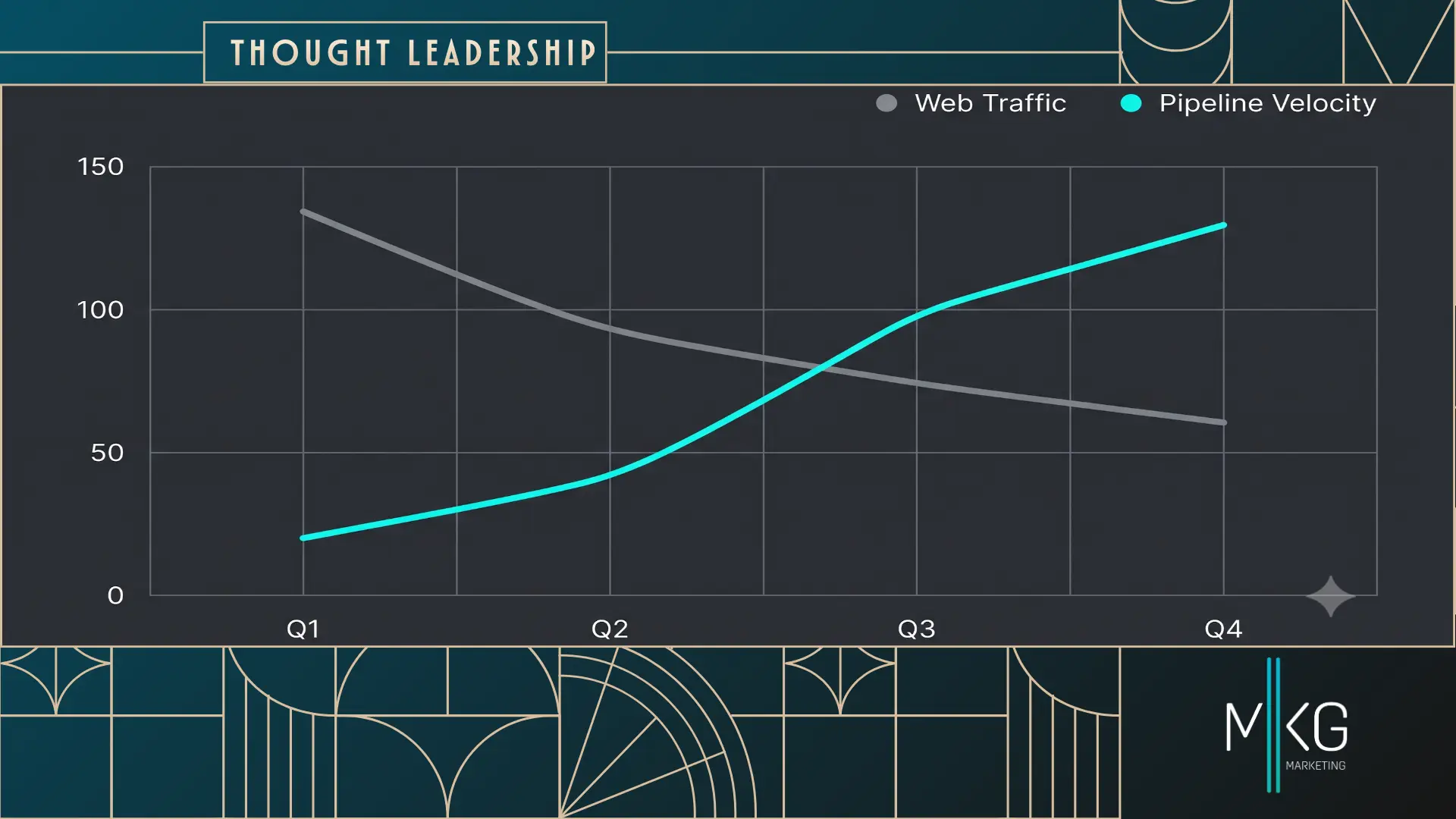
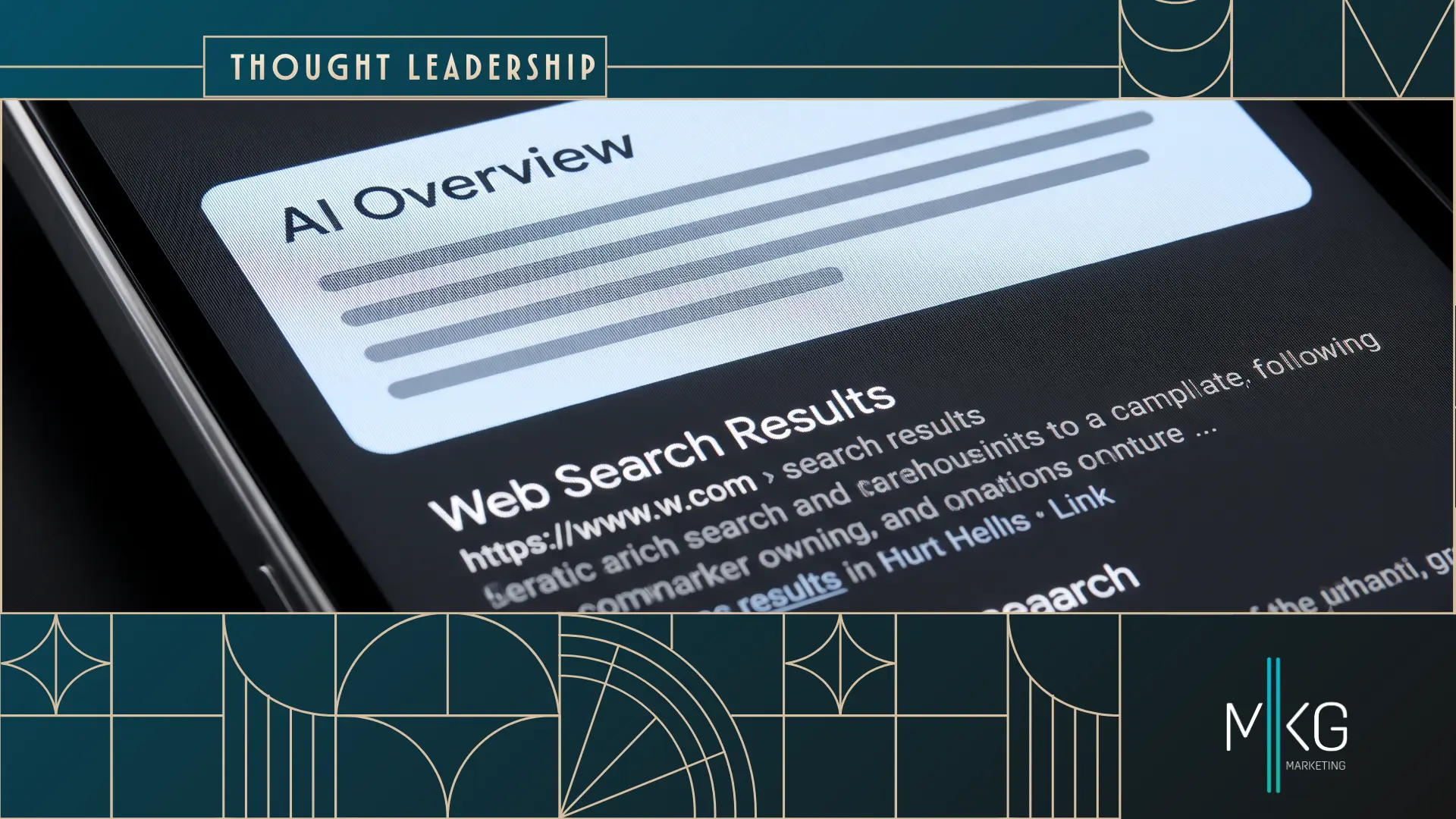
Yeah, so, you know, the first thing that I tell anybody is like, you aren't crazy. Your organic traffic has decreased. And it's not just you, it's everybody. Click through. Rates are dropping dramatically. Nobody is going to Google and scrolling all the way down the first page anymore, and clicking 10 blue links like that is not happening. And we're not interested in trying to, like, read everything and come up with our own answer anymore. That's what AI is doing for us, and so those answer snippets are extremely valuable. That's a huge source of where people are getting their information. Now we're using voice assistance a lot, and you know, Alexa isn't giving you a link to go click, but she's giving you an answer, or Siri is giving you an answer. So those voice assistants matter too, and that's changing the nature of search a lot. And then on top of that, right? We've got, you know, now the map pack, right? Like, if you are not in that top three, and you're a local business and you're not in the top three in that area, forget it like you're, like you're basically invisible, and that's harsh, but true. And so those things are, all, you know, really relevant. And it is changing our website traffic. It is changing click-through rates. But that doesn't mean there's not a visibility opportunity there. It just means you've got to, you know, as you said, invite all these other acronyms into your strategy. It's no longer an SEO strategy, right? It's a visibility strategy. And it's, it's being visible everywhere your audience is searching. And you know, if you know your audience, you're. Well. And you know your business really well. You might know exactly where it is that they're searching, you know, there, there's, there's an audience for LinkedIn, there's an audience for website traffic, there's an audience for everything. But I think the best practice for most businesses is you need to be visible everywhere, because, you know, everybody's a little different, right? Like, I have almost completely abandoned Google. If I can't get it from chat, GPT, or, you know, the map pack, then I'm not clicking through Google most of the time, right? And everybody's a little different. That may be clawed for some people, maybe that, you know, a different browser, a different search engine, or maybe it's Facebook. You know a lot of people; if they're looking for something, they're going to go to Facebook first, or they're going to go to LinkedIn first. So you basically have to be everywhere at the same time. But what's important is that your messaging is consistent across all of those platforms, because anywhere that they're going to find you, it needs to resonate with that brand, and also that's what creates authority and trust with the llms and even Google. If your brand is really disjointed, if you're saying one thing on TikTok, but something totally different on LinkedIn, it can't piece that together, and it doesn't surface you as an authoritative, quotable source. So I always break it down into credibility, credibility, crawlability. I'm losing a C in my own methodology here; it'll come back to me, or maybe it won't. There's a third one, but either the credibility is really important, Google LLMs, they need something to be able to cite. You need to be able to show those platforms that you are worth citing. So credibility is really important; those authorship signals, sources, data points, that's all really relevant. And then the crawl ability, right? Is the technical structure what you know it needs to be? You need your structured schema. You need to be formatting content with your H ones, your H twos, your H threes. I like short explainer blocks at the top of everything, because that's what gets surfaced to the LLM, so there is a structure for what's working right now, and kind of finding how to align your content with that structure is, is really key.
Kerry Guard 32:41
Yeah, we're thinking about it as search visibility optimization, because it's no longer just the landing page anymore, right? Your entire digital footprint is so absolutely sure, and to your point, to earlier of like, wherever people are searching, whether it's Reddit or LinkedIn or Gemini or Google or maps, right? You have to optimize for each place now in terms of that visibility with consistent positioning and messaging. So make sure you're hanging your hat on the key to how your audience is thinking about the problem you solve. So yeah, totally line there. And what I love, what you said too, that we're doubling down on is, is all of them, right? So the only one I'm going to call out, and I love your feedback on this too, is, yeah, I believe it SEO, AEO and GEO, but I think people are getting caught up in AI SEO, and I think there's a distinction there that's important when it comes to the quality of content, especially that you were talking about earlier, right? Might be getting lost in that one? Yeah, you see that too?
Jenna Nelson 33:46
I think a little bit like, are you defining it in a way of, like, people creating content specifically for the AI tools, or AI-created content? Because I think there's, there's two.
Kerry Guard 34:00
It's how I understand AI SEO in particular, is the tools you use to do SEO to do me, yeah, which tells me that it's more about content creation and pumping out content to get content ranked. So yeah, it's not, yeah, it's more of a quantity versus the quality, yeah, trying to do both, but not necessarily doing it well,
Jenna Nelson 34:26
doing it well, right? And that's that comes back to that kind of clarity angle, right? Like it has to be, first of all, there should be a human in the loop on all of this content, right? Like, if you are using AI to produce content, it needs. There's a lot of power in a human that knows how to use AI and can use AI to produce better content. There's a lot of risk in AI-produced content without that human in the loop. So finding that right structure is really, really key. But yeah, I. You're, you're right. I have seen there are a variety of tools out there that will, you know, generate a content map for you and auto-publish all of this content that's meant to rank. And it's not, it's not the way I would advise anybody to go. And, you know, I think, you know, you nailed. The ones I focus on are SEO, which is mostly technical these days. I think there's a lot of that's about your page speed, your indexing. SEO has become more technical, site maps than anything else, alt text, all of those things. And then you've got AEO, which is answer engine optimization, and that's incredibly important for, again, that's those snippets that, you know, that kind of stuff. And then you've got Geo, which can be defined to two ways. There's, you know, actual geo in terms of, like, location-based search. And then there's generative engine optimization, which is mostly, you know, what I work with, you know, from a digital landscape, but that generative engine optimization is, is extremely important too, right? Like that's getting surfaced in the llms itself, that's being able to go to ChatGPT and say, Tell me about this brand, or tell me, you know, help me find this type of business in my area, and getting, you know, that kind of information back. So I always tell people I'm like, if you can't go to ChatGPT and say, Tell me about your business, put it in there, and if you what you get back. If it can't find you or it's misquoting it, it doesn't seem right. It's very generic, then, like it doesn't know enough to surface you as an answer yet, and that's something you kind of have to fix.
Kerry Guard 36:59
Totally agree. I'm so doubling down on this with you, because not many people are talking about it this way. They kind of sell one or the other. They're either selling SEO still, oh gosh, just AEO, or just Geo, and they're defining GEO as AI SEO. So I really love that we're both like, I found somebody who is saying this, it needs all three.
Jenna Nelson 37:23
It's a combo, it's a combo pack. Yeah, agreed. I say all the time. I'm like, you know, I hear like, oh, SEO is dead. And like, it's not dead. You just need to invite its other friends to the party, AEO and CEO, and you need to focus on what each one does and where, but ultimately, it's all a system that needs to work together. And if you are working with an agency or a marketing person that is still doing SEO the old way, and that way worked for so long, right? Like Seo was really consistent for a really long time, but if they're still doing that, and they have not started incorporating these strategies, you need to very quickly find another agency or train them on you know, these, these practices, because it it's not dead, but it is now a smaller piece of the puzzle than it used to be. Okay?
Kerry Guard 38:21
Shameless plug, MKG Marketing, where we help you with your SVM, AEO, GEO today. Jenna, I could talk to you all day about this. It's so nice just getting validation. You know, when you're sort of in an echo chamber of one, it's just yeah, yeah. Really, really vague to hear from Yes. And it's starting to happen, and it's it's good, it's the way the market needs to go. A few more questions for you, leading back to got it back on track here, people, thank you for our diversion. We appreciate you when we see a spike in brand search. So we're talking about digital ads now. Switching gears. Everybody, everybody with me when we're when we see a spike in brand search and a drop in non-branded search traffic, how do we recalibrate our spend? Do we double down on channels that we're spending those clicks and getting that branded traffic? Do we diversify? You know, I feel like all roads are going to lead to brand these days. Am I crazy?
Jenna Nelson 39:20
I think to some extent, I think that's a that's a really loaded question, and I'd want to look at all of the data with before I, like, gave somebody a pathway on that. But I think what's most relevant is how competitive is your brand? If you have a really well-known brand, and you know that people are going to be looking for what they you know, if you're a known entity really well in your market, then I think brand search is where you want to funnel most of. That kind of spend in traffic, and then on your non-brand search, right? We're, we're trying to kind of overtake some market share there. On the other hand, if you're not a super, sometimes people don't even know what solution they're looking for. They know they've got a problem. They're problem aware, but maybe not solution aware, and certainly not brand aware, then I want to push more of the the non branded search traffic. But yes, I mean certainly, at least from a data standpoint, your brand search ROI is always going to look it should look higher. It should be higher than your non-branded search. But I think ultimately, like you've got to evaluate on a campaign-by-campaign basis, based on definitely your market. I don't, I don't know there's a singular answer there, yeah, I totally agree.
Kerry Guard 40:53
I think it is going to depend on the market and your sales cycle, and whether it's more transactional. If it's super transactional, it's going to be more of a see it, click it, buy it, but across paid and organic or more of a long term, bigger buy, bigger decision making, longer sales cycle that it's definitely going to be probably your brain is probably eating a lot of your attribution, but that means that more people are seeing you out in the wild or showing up in the research and you're filling in that form. So yeah, yeah, it definitely, quote unquote, depends. What are some early warning signs in terms of the the quote unquote 2026, marketing engine that tells a founder their visibility is fading before the leads actually stop coming in?
Jenna Nelson 41:47
Obviously, you know, this is obvious, but you know, decrease leads regardless of where they're coming. You know, like, I'm not so worried. If it's like, my volume has been consistent, but my website traffic is down. I'm like, they're just finding you elsewhere. That's actually good. I'm not worried about that. So certainly, you know, if you're seeing a slip in in lead volume, that's concerning, that's you know, something we want to figure out where that slippage is happening, and most likely it's that your website traffic has decreased, and your AEO traffic or your other platforms haven't increased, you know, to level that out, so that would be a concerning point, engagement, if you're noticing just a significant drop in you know, engagement, whether It's you know, on your socials, if your email open rate is tanking, that's a concern, so that that engagement is really concerning. And then you know the probably the biggest one right now is, is status client satisfaction, if your churn rate is increasing. If your bounce rate is getting really high from customers, then there is a market mismatch that you're not hitting, and someone else is. So that would be kind of my, my priority order in that world.
Kerry Guard 43:18
Yeah, in terms of these things dropping, what happens if you see it drop across the board, like, everything gets hit. Is there usually a reason for that, or is that just, like, I think everybody's blaming site traffic right now on AI? I think there's some validity to that. Absolutely. How do you navigate with clients when this happens, and like, the panic?
Jenna Nelson 43:53
That's it. Yeah, yeah. So I think, yeah, right. So the very first thing I would look at is what their overall visibility looks like, because it might be as simple as that. It might just be that, okay, you haven't optimized yet for AEO or geo, and your website traffic is slipping. So that's a big thing. That's probably the first place I'd start. The second place I'd start is messaging clarity and offer clarity. If you aren't resonating with your audience, if you aren't making it easy for them to understand who you are, who you help, and what transformation you provide on the other side, then that's a big issue. And so it's very possible that it's a situation where they've just their content has gotten watered down. Maybe their messaging has become unclear. It's scattered across too many platforms, and doesn't all make a cohesive, you know, brand story. So I'd want to look at that secondarily, you know, to see what. Why, you know what, what's failing here? So that failure point could be different. But I think you know my biggest thoughts are, is your messaging not getting to your audience? And that's probably that could be a visibility problem, or that could be a messaging problem. It's probably a little bit of both. Most likely.
Kerry Guard 45:20
Yeah, yeah, totally, totally, all right. Last question for you, Gen X, is, clearly, we can hang out all day. If a founder started staring at a pipeline that's gone quiet and a website that feels like a ghost town, what is the one tactical move that can be taken this afternoon to start getting back, getting them back on track?
Jenna Nelson 45:40
A database reactivation. You know this; this is the time to reactivate your existing database. That tree, your best customers are the ones who have already bought from you. So, yeah, go shake that tree. See what you can do. You know, with a DVR campaign, before you try to launch anything new. Let's stabilize the base basically, and then, you know, look at, you know, do we need to incorporate some new offers and things like that? But certainly a database reactivation campaign can be so powerful, agreed?
Kerry Guard 46:15
Yeah, absolutely. Ah, so good. Huge. Thanks to you. Jenna, thank you so much for joining me, for unpacking all of these things, the 2026 It's a new world. It is. Yeah, awesome. Thank you all for joining us. Zachary, so glad to see you. Thank you for hopping on and chiming on in. If you like this episode, please like, subscribe, and share. This episode is brought to you by mkg marketing. If you're watching your website traffic drop and your pipeline go bone dry because the dark, social, and zero click search, you can't shiny object your way out of it; you need a connected growth engine, one that restores clear, consistent visibility and connects those leading indicators to actual revenue at mkg. We installed that marketing growth engine, and we are here for you. So slide into my DMs and let's hang out. I'm Kerry Guard, host of Back on Track, and CEO of MKG Marketing, and we will see you next time.